

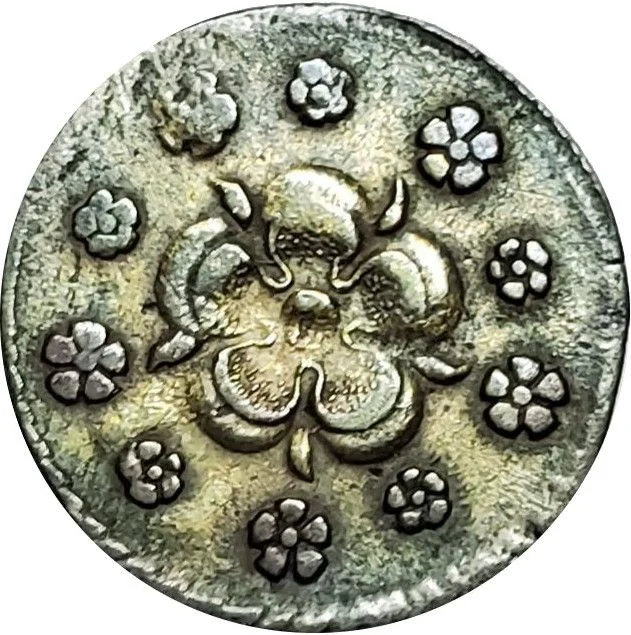
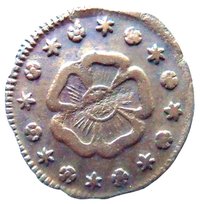
Obverse
Description:
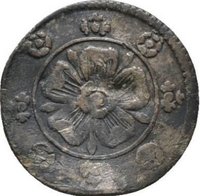
Rose encircled by rosettes.
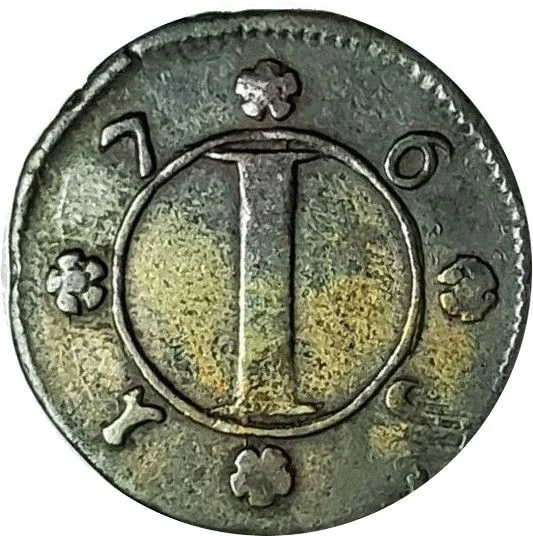
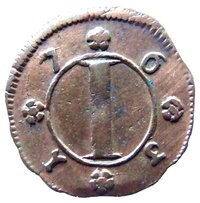
Reverse
Description:
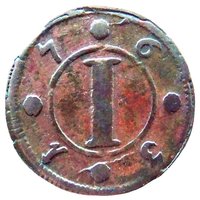
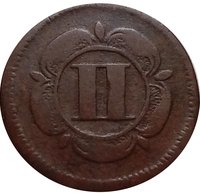
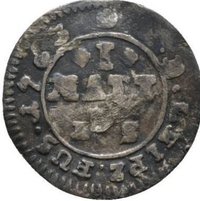
I inside circle; date around edge
Inscription:
1
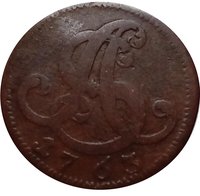
1763
1763
Edge
Mintings
| Year | Mint Mark | Mintage | Quality | Collection |
|---|---|---|---|---|
| 1763 | — | — |
Historical background
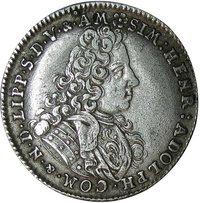
In 1763, the County of Lippe-Detmold, like much of the Holy Roman Empire, faced a severe monetary crisis rooted in the aftermath of the Seven Years' War (1756-1763). The conflict had drained the small state's resources, forcing the ruling Count, Simon August, to finance his military contributions through heavy borrowing and the debasement of coinage. This period saw a proliferation of low-quality, small-denomination coins (Kipper- und Wipperzeit phenomena) not only from Lippe but from neighboring territories, flooding the local economy and causing rampant inflation. The trust in currency collapsed, as the intrinsic silver content of coins fell far below their face value, crippling everyday trade and savings.
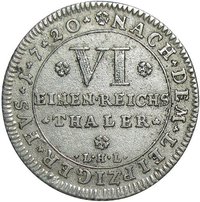
The situation reached a critical point with the widespread circulation of the Lippische Münzorte, a heavily debased 6-Mariengroschen piece that became notorious. These coins, containing as little as one-third of their mandated silver, were so problematic that they were officially rejected in trade with powerful neighbors like Hanover and Prussia. This external rejection created a dual crisis: a devalued currency internally and a breakdown in essential cross-border commerce. The county's economy, largely agrarian with a growing textile industry, was severely disrupted, threatening both public finances and social stability.
Confronted with this emergency, Count Simon August was compelled to act. In 1763, he initiated a comprehensive currency reform, one of the earliest in the Empire following the war. He recalled the debased coins and began minting new, full-value currency according to the stable Reichsthaler standard mandated by imperial law. This painful but necessary reform, funded through new taxes and loans, aimed to restore monetary confidence, stabilize prices, and reintegrate Lippe-Detmold into the regional economic system, setting a foundation for recovery in the war's devastated aftermath.
The situation reached a critical point with the widespread circulation of the Lippische Münzorte, a heavily debased 6-Mariengroschen piece that became notorious. These coins, containing as little as one-third of their mandated silver, were so problematic that they were officially rejected in trade with powerful neighbors like Hanover and Prussia. This external rejection created a dual crisis: a devalued currency internally and a breakdown in essential cross-border commerce. The county's economy, largely agrarian with a growing textile industry, was severely disrupted, threatening both public finances and social stability.
Confronted with this emergency, Count Simon August was compelled to act. In 1763, he initiated a comprehensive currency reform, one of the earliest in the Empire following the war. He recalled the debased coins and began minting new, full-value currency according to the stable Reichsthaler standard mandated by imperial law. This painful but necessary reform, funded through new taxes and loans, aimed to restore monetary confidence, stabilize prices, and reintegrate Lippe-Detmold into the regional economic system, setting a foundation for recovery in the war's devastated aftermath.
✨ Legendary