

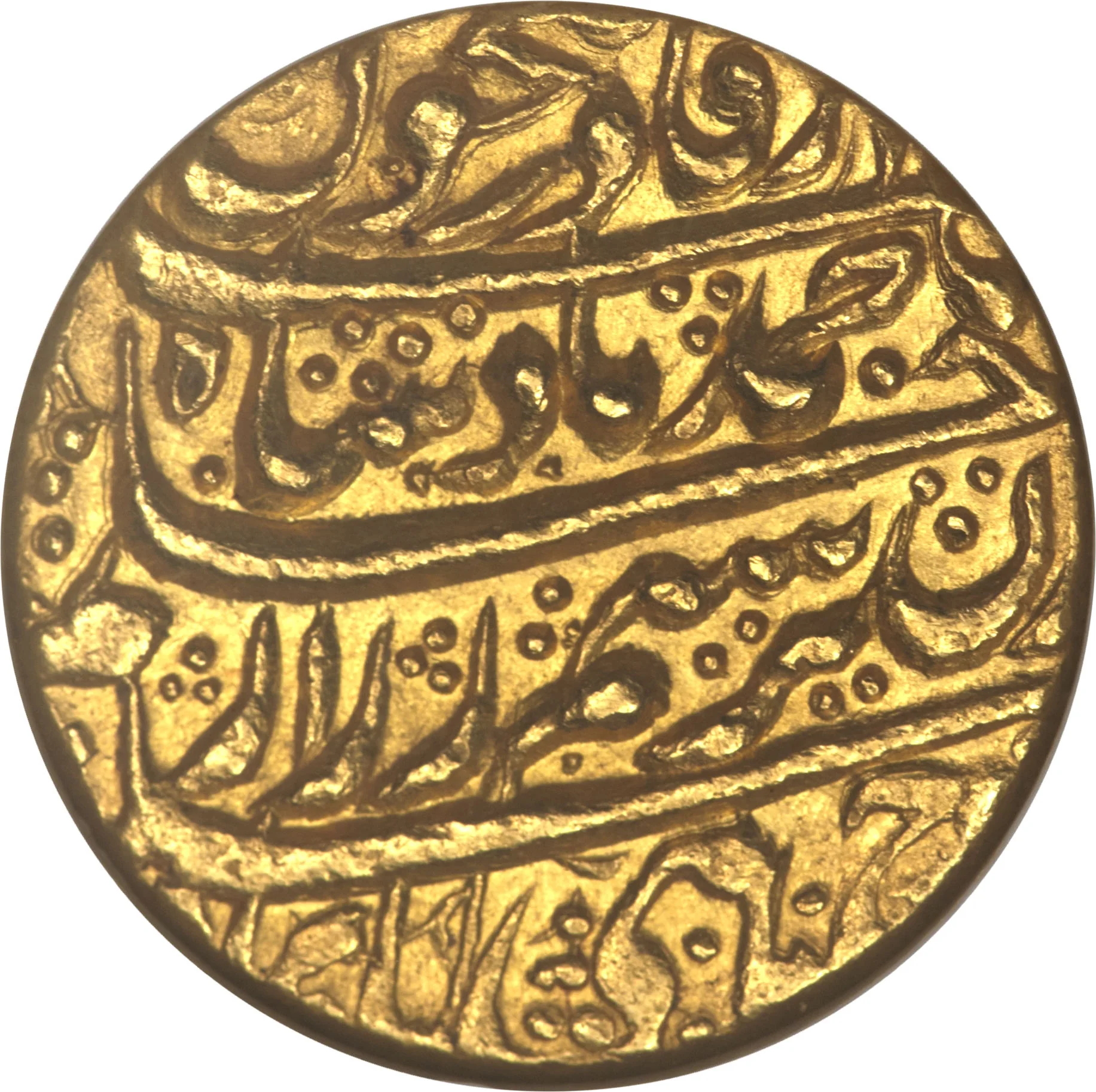
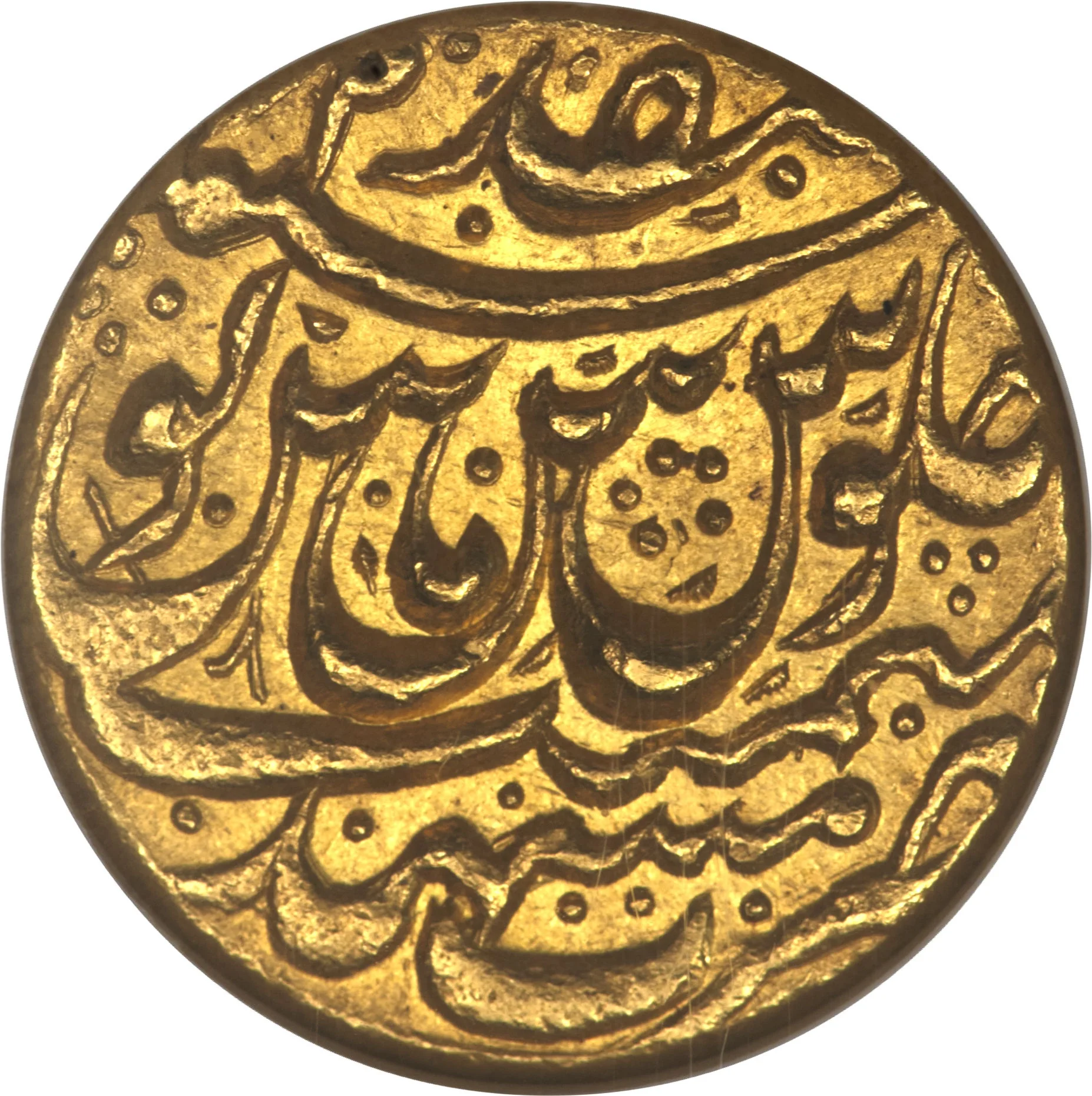
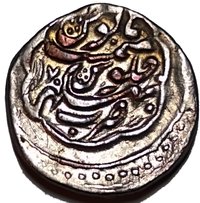
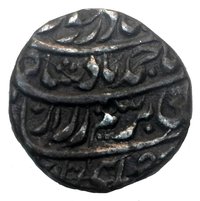
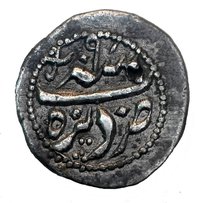
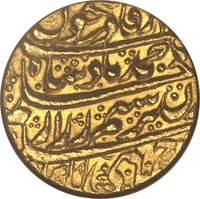
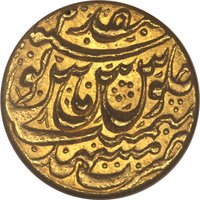
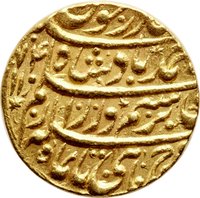
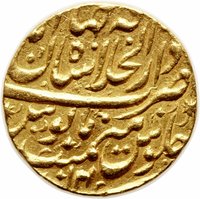
1 Ashrafi – Afghanistan
Afghanistan
Context
Material
References
KM: #Click to copy to clipboard639
Numista: #36968
Value
Bullion value: $583.79
Mintings
| Year | Mint Mark | Mintage | Quality | Collection |
|---|---|---|---|---|
| 1754 | — | — | ||
| 1755 | — | — | ||
| 1757 | — | — |
Historical background
In 1754, Afghanistan was not a unified nation-state but a contested region of shifting principalities and tribal confederacies, primarily under the loose hegemony of the Durrani Empire, founded just eight years earlier by Ahmad Shah Durrani. The currency situation reflected this political reality: it was decentralized, diverse, and tied to the broader economic networks of Central and South Asia. The primary unit of account was the silver rupee, but its weight, purity, and design varied significantly between different mint towns like Kabul, Kandahar, Herat, and Peshawar, each often under the control of local khans or Durrani-appointed governors who claimed the right of coinage (sikka).
The monetary system was a product of centuries of trade and conquest. Coins from the preceding Persian Safavid and Indian Mughal Empires remained in wide circulation alongside the new Durrani issues, creating a complex environment for commerce. Furthermore, the region's position on the Silk Road meant that foreign specie, including Persian abbasis, Indian mohurs, and even Russian ducats and Dutch lion dollars, could be found in major bazaars, their value determined by weight and intrinsic metal content rather than a central authority. The most important and reliable currency was the Kandahari rupee, minted in the empire's capital, which became a benchmark for trade due to its consistent silver standard.
This period was one of imperial consolidation, and Ahmad Shah Durrani understood that a stable currency was crucial for paying his army, collecting taxes, and facilitating the long-distance trade that enriched his treasury. Therefore, efforts were underway to impose a degree of uniformity, with the royal coinage bearing his name and titles in Persian script as a symbol of sovereignty. However, in 1754, this process was still in its early stages. The currency landscape remained fundamentally fragmented—a tangible reflection of the challenge of unifying a rugged, ethnically diverse territory where local power and cross-border trade often rivaled the authority of the nascent central state.
The monetary system was a product of centuries of trade and conquest. Coins from the preceding Persian Safavid and Indian Mughal Empires remained in wide circulation alongside the new Durrani issues, creating a complex environment for commerce. Furthermore, the region's position on the Silk Road meant that foreign specie, including Persian abbasis, Indian mohurs, and even Russian ducats and Dutch lion dollars, could be found in major bazaars, their value determined by weight and intrinsic metal content rather than a central authority. The most important and reliable currency was the Kandahari rupee, minted in the empire's capital, which became a benchmark for trade due to its consistent silver standard.
This period was one of imperial consolidation, and Ahmad Shah Durrani understood that a stable currency was crucial for paying his army, collecting taxes, and facilitating the long-distance trade that enriched his treasury. Therefore, efforts were underway to impose a degree of uniformity, with the royal coinage bearing his name and titles in Persian script as a symbol of sovereignty. However, in 1754, this process was still in its early stages. The currency landscape remained fundamentally fragmented—a tangible reflection of the challenge of unifying a rugged, ethnically diverse territory where local power and cross-border trade often rivaled the authority of the nascent central state.
💎 Extremely Rare