

2 Thalers – Brunswick-Lüneburg-Celle
Germany
Context
Year: 1634
Country: Germany 
Issuer: Brunswick-Lüneburg-Celle
Ruler: Augustus I
Currency:
Demonetized: Yes
References
KM: #Click to copy to clipboard109
Numista: #369315
Value
Bullion value: $168.46
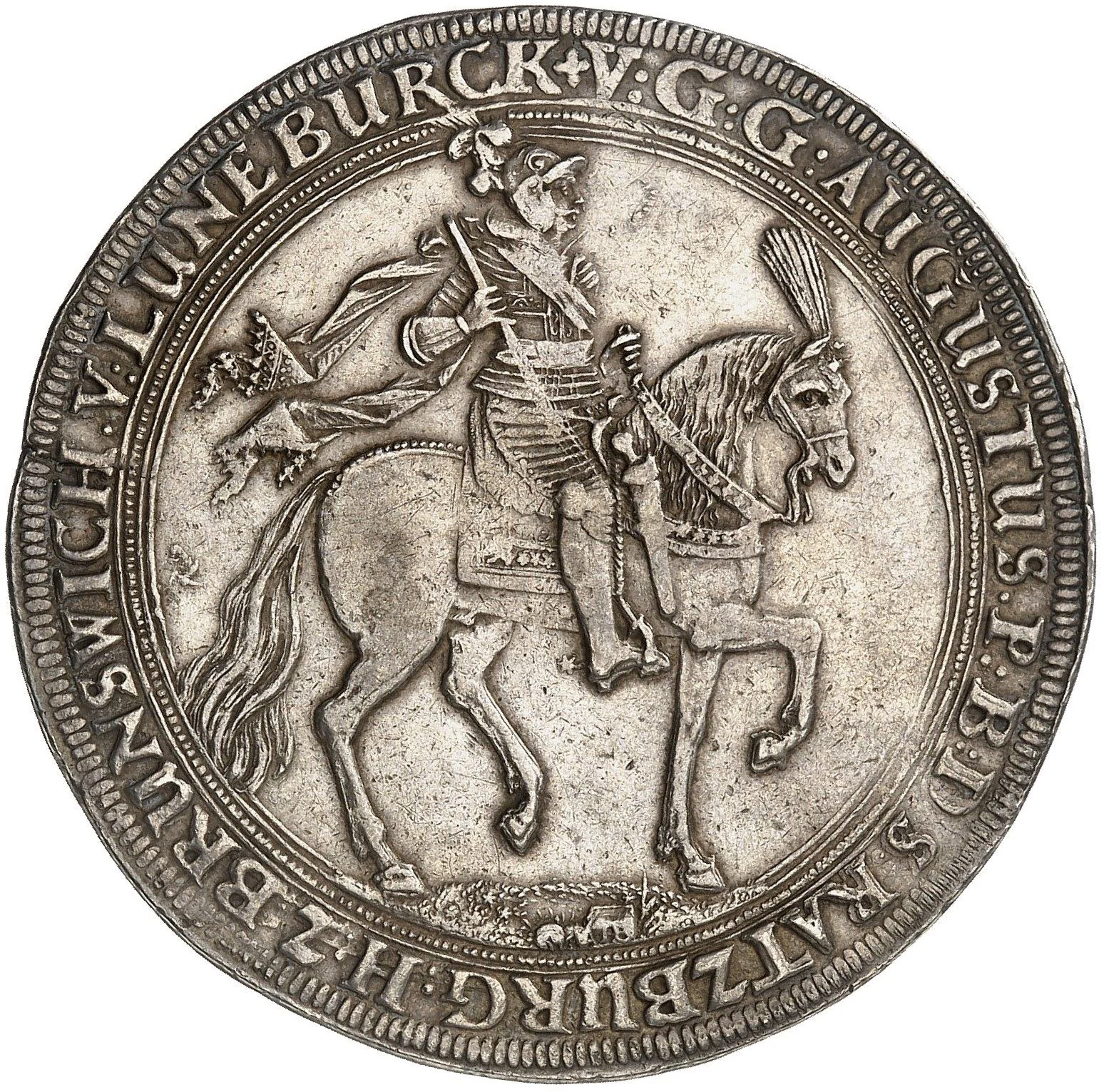
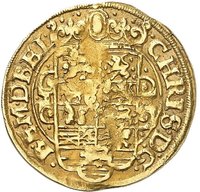
Obverse
Description:
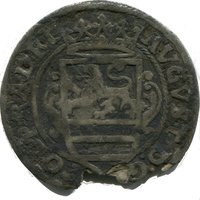
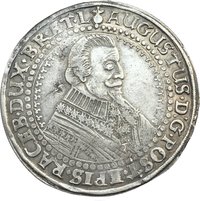
Duke August riding right.
Inscription:
V G G AUGUSTUS P B DS RATZBURG H Z BRUNSWICH V LUNEBURCK
Script: Latin
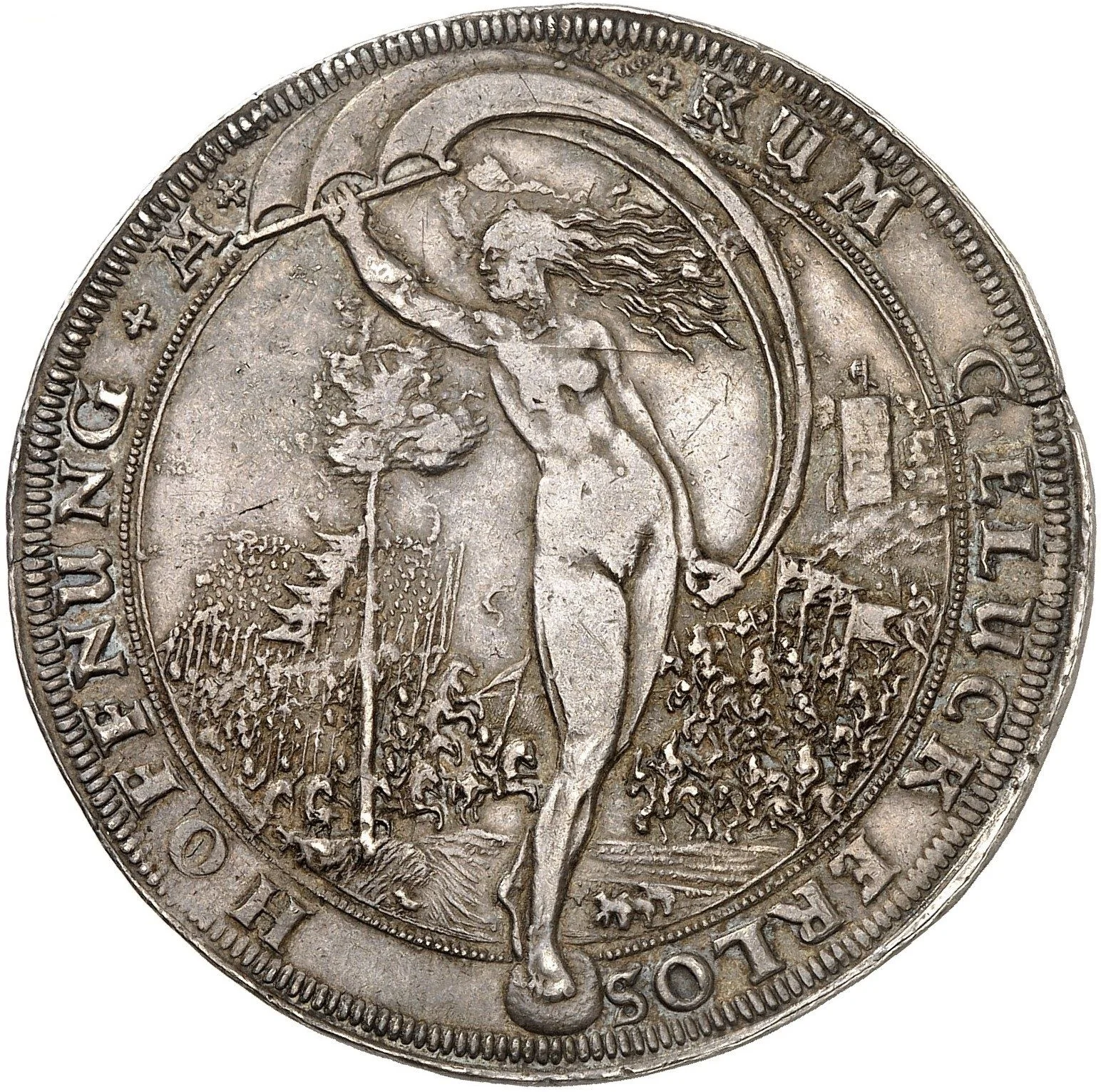
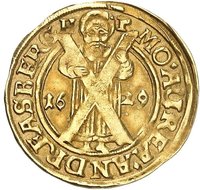
Reverse
Description:
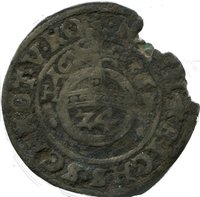
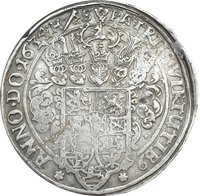
Fortune steering a ship through battle.
Inscription:
KUM GELUCK ERLOS HOFFNUNG + M +
Script: Latin
Edge
Mints
| Name | Mark |
|---|---|
| Ratzeburg | — |
Mintings
| Year | Mint Mark | Mintage | Quality | Collection |
|---|---|---|---|---|
| 1634 | M | — |
Historical background
In 1634, the Duchy of Brunswick-Lüneburg, with its administrative center in Celle, was deeply enmeshed in the economic and societal devastation of the Thirty Years' War. The region suffered from military occupation, marauding armies, and severe population loss, which crippled agricultural and commercial activity. This collapse of the real economy placed immense strain on the monetary system, as the ducal government, under Duke George of the Calenberg line, faced soaring war expenses and diminishing tax revenues, leading to a chronic fiscal crisis.
The currency situation was characterized by rampant debasement and chaotic circulation. To finance military obligations and state debts, the mint in Celle, like many others across the Holy Roman Empire, engaged in the aggressive reduction of silver content in coinage. This practice, known as Kipper- und Wipperzeit, had peaked in the early 1620s but left a legacy of unstable and distrustful currency. In 1634, multiple coin types—including older, better-valued pieces and new, debased issues—circulated simultaneously, alongside various foreign coins brought by mercenary armies, causing confusion, price inflation, and a loss of public trust in the ducal currency.
Despite the chaos, the ducal administration in Celle made attempts at stabilization. Recognizing that monetary disorder further harmed commerce and state income, authorities issued ordinances to fix exchange rates between different coins and to regulate their acceptance. However, these measures were largely ineffective against the overwhelming pressures of war. The monetary system remained fragile and unreliable, a microcosm of the wider imperial crisis, where the need for short-term war funding systematically undermined long-term economic stability and princely authority.
The currency situation was characterized by rampant debasement and chaotic circulation. To finance military obligations and state debts, the mint in Celle, like many others across the Holy Roman Empire, engaged in the aggressive reduction of silver content in coinage. This practice, known as Kipper- und Wipperzeit, had peaked in the early 1620s but left a legacy of unstable and distrustful currency. In 1634, multiple coin types—including older, better-valued pieces and new, debased issues—circulated simultaneously, alongside various foreign coins brought by mercenary armies, causing confusion, price inflation, and a loss of public trust in the ducal currency.
Despite the chaos, the ducal administration in Celle made attempts at stabilization. Recognizing that monetary disorder further harmed commerce and state income, authorities issued ordinances to fix exchange rates between different coins and to regulate their acceptance. However, these measures were largely ineffective against the overwhelming pressures of war. The monetary system remained fragile and unreliable, a microcosm of the wider imperial crisis, where the need for short-term war funding systematically undermined long-term economic stability and princely authority.
✨ Legendary