

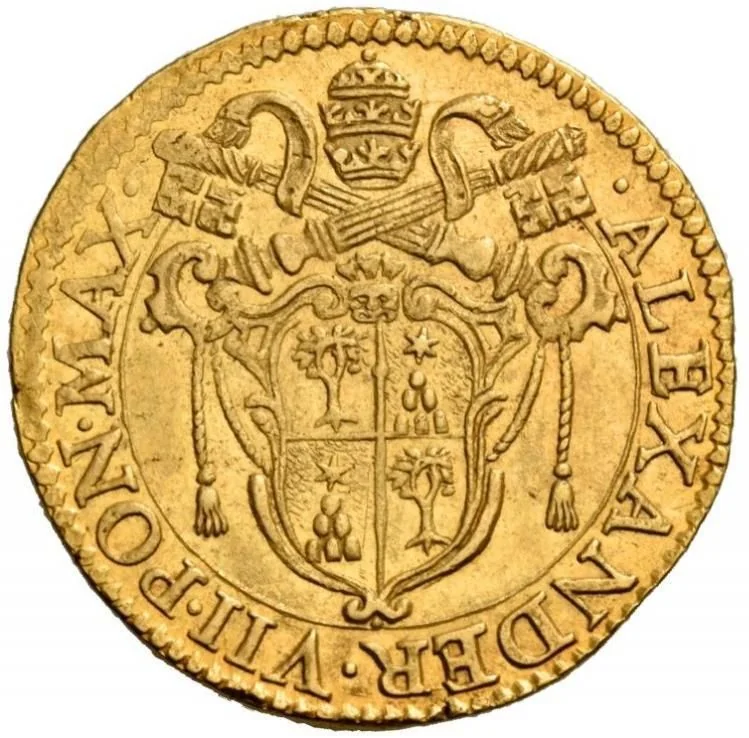
1 Quadrupla – Bologna
Italy
Context
Years: 1659–1661
Country: Italy 
Issuer: Bologna
Ruler: Alexander VII
Currency:
(1534—1835)
Demonetized: Yes
References
KM: #Click to copy to clipboard59
Numista: #365269
Value
Bullion value: $2158.02
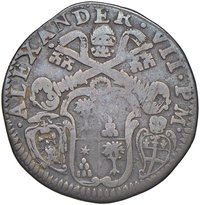
Obverse
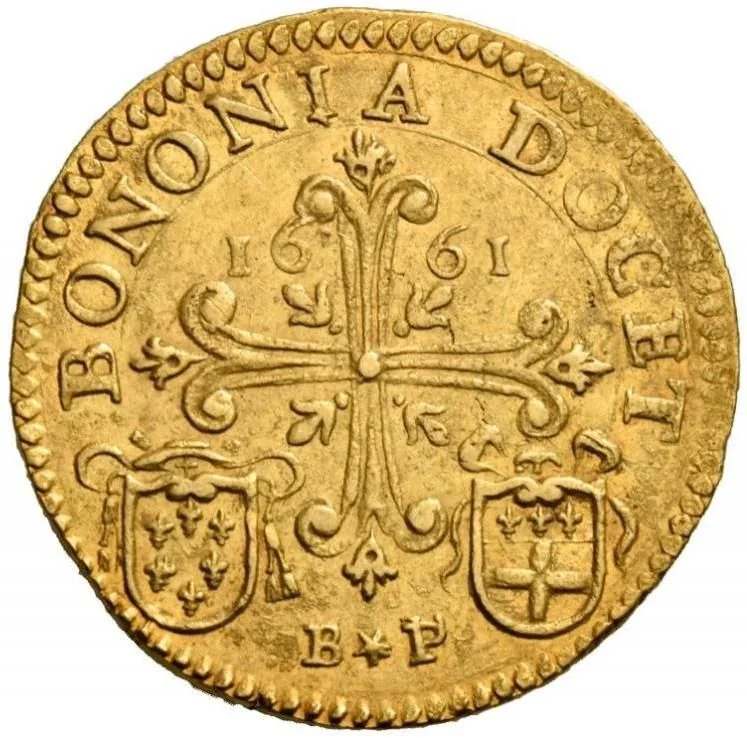
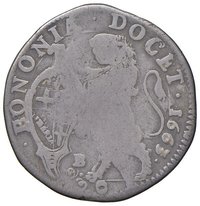
Reverse
Description:
Floriate cross divides date, two small shields below.
Inscription:
BONONIA DOCET
16 61
B P
16 61
B P
Script: Latin
Edge
Mints
| Name | Mark |
|---|---|
| Bologna | — |
Mintings
| Year | Mint Mark | Mintage | Quality | Collection |
|---|---|---|---|---|
| 1659 | — | — | ||
| 1660 | — | — | ||
| 1661 | — | — |
Historical background
In 1659, Bologna operated within the complex monetary landscape of the Papal States, to which it belonged. The city did not mint its own coinage but used a mixture of papal, local Italian, and foreign currencies that circulated simultaneously. The primary unit of account was the Bolognese lira (plural: lire), divided into 20 soldi or 240 denari, but this was a notional value used for bookkeeping, not a physical coin. Actual transactions involved a confusing array of silver scudi (from Rome and other states), testoni, and giulii, as well as gold doppie from Spain and Florence, each with fluctuating exchange rates against the lira.
This period was one of significant monetary instability and "bad money." Decades of war, including the Thirty Years' War and regional conflicts, had led to widespread debasement—reducing the precious metal content in coins—by various states seeking to finance their armies. The Papal State itself had engaged in this practice. Consequently, older, full-weight coins were often hoarded or exported (Gresham's Law in action), leaving Bologna's marketplaces flooded with underweight and inferior coins. This created chronic inflation, price volatility, and widespread confusion in commerce, as the intrinsic value of a coin could be far less than its face value.
The situation placed a heavy burden on Bologna’s civic institutions, particularly the Tribunale di Mercanzia (Merchants' Court), which was responsible for regulating trade and resolving disputes. Authorities regularly published tariffe (official exchange lists) attempting to fix the value of the myriad circulating coins in terms of the Bolognese lira, but these were reactive and struggled to keep pace with market realities. For merchants, artisans, and laborers, daily economic life was fraught with uncertainty, requiring constant vigilance to avoid being paid in the most debased currency, a tangible symptom of the broader fiscal strains within the Italian peninsula during the mid-17th century.
This period was one of significant monetary instability and "bad money." Decades of war, including the Thirty Years' War and regional conflicts, had led to widespread debasement—reducing the precious metal content in coins—by various states seeking to finance their armies. The Papal State itself had engaged in this practice. Consequently, older, full-weight coins were often hoarded or exported (Gresham's Law in action), leaving Bologna's marketplaces flooded with underweight and inferior coins. This created chronic inflation, price volatility, and widespread confusion in commerce, as the intrinsic value of a coin could be far less than its face value.
The situation placed a heavy burden on Bologna’s civic institutions, particularly the Tribunale di Mercanzia (Merchants' Court), which was responsible for regulating trade and resolving disputes. Authorities regularly published tariffe (official exchange lists) attempting to fix the value of the myriad circulating coins in terms of the Bolognese lira, but these were reactive and struggled to keep pace with market realities. For merchants, artisans, and laborers, daily economic life was fraught with uncertainty, requiring constant vigilance to avoid being paid in the most debased currency, a tangible symptom of the broader fiscal strains within the Italian peninsula during the mid-17th century.
✨ Legendary