

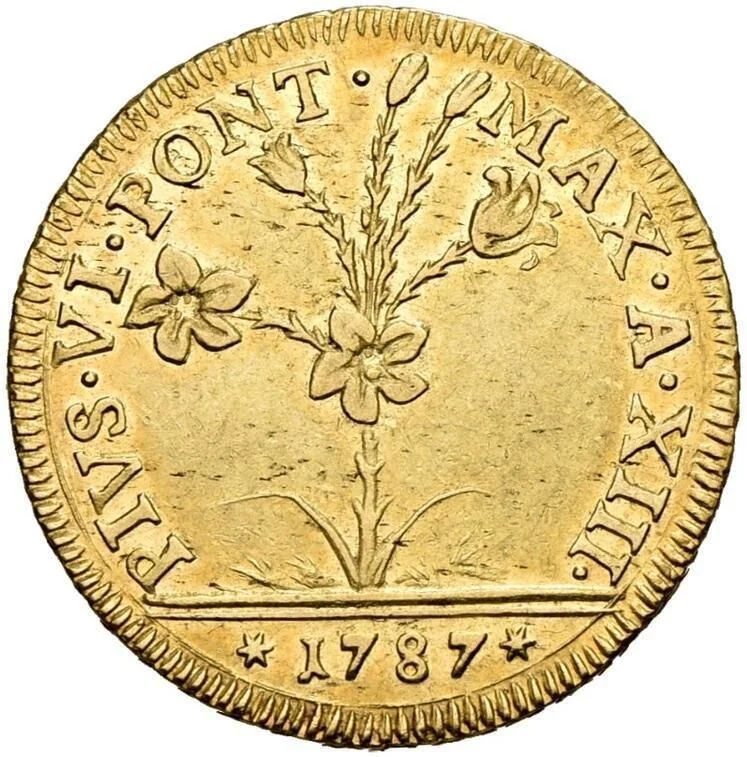

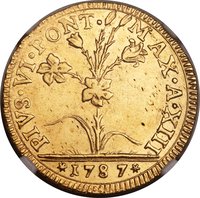
Obverse
Description:
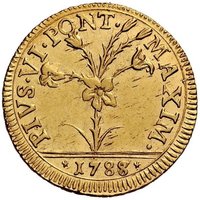
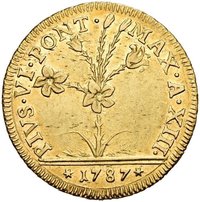
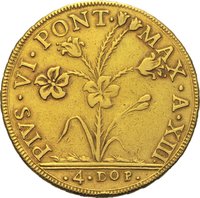
Date beneath flower sprig.
Inscription:
PIVS · VI · PONT · MAX · A · XIII
1787
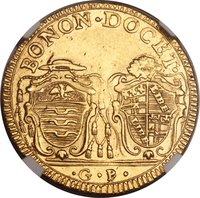
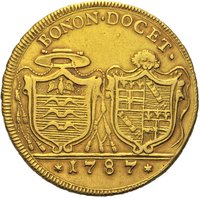
1787
Script: Latin
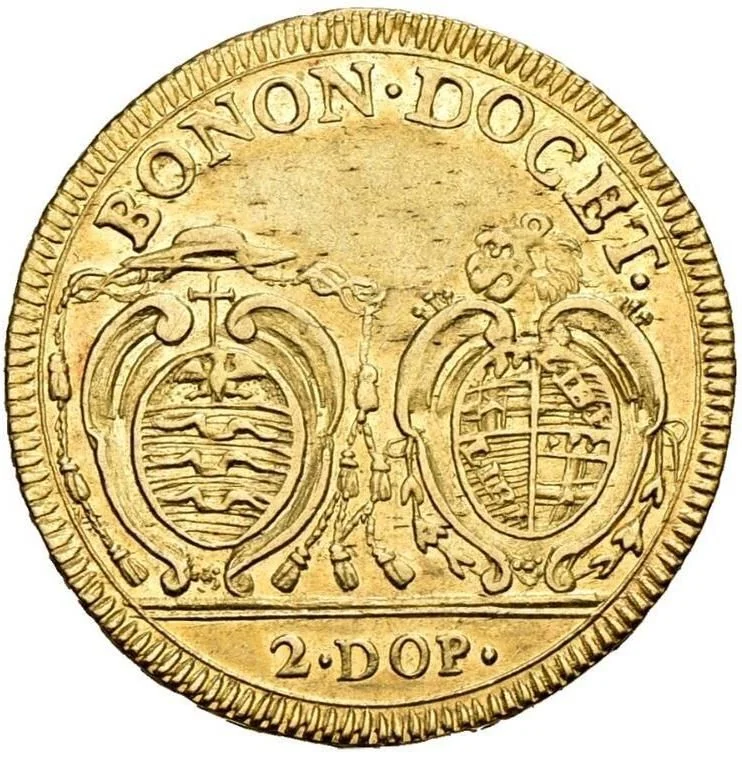
Reverse
Edge
Mints
| Name | Mark |
|---|---|
| Bologna | — |
Mintings
| Year | Mint Mark | Mintage | Quality | Collection |
|---|---|---|---|---|
| 1787 | — | — | ||
| 1796 | — | — |
Historical background
In 1787, Bologna operated within the complex monetary landscape of the Papal States, under the temporal rule of Pope Pius VI. The city did not issue its own independent currency but used a system dominated by the Papal scudo (divided into 100 baiochi, each of 10 quattrini), which was the official standard. However, Bologna's historic economic importance and its position as a major hub meant that a plethora of other coins also circulated freely. These included silver coins from neighbouring Italian states like the Tuscan fiorino and Venetian lira, as well as gold zecchini and Spanish silver reales, reflecting its active role in regional trade.
This multiplicity of currencies created significant practical challenges. Exchange rates between these coins fluctuated based on metal content and market demand, requiring money-changers (banchi di cambio) to be ubiquitous. More problematically, the system was plagued by a chronic shortage of small-denomination coinage for everyday transactions. This scarcity often forced merchants and citizens to accept clipped or worn coins at a discount, or to resort to informal credit, hampering commerce and causing frustration among the lower and merchant classes.
The situation was symptomatic of broader administrative and economic tensions within the Papal States. While the papal government in Rome sought monetary uniformity, local realities and the influx of foreign trade made this impossible to enforce. Consequently, Bologna in 1787 existed in a state of monetary hybridity—officially under the papal system but practically dependent on a heterogeneous mix of coins, a condition that would persist until the Napoleonic invasions a decade later swept the old monetary order away.
This multiplicity of currencies created significant practical challenges. Exchange rates between these coins fluctuated based on metal content and market demand, requiring money-changers (banchi di cambio) to be ubiquitous. More problematically, the system was plagued by a chronic shortage of small-denomination coinage for everyday transactions. This scarcity often forced merchants and citizens to accept clipped or worn coins at a discount, or to resort to informal credit, hampering commerce and causing frustration among the lower and merchant classes.
The situation was symptomatic of broader administrative and economic tensions within the Papal States. While the papal government in Rome sought monetary uniformity, local realities and the influx of foreign trade made this impossible to enforce. Consequently, Bologna in 1787 existed in a state of monetary hybridity—officially under the papal system but practically dependent on a heterogeneous mix of coins, a condition that would persist until the Napoleonic invasions a decade later swept the old monetary order away.
Series: 1787 Bologna circulation coins
✨ Legendary