

1 Quattrino – Ferrara
Italy
Context

Material
References
KM: #Click to copy to clipboard47
Numista: #364438
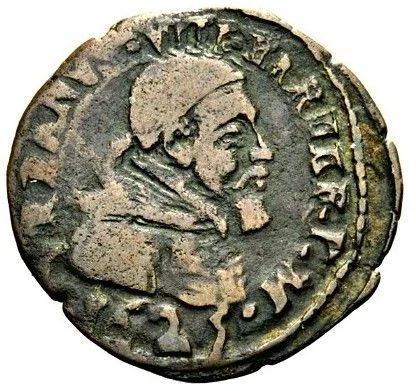
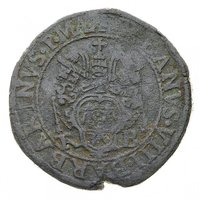
Obverse
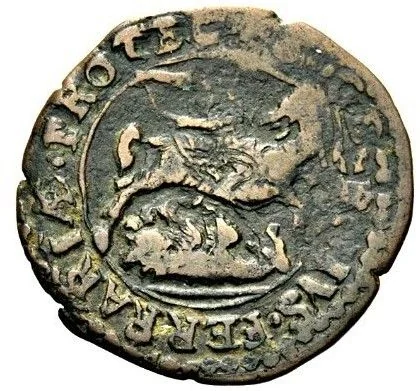
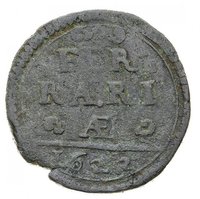
Reverse
Description:
Saint George on horseback slaying a dragon.
Inscription:
S · GEORGIVS · FERRARIÆ · PROTEC
Script: Latin
Edge
Mints
| Name | Mark |
|---|---|
| Ferrara | — |
Mintings
| Year | Mint Mark | Mintage | Quality | Collection |
|---|---|---|---|---|
| 1623 | — | — |
Historical background
In 1623, the currency situation in the Duchy of Ferrara was defined by its recent and politically charged integration into the Papal States. Following the death of the last Este duke, Alfonso II, in 1597 without a legitimate heir, Pope Clement VIII annexed Ferrara by 1598, ending its long period of Este family rule. This political shift had direct monetary consequences, as Ferrara was gradually brought under the Papal monetary system, which sought to standardize coinage across its territories. The Papal scudo and giulio became the dominant reference points, though the transition was neither immediate nor complete, creating a period of monetary duality.
Economically, the city grappled with the practical challenges of this transition. Older Este coinage, such as the lira ferrarese, remained in circulation alongside the new Papal issues, leading to complexities in exchange and valuation. Merchants and citizens had to navigate fluctuating exchange rates between the old local standards and the incoming Roman ones. Furthermore, Ferrara’s economic stature had been in relative decline since the loss of its ducal court, a major economic driver, which reduced the volume of high-value transactions and made the monetary system more susceptible to local debasements and the influx of low-quality foreign coinage common across Northern Italy.
Therefore, the currency landscape in 1623 was one of administrative overlay and lingering local practice. While Papal authority officially dictated the monetary standard, the reality was a fragmented circulation of coins. This situation reflected Ferrara's broader condition: a city adjusting to its reduced status as a provincial papal governorate, where the remnants of its independent ducal past physically jostled in the money pouches of its inhabitants with the coins of its new Roman masters.
Economically, the city grappled with the practical challenges of this transition. Older Este coinage, such as the lira ferrarese, remained in circulation alongside the new Papal issues, leading to complexities in exchange and valuation. Merchants and citizens had to navigate fluctuating exchange rates between the old local standards and the incoming Roman ones. Furthermore, Ferrara’s economic stature had been in relative decline since the loss of its ducal court, a major economic driver, which reduced the volume of high-value transactions and made the monetary system more susceptible to local debasements and the influx of low-quality foreign coinage common across Northern Italy.
Therefore, the currency landscape in 1623 was one of administrative overlay and lingering local practice. While Papal authority officially dictated the monetary standard, the reality was a fragmented circulation of coins. This situation reflected Ferrara's broader condition: a city adjusting to its reduced status as a provincial papal governorate, where the remnants of its independent ducal past physically jostled in the money pouches of its inhabitants with the coins of its new Roman masters.
✨ Legendary