


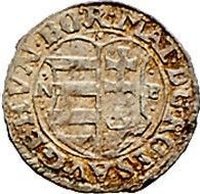
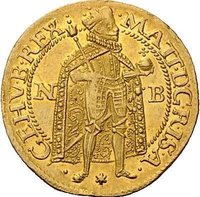
Obverse
Description:
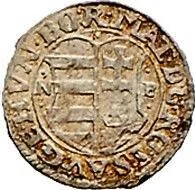
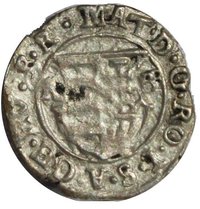
Hungarian coat of arms: Árpád stripes and double cross flank mintmark.
Inscription:
MAT : D · G · RO · I · S · AV : GE · HVN · BO · R ·
K B
K B
Script: Latin
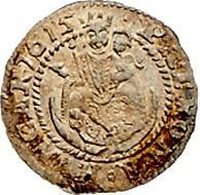
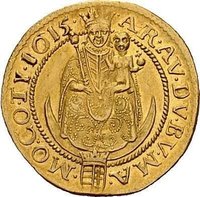
Reverse
Description:
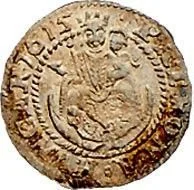
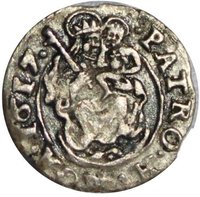
Madonna seated, crowned, holding child and cross, with crescent.
Inscription:
· PATRONA · HVNGAR · 1615
Script: Latin
Edge
Plain
Mintings
| Year | Mint Mark | Mintage | Quality | Collection |
|---|---|---|---|---|
| 1615 | N-B | — | ||
| 1618 | N-B | — | ||
| 1619 | N-B | — |
Historical background
In 1615, the Kingdom of Hungary was grappling with a severe and protracted currency crisis, a direct consequence of its political fragmentation. The realm was divided into three parts: Royal Hungary under Habsburg rule, the Ottoman-occupied central territories, and the semi-independent Principality of Transylvania. This tripartite division led to a chaotic monetary landscape, as each entity minted its own coins with differing values and precious metal content. The Habsburgs, controlling the main mint at Kremnica (Körmöcbánya), heavily debased the silver denars to fund continuous military campaigns against the Ottomans and their own imperial expenses, flooding the market with low-quality, "bad money."
The economic impact was devastating, following Gresham's Law where "bad money drives out good." High-quality silver thalers from German states or older, full-weight Hungarian coins were hoarded or used for foreign trade, leaving the debated, brittle denars as the primary domestic currency. This fueled rampant inflation, eroding trust in the coinage and crippling everyday commerce. Peasants, soldiers, and small traders were particularly hard-hit, as their wages were paid in the depreciating currency while prices for goods soared. The situation created widespread social discontent and economic instability across all social strata.
Attempts at reform were largely ineffective due to the conflicting interests of the ruling powers. While the Hungarian Diet repeatedly protested the debasement and called for a return to stable currency, the Habsburg monarchy's financial needs took precedence. Consequently, the year 1615 fell within a long period of monetary disorder that would persist for decades. The unstable currency not only weakened the local economy but also reflected the deeper malaise of a kingdom fractured by war and competing sovereignties, where unified fiscal policy was impossible.
The economic impact was devastating, following Gresham's Law where "bad money drives out good." High-quality silver thalers from German states or older, full-weight Hungarian coins were hoarded or used for foreign trade, leaving the debated, brittle denars as the primary domestic currency. This fueled rampant inflation, eroding trust in the coinage and crippling everyday commerce. Peasants, soldiers, and small traders were particularly hard-hit, as their wages were paid in the depreciating currency while prices for goods soared. The situation created widespread social discontent and economic instability across all social strata.
Attempts at reform were largely ineffective due to the conflicting interests of the ruling powers. While the Hungarian Diet repeatedly protested the debasement and called for a return to stable currency, the Habsburg monarchy's financial needs took precedence. Consequently, the year 1615 fell within a long period of monetary disorder that would persist for decades. The unstable currency not only weakened the local economy but also reflected the deeper malaise of a kingdom fractured by war and competing sovereignties, where unified fiscal policy was impossible.
Series: 1615 Hungary circulation coins

✨ Legendary