

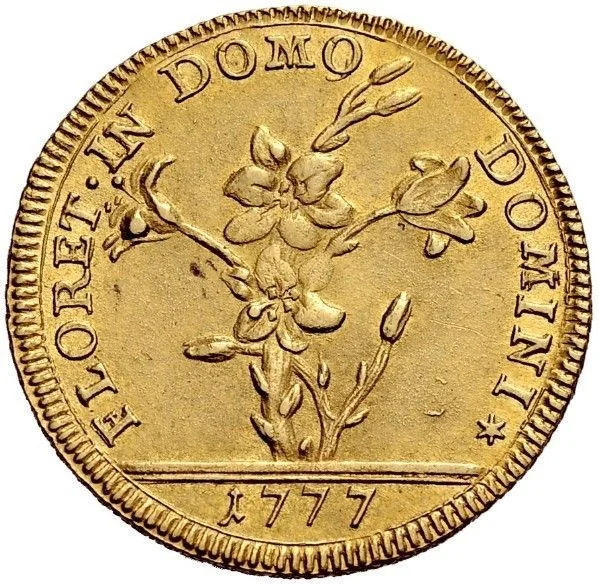
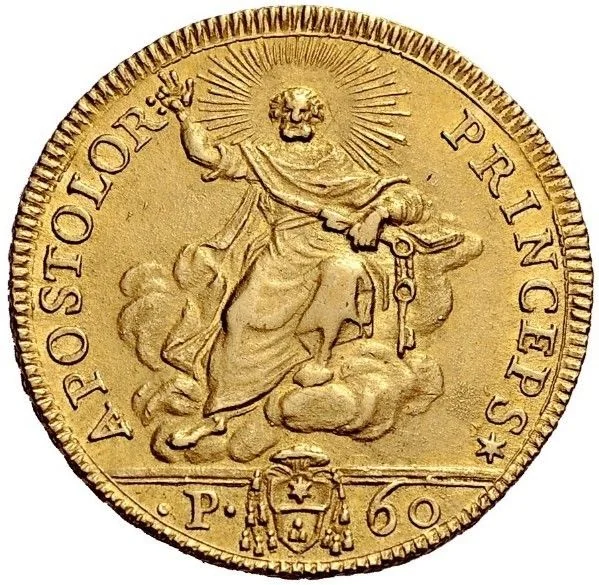
2 Doppie – Papal States
Vatican City
Context
Year: 1777
Country: Vatican City 
Issuer: Papal States
Ruler: Pius VI
Currency:
(1534—1835)
Demonetized: Yes
Material
References
KM: #Click to copy to clipboard1035
Numista: #363891
Value
Bullion value: $1672.64
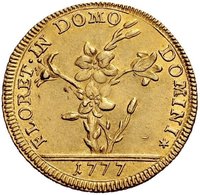
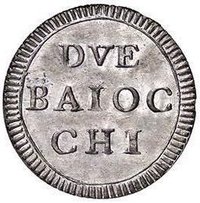
Obverse
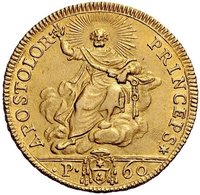
Reverse
Edge
Meanders pattern
Mints
| Name | Mark |
|---|---|
| Rome | — |
Mintings
| Year | Mint Mark | Mintage | Quality | Collection |
|---|---|---|---|---|
| 1777 | — | — |
Historical background
In 1777, the Papal States' monetary system was a complex and fragmented relic of medieval and early modern practices, reflecting the temporal power's decentralized political structure. There was no single, unified papal currency. Instead, the primary circulating coins were the Papal Scudo, divided into 100 Baiocchi, and the older Giulio, valued at 10 Baiocchi. These coins circulated alongside a multitude of regional and foreign currencies, particularly from other Italian states like Tuscany and Naples, as well as Spanish and Austrian coins. This proliferation created constant difficulties in trade and taxation, requiring cumbersome exchange calculations and leading to frequent disputes over the intrinsic silver value of coins versus their official face value.
The system was further strained by chronic fiscal pressures. The Papal Treasury, often depleted by the costs of administration, patronage, and grand architectural projects, periodically resorted to debasement—reducing the precious metal content in coins while maintaining their nominal value. This practice, though providing short-term revenue, eroded public trust and spurred inflation, as merchants adjusted prices to account for weaker coinage. Furthermore, counterfeiting was a rampant problem, exacerbated by the sheer variety of legitimate coins in circulation, which made fraudulent pieces harder to detect and control.
Pope Pius VI, reigning from 1775, inherited these monetary troubles. While his pontificate would later see attempts at economic reform and large-scale drainage projects to boost agriculture, the monetary situation in 1777 remained largely unresolved. The system functioned, but inefficiently, acting as a drag on commerce and state finances. It was a tangible symbol of the challenges facing the Papal States: an ancient institution grappling with the practical demands of modern governance and economy, yet hesitant to undertake the sweeping centralization required for a unified monetary standard.
The system was further strained by chronic fiscal pressures. The Papal Treasury, often depleted by the costs of administration, patronage, and grand architectural projects, periodically resorted to debasement—reducing the precious metal content in coins while maintaining their nominal value. This practice, though providing short-term revenue, eroded public trust and spurred inflation, as merchants adjusted prices to account for weaker coinage. Furthermore, counterfeiting was a rampant problem, exacerbated by the sheer variety of legitimate coins in circulation, which made fraudulent pieces harder to detect and control.
Pope Pius VI, reigning from 1775, inherited these monetary troubles. While his pontificate would later see attempts at economic reform and large-scale drainage projects to boost agriculture, the monetary situation in 1777 remained largely unresolved. The system functioned, but inefficiently, acting as a drag on commerce and state finances. It was a tangible symbol of the challenges facing the Papal States: an ancient institution grappling with the practical demands of modern governance and economy, yet hesitant to undertake the sweeping centralization required for a unified monetary standard.
✨ Legendary