

1 Thaler – Brunswick-Lüneburg-Celle
Germany
Context
Year: 1617
Country: Germany 
Issuer: Brunswick-Lüneburg-Celle
Ruler: Christian
Currency:
Demonetized: Yes
References
KM: #Click to copy to clipboard9.1
Numista: #363320
Value
Bullion value: $83.28
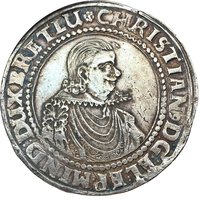
Obverse
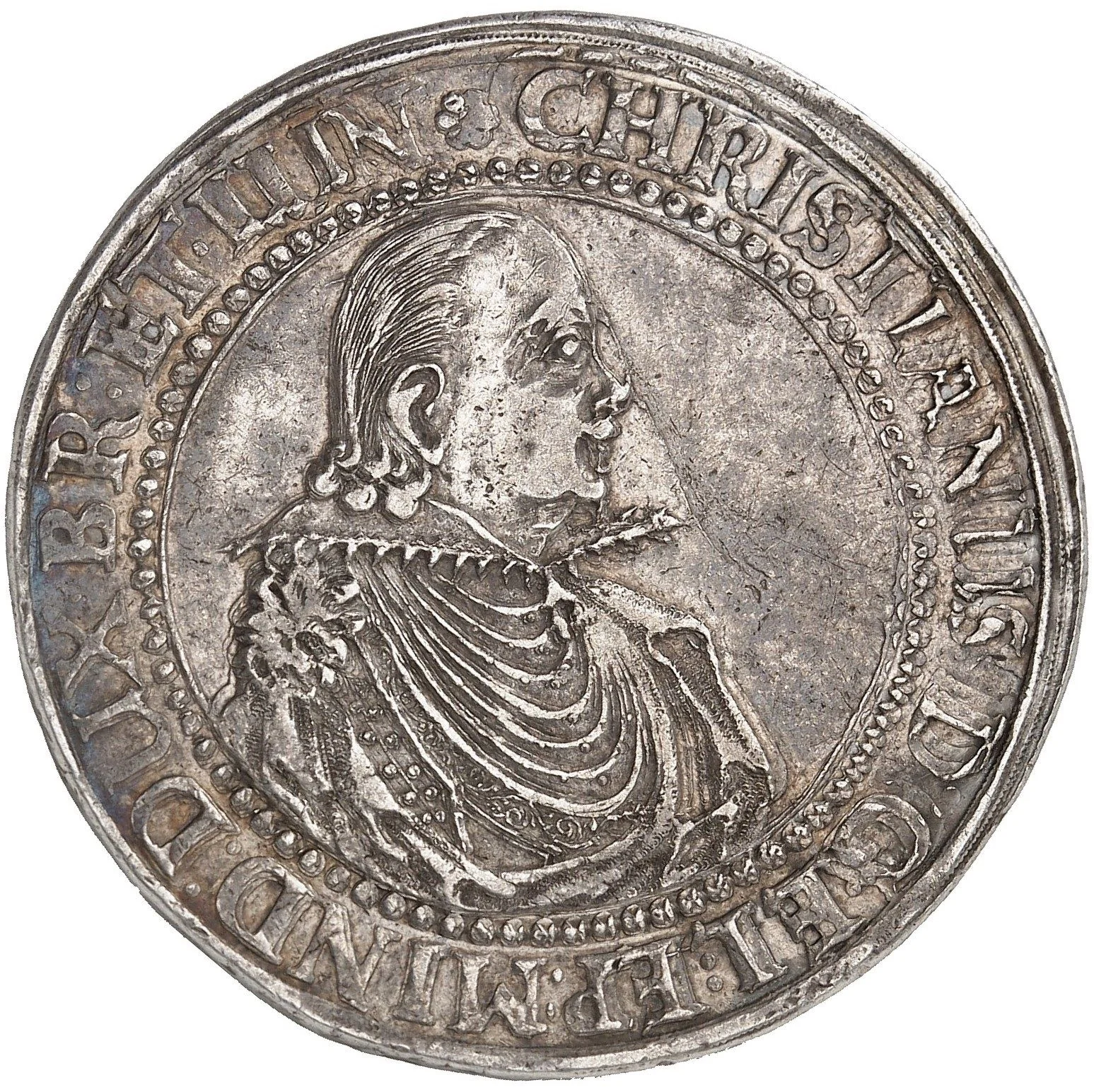
Description:
Bust right.
Inscription:
CHRISTIANUS. D: G: EL: EP: MIND: DUX. BR: ET: LUN*
Script: Latin
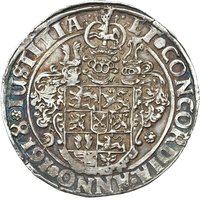
Reverse
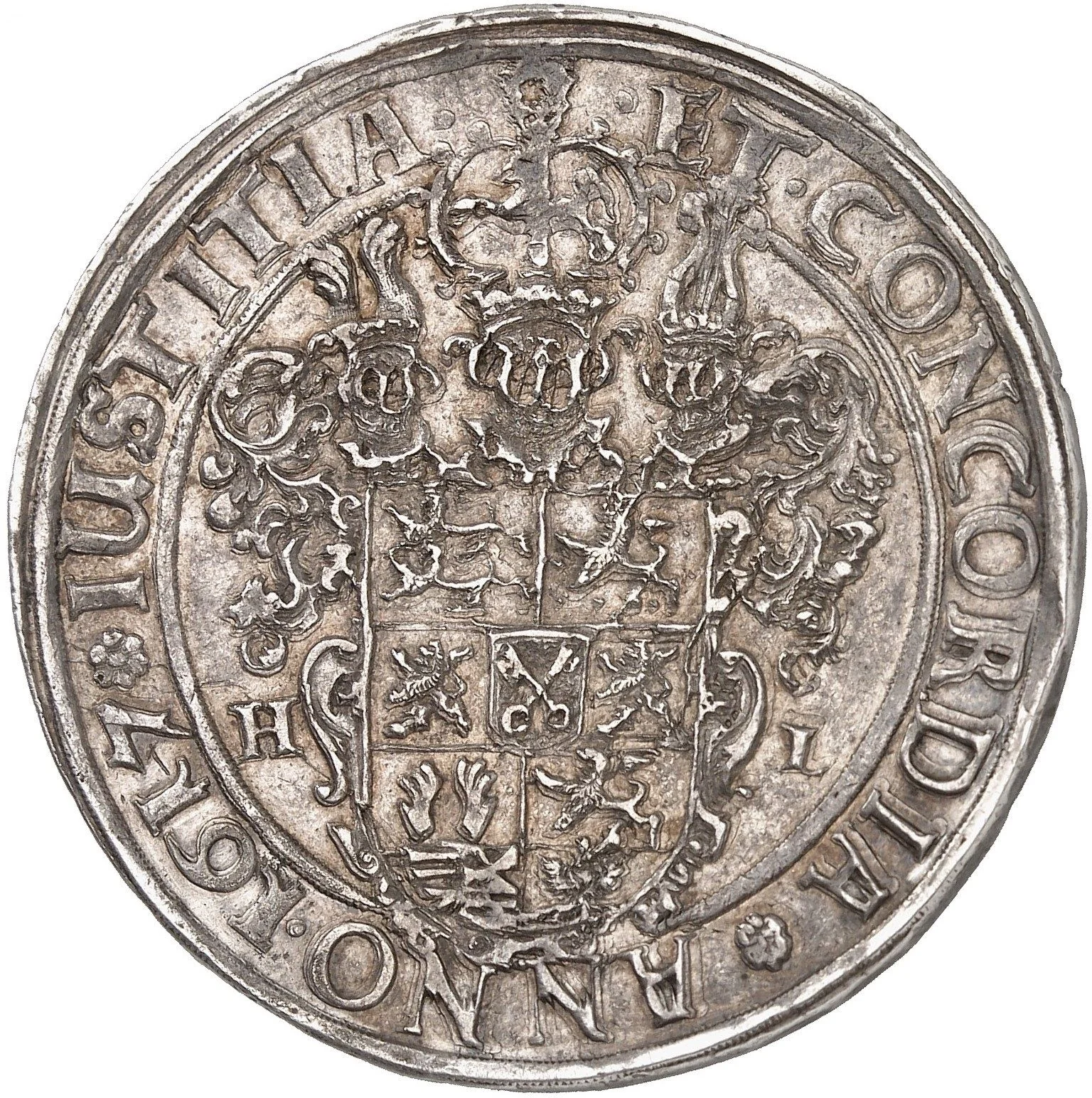
Description:
Triple-helmeted, eight-armed.
Inscription:
IUSTITIA. ET. CONCORDIA * ANNO. 1617
H L
H L
Script: Latin
Edge
Mintings
| Year | Mint Mark | Mintage | Quality | Collection |
|---|---|---|---|---|
| 1617 | — | — |
Historical background
In 1617, the Duchy of Brunswick-Lüneburg, with its administrative centre in Celle, was entangled in the complex and fragmented monetary system of the Holy Roman Empire. The region operated under the Imperial Coinage Ordinance (Reichsmünzordnung) of 1559, which aimed to standardize coinage across the Empire's states. However, the authority to mint coins was a cherished sovereign right (Münzregal) held by numerous princes and cities, leading to a proliferation of different coins in circulation. In practice, the Dukes of Brunswick-Lüneburg issued their own regional currency, primarily Taler and smaller Groschen, but these competed with coins from neighbouring territories, causing chronic instability in exchange rates and values.
The monetary situation was particularly strained by the upcoming outbreak of the Thirty Years' War (1618-1648). While full-scale war had not yet begun in 1617, the preceding years of political and religious tension had already disrupted trade and economic confidence. Authorities in Celle were likely grappling with common early 17th-century problems: debasement of coinage by some minters to generate short-term profit, the influx of inferior foreign coins, and the hoarding of high-quality silver coins. This created a persistent challenge for both commerce and state finances, as the actual metal content of a coin often fell below its face value.
Consequently, Duke Christian the Elder of Brunswick-Lüneburg (ruling from Celle) faced the difficult task of maintaining a stable currency to ensure economic functionality within his domains while navigating the wider imperial framework. The year 1617 thus represents a precarious calm before the storm, with the existing fragile system about to be severely tested by the coming decades of warfare, which would lead to catastrophic currency devaluation, rampant inflation, and a complete breakdown of the imperial monetary order.
The monetary situation was particularly strained by the upcoming outbreak of the Thirty Years' War (1618-1648). While full-scale war had not yet begun in 1617, the preceding years of political and religious tension had already disrupted trade and economic confidence. Authorities in Celle were likely grappling with common early 17th-century problems: debasement of coinage by some minters to generate short-term profit, the influx of inferior foreign coins, and the hoarding of high-quality silver coins. This created a persistent challenge for both commerce and state finances, as the actual metal content of a coin often fell below its face value.
Consequently, Duke Christian the Elder of Brunswick-Lüneburg (ruling from Celle) faced the difficult task of maintaining a stable currency to ensure economic functionality within his domains while navigating the wider imperial framework. The year 1617 thus represents a precarious calm before the storm, with the existing fragile system about to be severely tested by the coming decades of warfare, which would lead to catastrophic currency devaluation, rampant inflation, and a complete breakdown of the imperial monetary order.
✨ Legendary