

6 Florins – New Holland
Brazil
Context
Years: 1645–1646
Country: Brazil 
Issuer: New Holland
Period:
(1630—1654)
Currency:
(1624—1661)
Demonetized: Yes
Material
References
KM: #Click to copy to clipboard6
Numista: #36325
Value
Bullion value: $580.37
Obverse
Description:
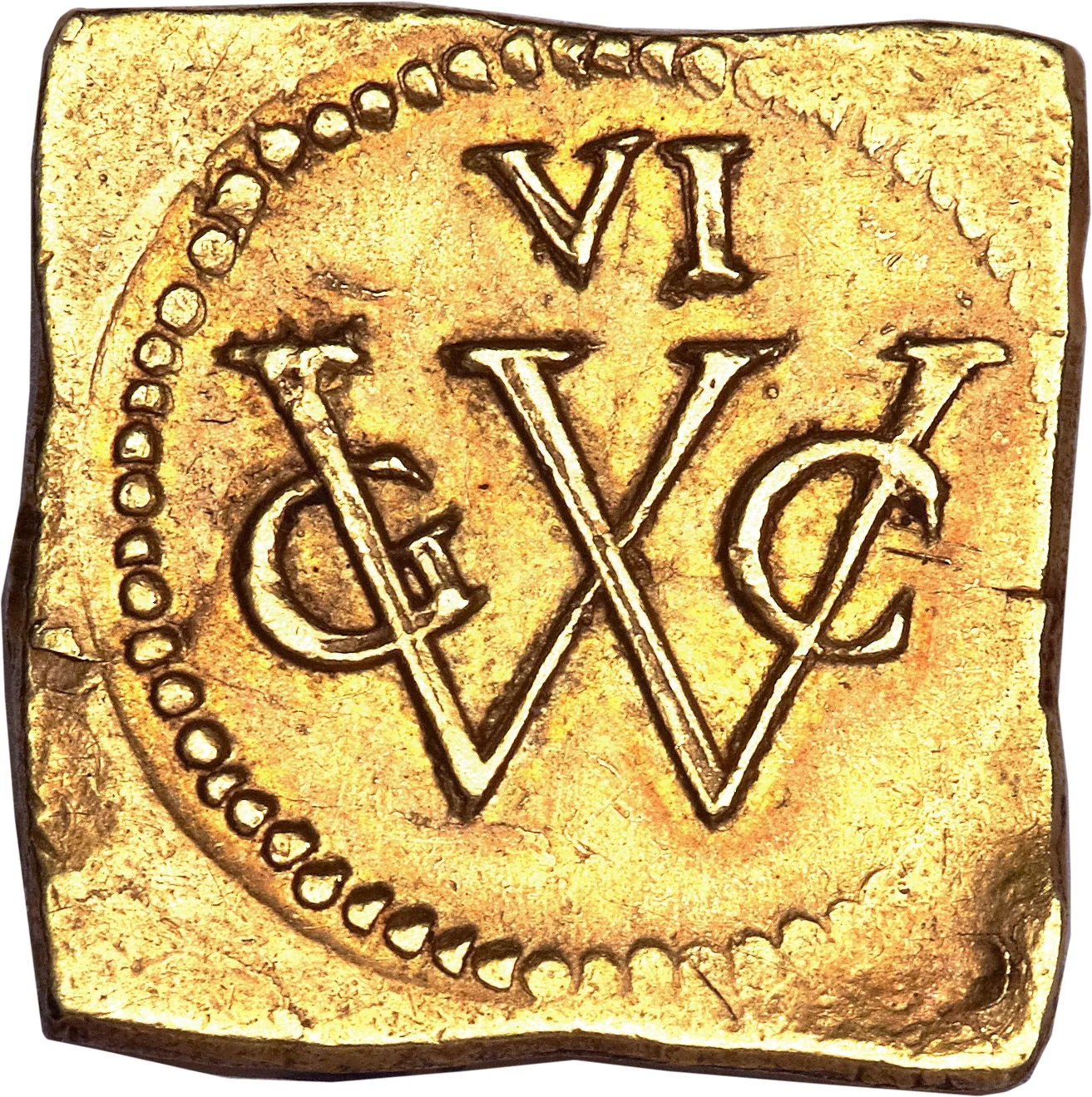
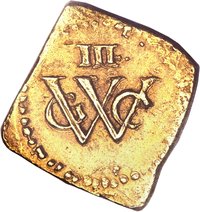
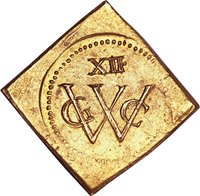
GWC monogram with VI, encircled by pearls.
Inscription:
VI
GWC
GWC
Script: Latin
Engravers: Jan Hendrik Bruynsvelt, Pieter Janssen Bas
Reverse
Description:
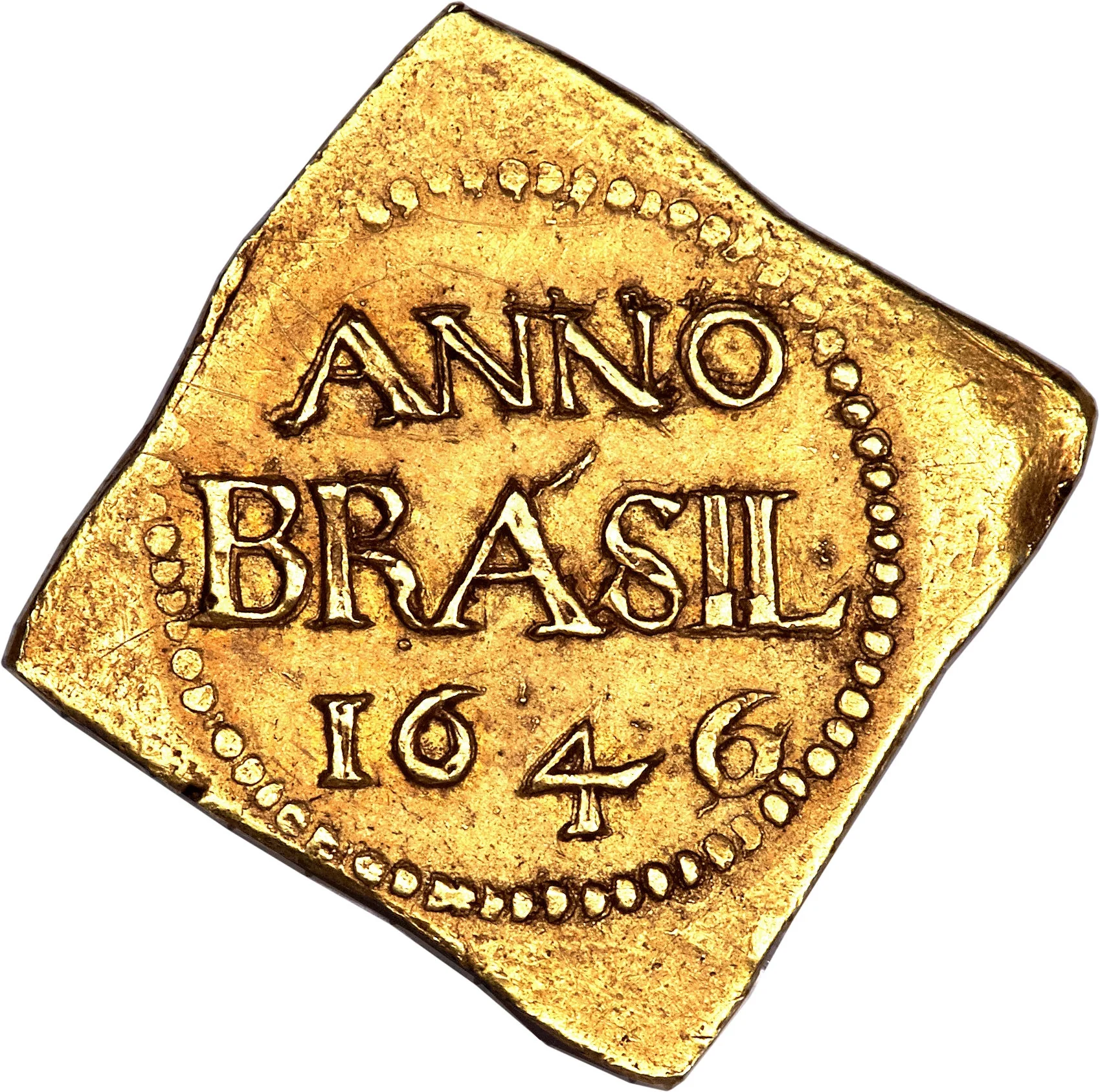
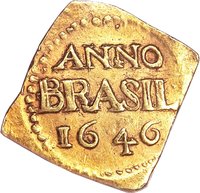
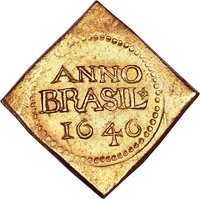
Legend and date encircled by pearls.
Inscription:
ANNO
BRASIL
1646
BRASIL
1646
Script: Latin
Engravers: Jan Hendrik Bruynsvelt, Pieter Janssen Bas
Edge
Plain
Mintings
| Year | Mint Mark | Mintage | Quality | Collection |
|---|---|---|---|---|
| 1645 | — | — | ||
| 1646 | — | — |
Historical background
In 1645, the fledgling Dutch colony of New Holland, centered on the capital of Mauritsstad (present-day Recife, Brazil), operated under a complex and often chaotic currency system. As a commercial outpost of the Dutch West India Company (WIC), its primary purpose was the profitable cultivation and export of sugar, heavily reliant on enslaved African labor. The official currency was the Dutch guilder, but in practice, a multitude of coins circulated. These included Spanish reales and Portuguese réis from neighboring territories, Dutch leeuwendaalders (lion dollars), and even German and French coins brought by soldiers and traders. This proliferation created constant confusion over exchange rates and values, hampering daily commerce.
The WIC attempted to impose order by setting official exchange rates for the various coins, but these were frequently ignored in the market. A more significant problem was a chronic shortage of official small change, which was essential for paying soldiers, sailors, and workers, and for local market transactions. To fill this void, a widely used but unstable substitute emerged: sugar. Bars of refined sugar, and later even tokens made of pressed tobacco, became de facto currencies for smaller purchases and wages, their value fluctuating wildly with the harvest yield and global commodity prices.
This unstable monetary environment reflected the colony's deeper vulnerabilities. While the WIC focused on extracting wealth, it failed to establish a stable financial infrastructure. The reliance on commodity money and foreign coinage underscored New Holland's status as a mercantile enterprise first and a settled colony second. This economic fragility would contribute to the growing administrative and social tensions that, within a decade, would culminate in the colony's collapse following a successful Portuguese reconquest in 1654.
The WIC attempted to impose order by setting official exchange rates for the various coins, but these were frequently ignored in the market. A more significant problem was a chronic shortage of official small change, which was essential for paying soldiers, sailors, and workers, and for local market transactions. To fill this void, a widely used but unstable substitute emerged: sugar. Bars of refined sugar, and later even tokens made of pressed tobacco, became de facto currencies for smaller purchases and wages, their value fluctuating wildly with the harvest yield and global commodity prices.
This unstable monetary environment reflected the colony's deeper vulnerabilities. While the WIC focused on extracting wealth, it failed to establish a stable financial infrastructure. The reliance on commodity money and foreign coinage underscored New Holland's status as a mercantile enterprise first and a settled colony second. This economic fragility would contribute to the growing administrative and social tensions that, within a decade, would culminate in the colony's collapse following a successful Portuguese reconquest in 1654.
✨ Legendary