

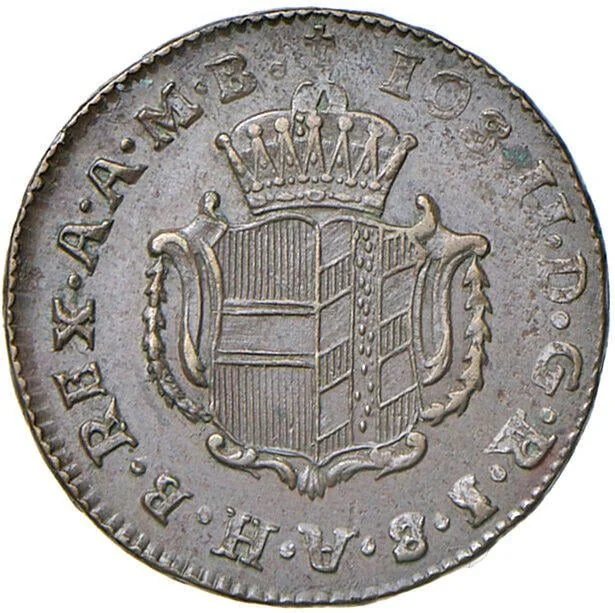
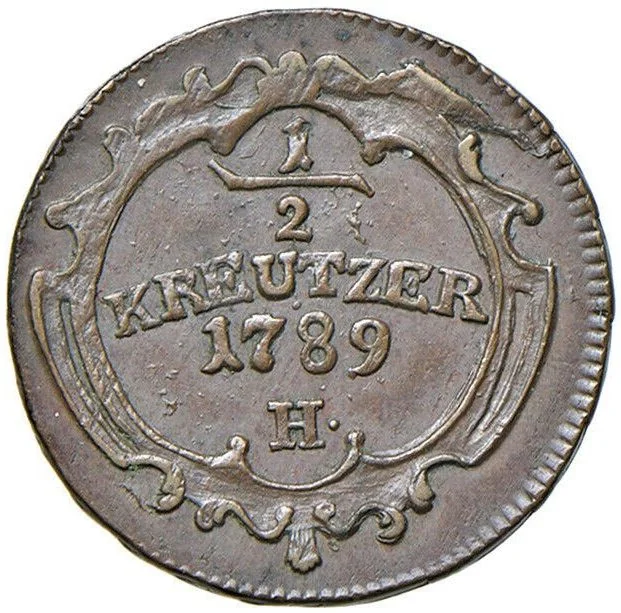
½ kreuzer – Further Austria
Add to wishlist
Austria
Mints
| Name | Mark |
|---|---|
| Günzburg | H |
Historical background
In 1784, the currency situation in Further Austria (Vorderösterreich) was characterized by complexity and imperial integration, typical of the Habsburg hereditary lands. As a disparate collection of territories under the direct rule of the Habsburg monarchy, its monetary system was not autonomous but was governed by the imperial reforms emanating from Vienna. The primary currency in circulation was the Conventionsthaler, established by the Imperial Coinage Convention of 1753, which had standardized the silver content of large coins across the Austrian lands, Bavaria, and other southern German states. This provided a stable, high-value unit for state finance and trade.
However, daily economic life for most citizens in the Swabian and Alemannic regions of Further Austria was conducted using a confusing array of smaller, often debased, subsidiary coins. Kreuzers and hellers, minted in various local and regional standards, were the common coins for wages and market purchases. The persistent challenge was the fluctuating exchange rates between these small coins and the standard Conventionsthaler, alongside the circulation of coins from neighboring Swiss cantons and German states, which complicated commerce and often led to loss for the unwary.
This situation was part of a broader, centralized effort under Emperor Joseph II to modernize and unify the Habsburg economy. While a full monetary union was still decades away, the imperial administration in Vienna sought to enforce consistent minting standards and suppress counterfeit or excessively debased coinage. Thus, in 1784, the currency landscape was one of top-down imperial standardization struggling against the entrenched reality of local monetary diversity, a tension that would persist until Further Austria was dissolved and redistributed following the Napoleonic Wars.
However, daily economic life for most citizens in the Swabian and Alemannic regions of Further Austria was conducted using a confusing array of smaller, often debased, subsidiary coins. Kreuzers and hellers, minted in various local and regional standards, were the common coins for wages and market purchases. The persistent challenge was the fluctuating exchange rates between these small coins and the standard Conventionsthaler, alongside the circulation of coins from neighboring Swiss cantons and German states, which complicated commerce and often led to loss for the unwary.
This situation was part of a broader, centralized effort under Emperor Joseph II to modernize and unify the Habsburg economy. While a full monetary union was still decades away, the imperial administration in Vienna sought to enforce consistent minting standards and suppress counterfeit or excessively debased coinage. Thus, in 1784, the currency landscape was one of top-down imperial standardization struggling against the entrenched reality of local monetary diversity, a tension that would persist until Further Austria was dissolved and redistributed following the Napoleonic Wars.
✨ Legendary