

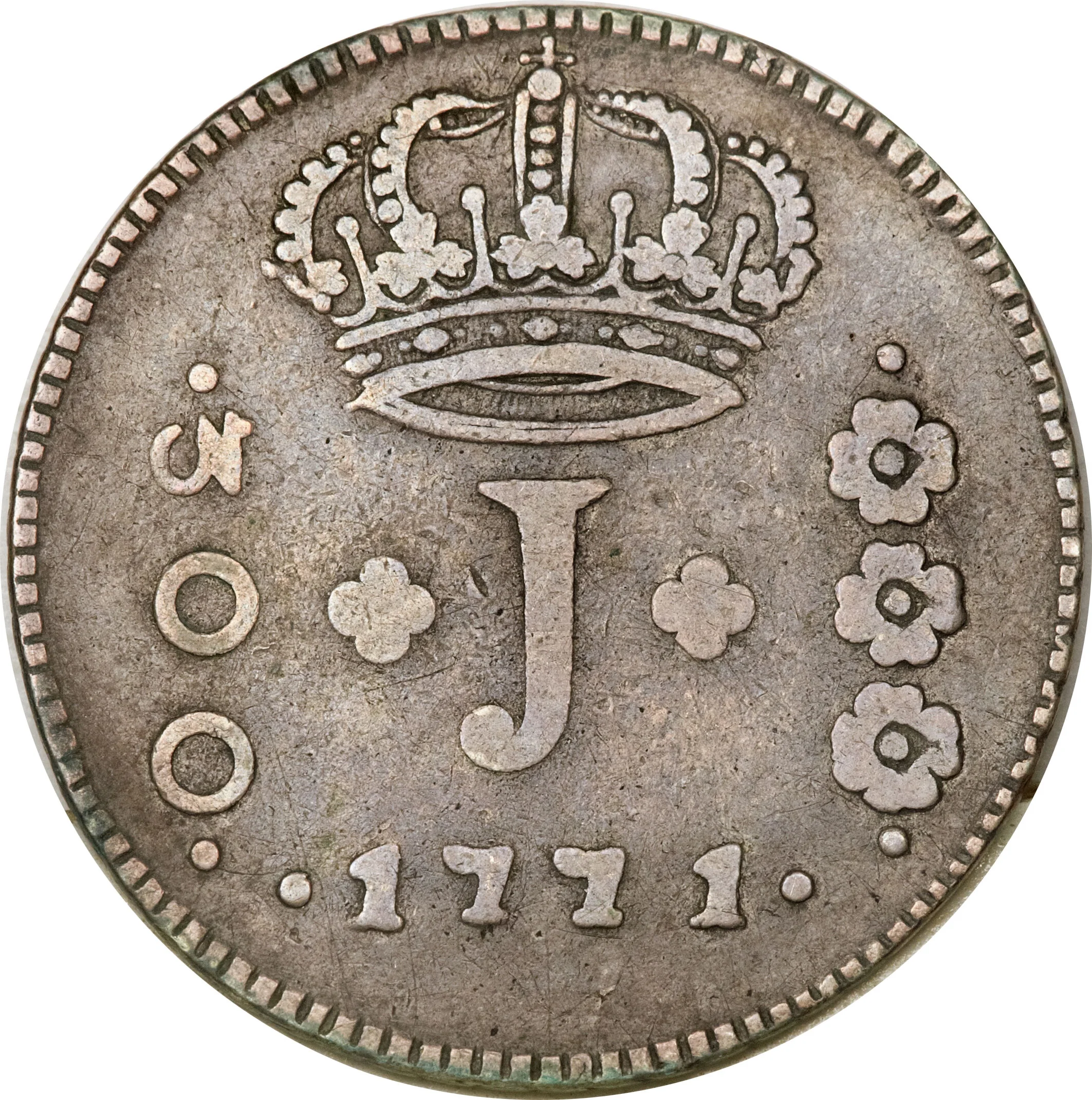

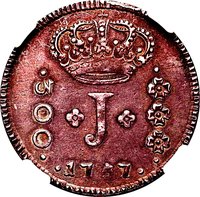
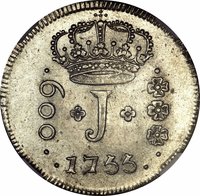
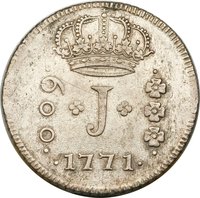
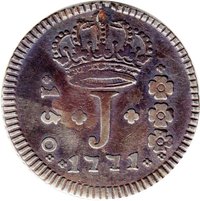
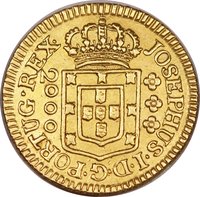
Obverse
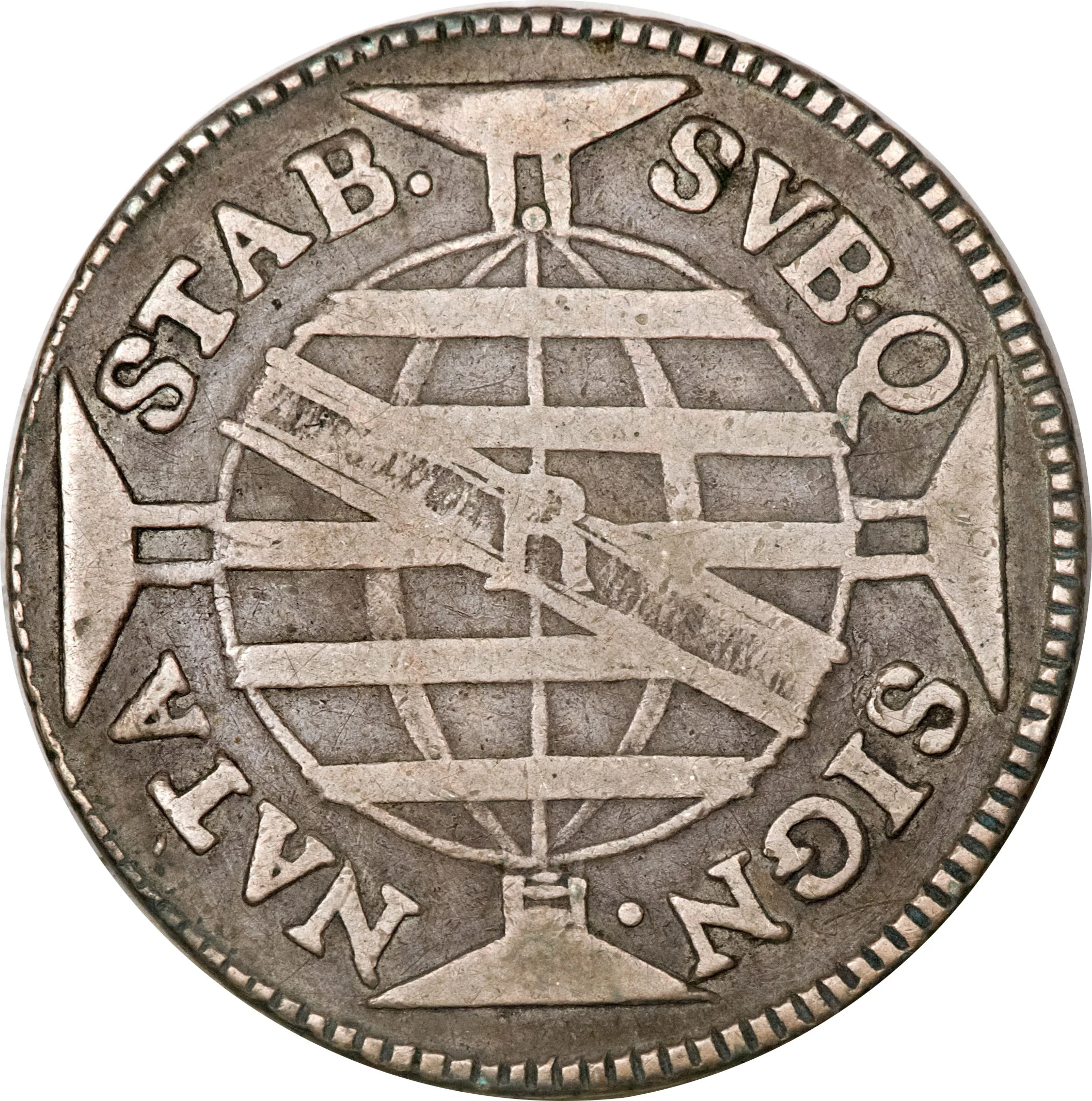
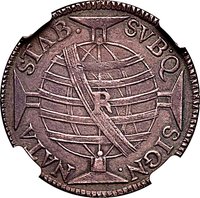
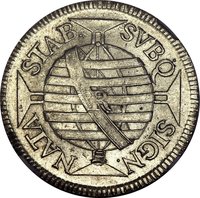
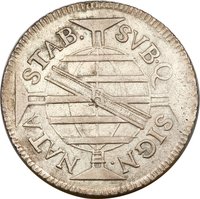
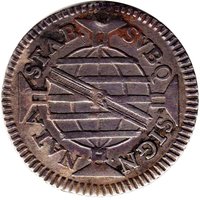
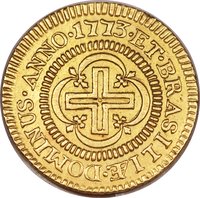
Reverse
Description:
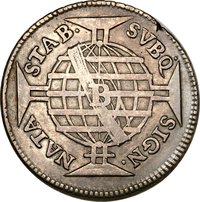
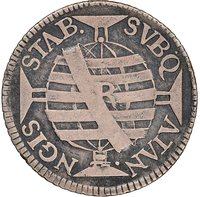
An armillary sphere before the Order of Christ cross, with the R mintmark.
Inscription:
SVBQ. SIGN. NATA. STAB.
Script: Latin
Edge
Reeded.
Mints
| Name | Mark |
|---|---|
| Casa da Moeda do Brasil | R |
Mintings
| Year | Mint Mark | Mintage | Quality | Collection |
|---|---|---|---|---|
| 1771 | R | 25,964 |
Historical background
In 1771, Brazil's currency situation was characterized by profound instability and scarcity, a direct legacy of its colonial status under Portugal. The primary circulating medium was the Portuguese real (plural: réis), but the colony suffered from a chronic shortage of official coinage. This was exacerbated by Portugal's mercantilist policies, which drained gold and silver from the mines of Minas Gerais to Lisbon, leaving Brazil with insufficient specie for its domestic economy. Much of daily commerce relied on a cumbersome system of commodity money—such as sugar, tobacco, and cotton—and even playing cards stamped by the treasury, which served as provisional paper currency.
The period was one of transition and attempted reform. The previous decades had seen a massive influx of gold, but by 1771, gold production was in decline, weakening the metallic base of the economy. Furthermore, the monetary system was chaotic, with various foreign coins (like Spanish pieces of eight) circulating alongside Portuguese coins of varying weights and purities. To address this, the Portuguese Crown, under the Marquis of Pombal, was in the process of implementing centralizing reforms. A key development was the establishment of the Casa da Moeda do Brasil (Brazilian Mint) in Rio de Janeiro in 1694, but its operations and the standardization of coinage remained inconsistent and struggled to meet the demands of a vast and growing territory.
Consequently, the economy in 1771 functioned on a fragile and complex monetary patchwork. The scarcity of reliable coinage hindered trade, encouraged barter, and facilitated widespread fraud and clipping of coins. This unstable environment created significant price volatility and acted as a drag on economic development. The currency crisis of the era underscored Brazil's dependent colonial economy and highlighted the growing administrative challenges Portugal faced in managing its largest and most valuable colony, setting the stage for future tensions and eventual moves toward financial independence in the following century.
The period was one of transition and attempted reform. The previous decades had seen a massive influx of gold, but by 1771, gold production was in decline, weakening the metallic base of the economy. Furthermore, the monetary system was chaotic, with various foreign coins (like Spanish pieces of eight) circulating alongside Portuguese coins of varying weights and purities. To address this, the Portuguese Crown, under the Marquis of Pombal, was in the process of implementing centralizing reforms. A key development was the establishment of the Casa da Moeda do Brasil (Brazilian Mint) in Rio de Janeiro in 1694, but its operations and the standardization of coinage remained inconsistent and struggled to meet the demands of a vast and growing territory.
Consequently, the economy in 1771 functioned on a fragile and complex monetary patchwork. The scarcity of reliable coinage hindered trade, encouraged barter, and facilitated widespread fraud and clipping of coins. This unstable environment created significant price volatility and acted as a drag on economic development. The currency crisis of the era underscored Brazil's dependent colonial economy and highlighted the growing administrative challenges Portugal faced in managing its largest and most valuable colony, setting the stage for future tensions and eventual moves toward financial independence in the following century.
Series: Series of J
💎 Extremely Rare