

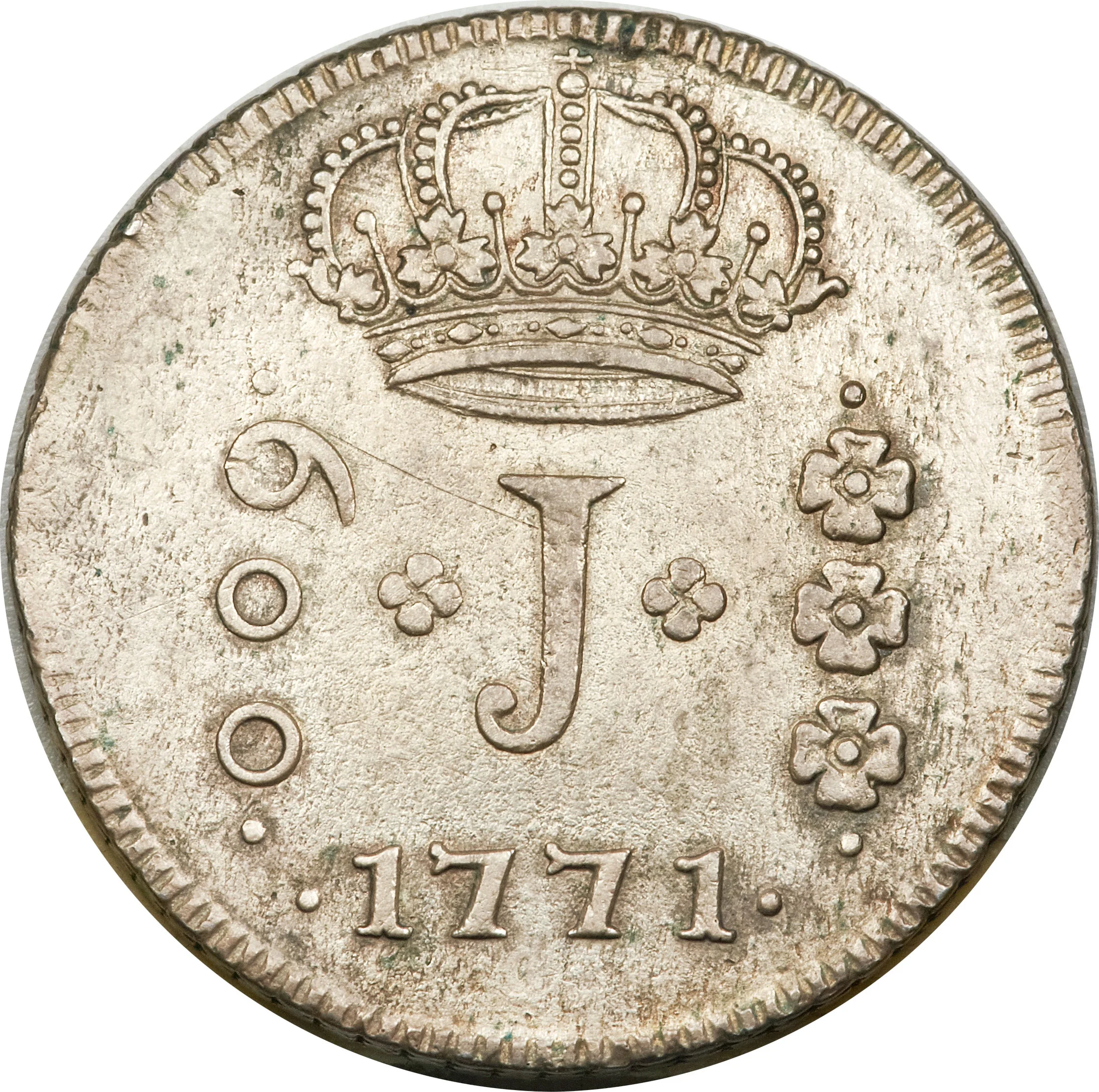
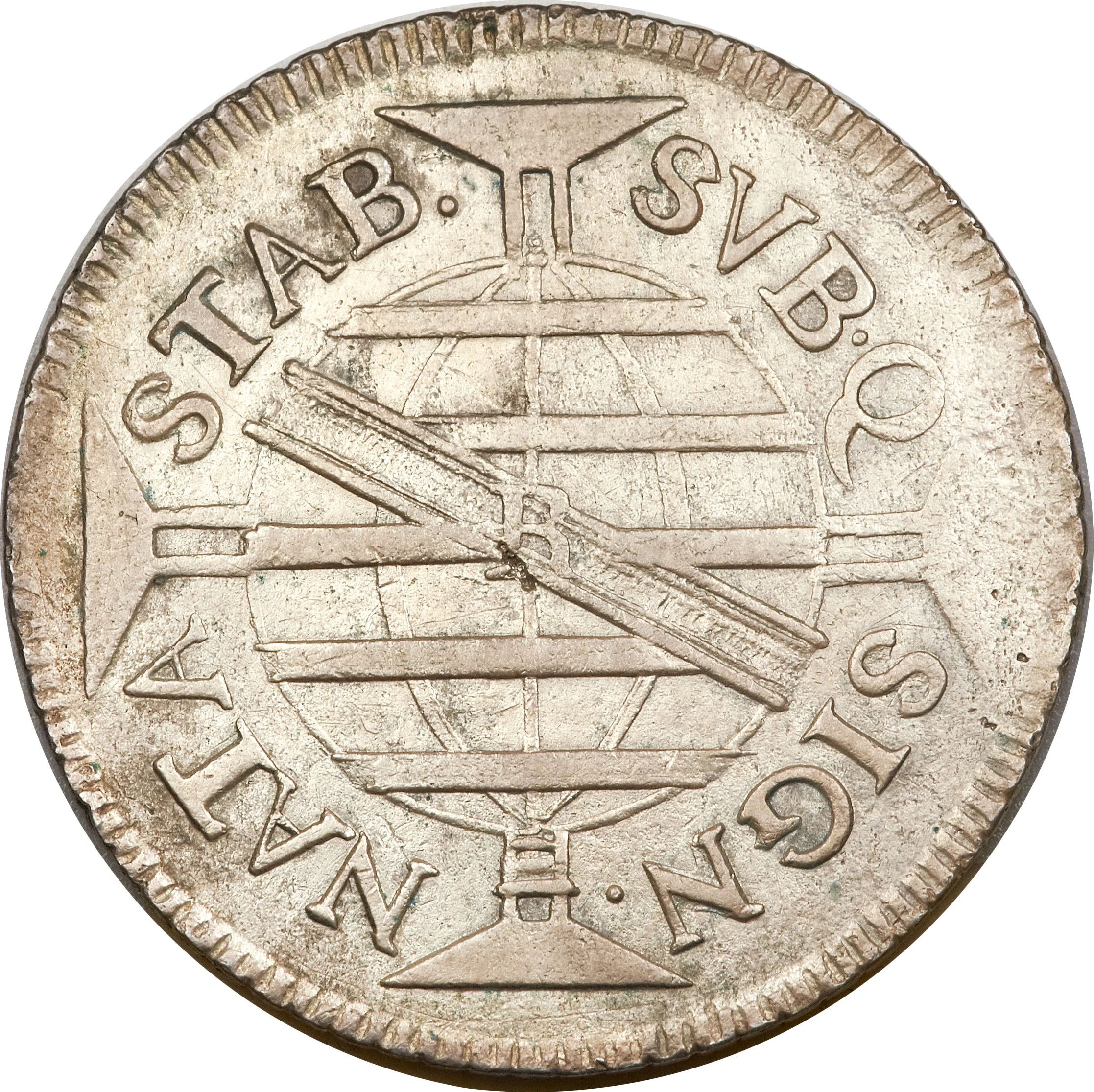

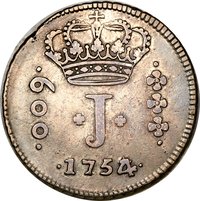
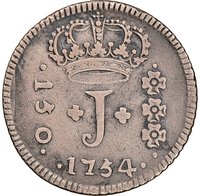
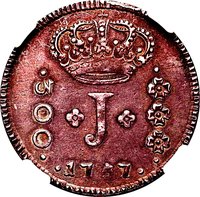
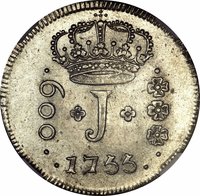
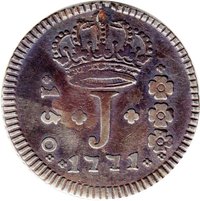
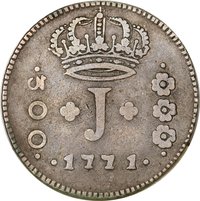
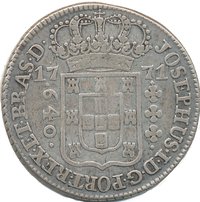
Obverse
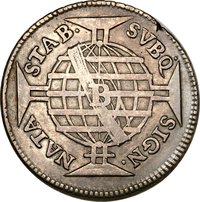
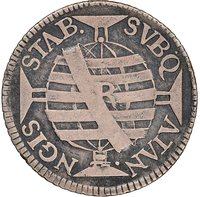
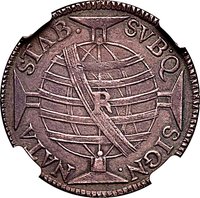
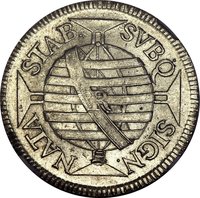
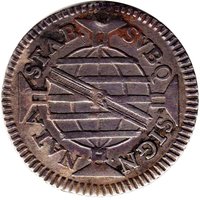
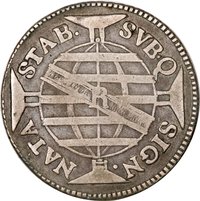
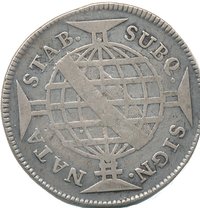
Reverse
Description:
An armillary sphere before the Order of Christ cross, with the R mintmark.
Inscription:
SVBQ. SIGN. NATA. STAB.
Script: Latin
Edge
Reeded.
Mints
| Name | Mark |
|---|---|
| Casa da Moeda do Brasil | R |
Historical background
In 1770, Brazil's currency situation was characterized by complexity and scarcity, operating under the monetary system of the Portuguese Empire. The primary unit was the réis (plural: réis), a currency of account that had been in use for centuries. However, the colony suffered from a chronic shortage of physical coinage, particularly gold and silver. While Brazil was a prodigious source of gold from its Minas Gerais region, much of this wealth was immediately shipped to Portugal as the "royal fifth" (a 20% tax) or used to pay for imported manufactured goods, leaving the local economy with insufficient circulating medium.
To address this scarcity, a variety of substitute currencies circulated alongside scarce Portuguese coins. These included gold dust, gold bars, and even sugar, which served as a commodity-based medium of exchange in certain regions. Furthermore, due to the shortage of official minted currency, colonial authorities and even private merchants often issued promissory notes and crude local tokens to facilitate trade. This patchwork system was inefficient and prone to fraud, complicating both daily commerce and larger financial transactions within the vast territory.
The monetary landscape was also directly shaped by Portuguese mercantilist policy. The Crown maintained strict control over minting, with official coins being produced at the Casa da Moeda do Brasil (Brazilian Mint), which had relocated from Bahia to Rio de Janeiro in 1702. The most common circulating coins were copper réis of low denomination for everyday use, but their value and authenticity were inconsistent. This unstable and fragmented currency environment reflected Brazil's colonial status—its economy was designed to extract wealth for the metropole rather than to foster a robust, integrated internal market, leading to persistent monetary challenges that would endure beyond the colonial period.
To address this scarcity, a variety of substitute currencies circulated alongside scarce Portuguese coins. These included gold dust, gold bars, and even sugar, which served as a commodity-based medium of exchange in certain regions. Furthermore, due to the shortage of official minted currency, colonial authorities and even private merchants often issued promissory notes and crude local tokens to facilitate trade. This patchwork system was inefficient and prone to fraud, complicating both daily commerce and larger financial transactions within the vast territory.
The monetary landscape was also directly shaped by Portuguese mercantilist policy. The Crown maintained strict control over minting, with official coins being produced at the Casa da Moeda do Brasil (Brazilian Mint), which had relocated from Bahia to Rio de Janeiro in 1702. The most common circulating coins were copper réis of low denomination for everyday use, but their value and authenticity were inconsistent. This unstable and fragmented currency environment reflected Brazil's colonial status—its economy was designed to extract wealth for the metropole rather than to foster a robust, integrated internal market, leading to persistent monetary challenges that would endure beyond the colonial period.
Series: Series of J
💎 Extremely Rare