

12 Sols – Duchy of Luxembourg
Luxembourg
Context
Years: 1786–1789
Country: Luxembourg 
Issuer: Duchy of Luxembourg
Ruler: Joseph II
Demonetized: Yes
Total mintage: 90,911
Material
References
KM: #Click to copy to clipboard13
Numista: #36182
Value
Bullion value: $12.17
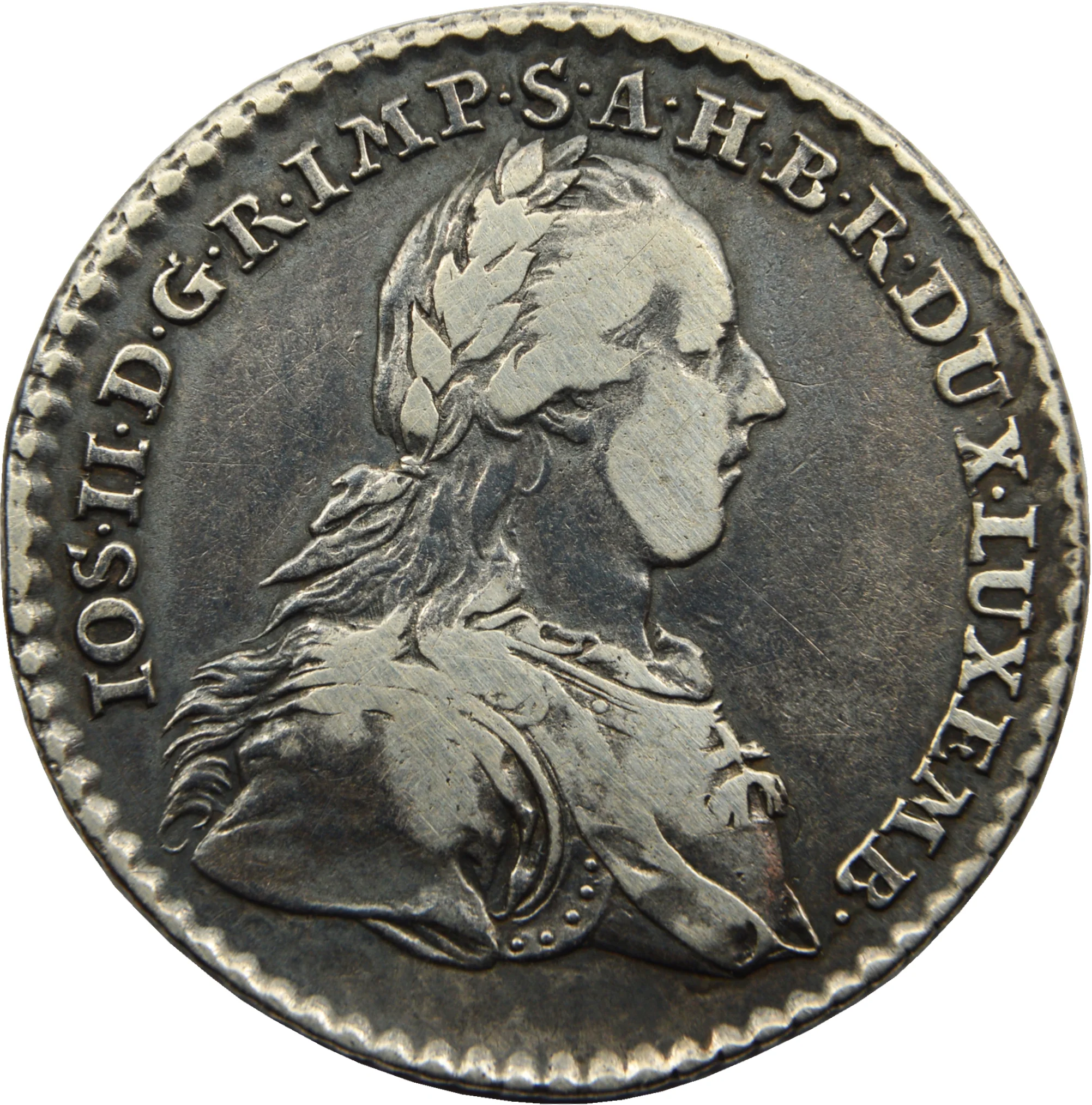
Obverse
Description:
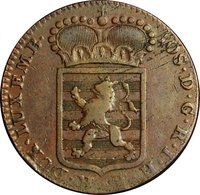
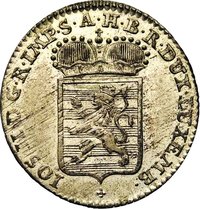
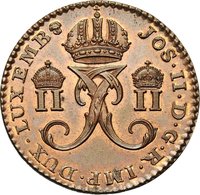
Joseph II's laureate bust right within legend and outer border.
Inscription:
IOS•II•D•G•R•IMP•S•A•H•B•R•DUX•LUXEMB•
Script: Latin
Engraver: Theodore van Berckel
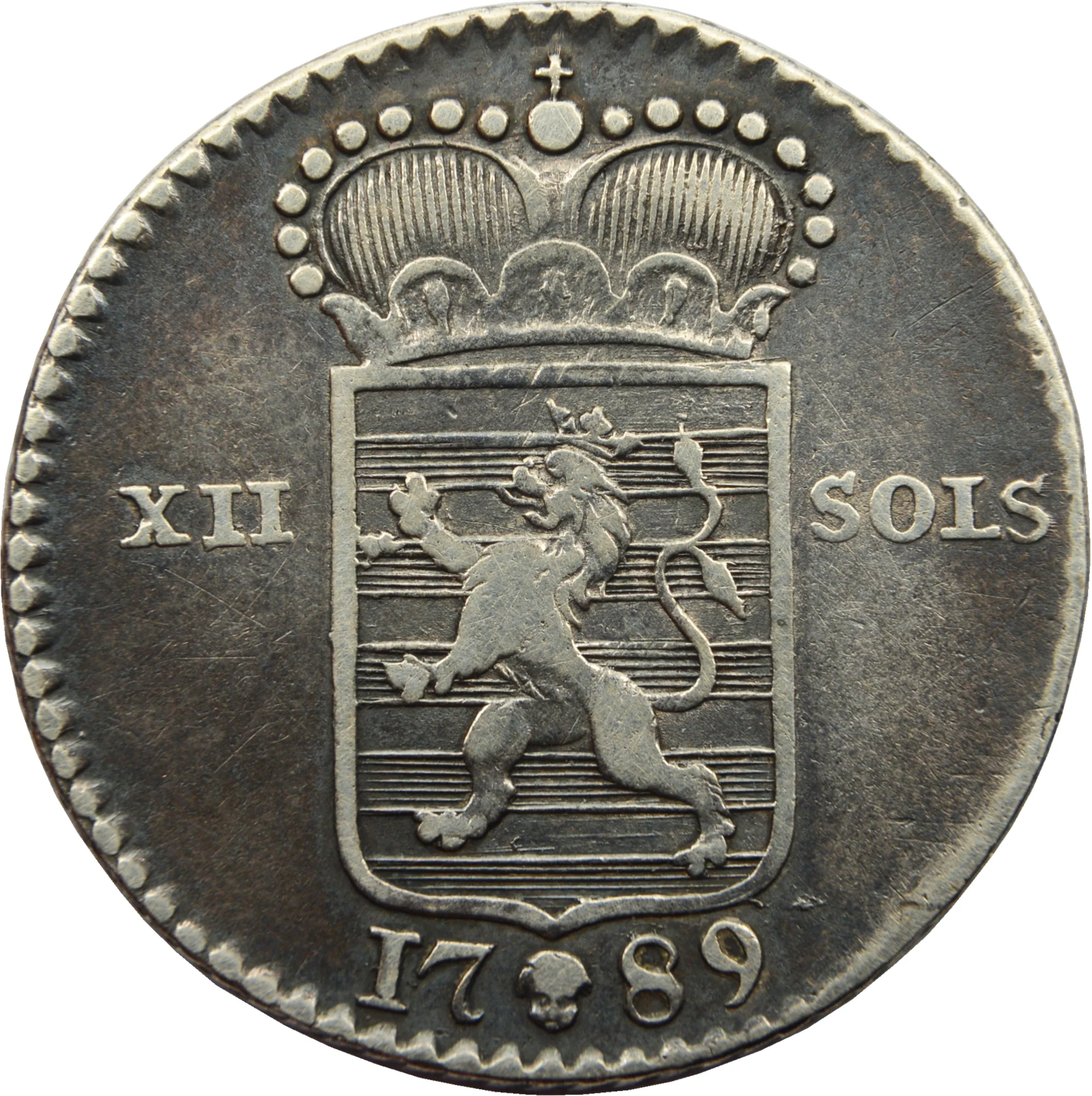
Reverse
Description:
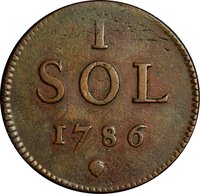
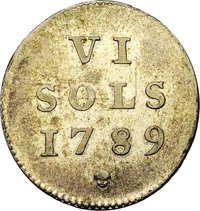
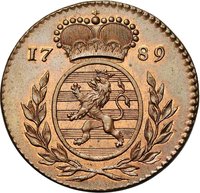
Luxembourg coat of arms with a crowned lion on a striped shield, flanking the value. Mint year and Brussels mark split below, within a pearled border.
Inscription:
XII SOLS
1789
1789
Script: Latin
Engraver: Theodore van Berckel
Edge
String
Mints
| Name | Mark |
|---|---|
| Royal Mint of Belgium | — |
Mintings
| Year | Mint Mark | Mintage | Quality | Collection |
|---|---|---|---|---|
| 1786 | — | 37,196 | ||
| 1789 | — | 53,715 |
Historical background
In 1786, the Duchy of Luxembourg, a possession of the Austrian Habsburgs under Emperor Joseph II, operated within a complex and fragmented monetary landscape typical of the Ancien Régime. The territory did not have a unified, exclusive currency. Instead, its economy relied on a concurrent circulation of multiple coinages, primarily foreign. The most dominant was the Dutch guilder (florin), reflecting strong commercial ties with the neighboring Netherlands. Alongside these, French livres, Austrian kronenthalers, and various German state coins all circulated, their values and acceptance often determined by local custom and the intrinsic value of their silver or gold content.
This multiplicity of currencies created chronic practical difficulties. Exchange rates between coins fluctuated, leading to confusion in trade and daily transactions. The system was prone to abuse, as debased or clipped coins could be passed, and merchants had to constantly evaluate the worth of each payment. Furthermore, the Austrian authorities in Vienna had limited effective control over the monetary chaos in this distant duchy. While they officially valued coins in terms of the Austrian standard, enforcing these rates and regulating the inflow of foreign coinage was a significant administrative challenge.
The situation was symptomatic of Luxembourg's broader geopolitical position—a crossroads region influenced by powerful neighbors rather than a sovereign monetary authority. There were no major reforms or minting initiatives specific to Luxembourg in 1786; it remained a passive participant in a regional monetary sphere. This instability would persist until the sweeping changes brought by the French Revolutionary and Napoleonic Wars, which ultimately integrated Luxembourg into the French franc zone, imposing a uniform currency for the first time.
This multiplicity of currencies created chronic practical difficulties. Exchange rates between coins fluctuated, leading to confusion in trade and daily transactions. The system was prone to abuse, as debased or clipped coins could be passed, and merchants had to constantly evaluate the worth of each payment. Furthermore, the Austrian authorities in Vienna had limited effective control over the monetary chaos in this distant duchy. While they officially valued coins in terms of the Austrian standard, enforcing these rates and regulating the inflow of foreign coinage was a significant administrative challenge.
The situation was symptomatic of Luxembourg's broader geopolitical position—a crossroads region influenced by powerful neighbors rather than a sovereign monetary authority. There were no major reforms or minting initiatives specific to Luxembourg in 1786; it remained a passive participant in a regional monetary sphere. This instability would persist until the sweeping changes brought by the French Revolutionary and Napoleonic Wars, which ultimately integrated Luxembourg into the French franc zone, imposing a uniform currency for the first time.
✨ Legendary