

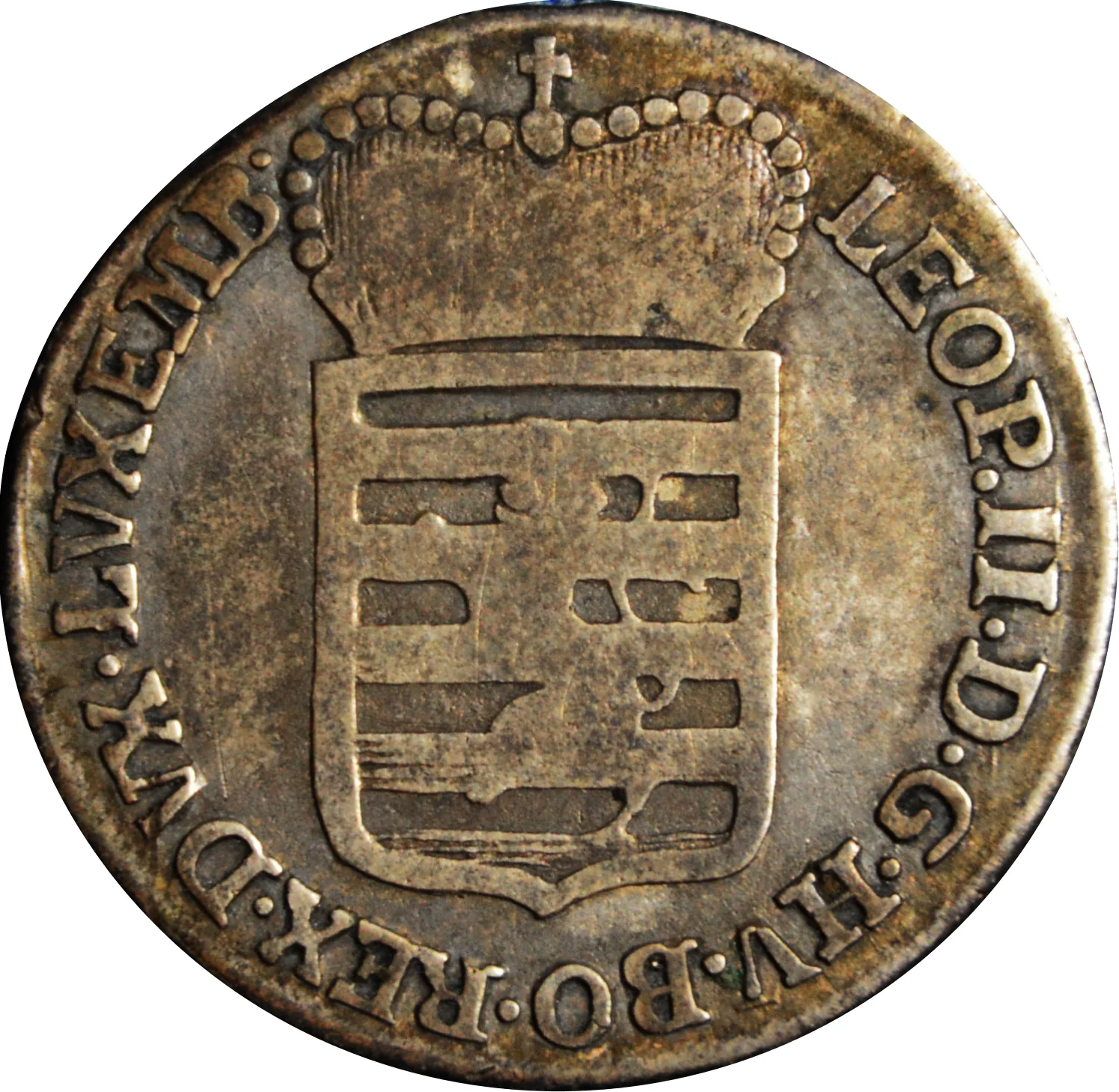
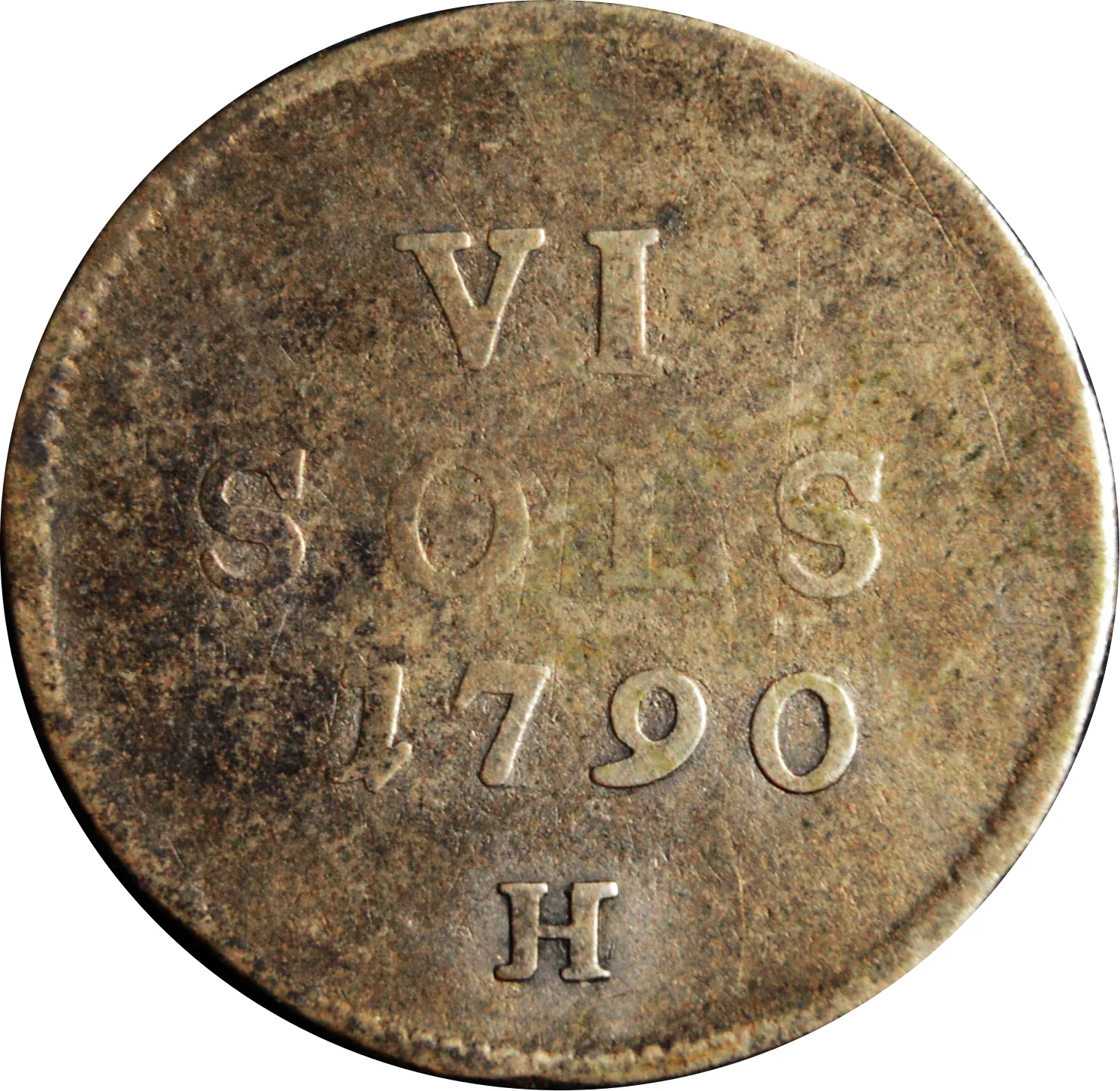
6 Sols – Duchy of Luxembourg
Luxembourg
Context
Year: 1790
Country: Luxembourg 
Issuer: Duchy of Luxembourg
Ruler: Leopold II
Demonetized: Yes
Total mintage: 727,651
Material
References
KM: #Click to copy to clipboard17
Numista: #36106
Value
Bullion value: $5.98
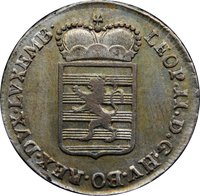
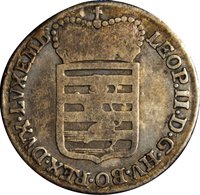
Obverse
Description:
Crowned Luxembourg shield splitting legend.
Inscription:
LEOP. II. D. G. HV. BO. REX. DVX. LVXEMB
Script: Latin
Engraver: Jean-Baptiste Wurschbauer
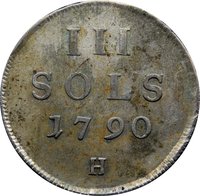
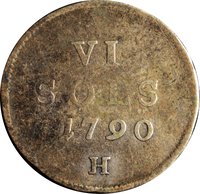
Reverse
Description:
Face, year, mint letter.
Four lines.
External pearling.
Four lines.
External pearling.
Inscription:
VI ꟾ SOLS ꟾ 1790 ꟾ H
Script: Latin
Engraver: Jean-Baptiste Wurschbauer
Edge
Plain
Mints
| Name | Mark |
|---|---|
| Günzburg | H |
Mintings
| Year | Mint Mark | Mintage | Quality | Collection |
|---|---|---|---|---|
| 1790 | H | 727,651 |
Historical background
In 1790, the Duchy of Luxembourg was entangled in a complex and unstable currency situation, a direct consequence of its political status. The territory was part of the Austrian Netherlands, under the rule of the Habsburg Monarchy, but it was also deeply integrated into the economic sphere of the neighboring French kingdom. This dual influence resulted in a monetary system where both Austrian and French coins circulated simultaneously, alongside various older regional issues. The lack of a uniform, authoritative currency led to frequent confusion, disputes over exchange rates, and widespread counterfeiting, which hampered daily commerce and economic stability.
This monetary disorder was exacerbated by the political upheaval of the Brabant Revolution (1789-1790), which saw the Austrian Netherlands, including Luxembourg, briefly rebel against Habsburg rule to form the short-lived United Belgian States. While the rebellion was ultimately crushed by the end of 1790, the period of instability disrupted governmental authority and economic policy, making any attempt at currency reform impossible. The fluctuating control over the territory meant that the already chaotic circulation of multiple coinages continued unchecked, with authorities unable to enforce standards or instill confidence in the monetary system.
Ultimately, the currency situation in Luxembourg in 1790 reflected its position as a contested borderland. It was a tangible symptom of the duchy's lack of sovereign monetary authority, caught between the receding power of Vienna and the looming influence of revolutionary France. This instability would persist until the French Revolutionary forces annexed the duchy in 1795, subsequently imposing the French franc and finally creating a unified, though foreign-imposed, currency system.
This monetary disorder was exacerbated by the political upheaval of the Brabant Revolution (1789-1790), which saw the Austrian Netherlands, including Luxembourg, briefly rebel against Habsburg rule to form the short-lived United Belgian States. While the rebellion was ultimately crushed by the end of 1790, the period of instability disrupted governmental authority and economic policy, making any attempt at currency reform impossible. The fluctuating control over the territory meant that the already chaotic circulation of multiple coinages continued unchecked, with authorities unable to enforce standards or instill confidence in the monetary system.
Ultimately, the currency situation in Luxembourg in 1790 reflected its position as a contested borderland. It was a tangible symptom of the duchy's lack of sovereign monetary authority, caught between the receding power of Vienna and the looming influence of revolutionary France. This instability would persist until the French Revolutionary forces annexed the duchy in 1795, subsequently imposing the French franc and finally creating a unified, though foreign-imposed, currency system.
💎 Very Rare