

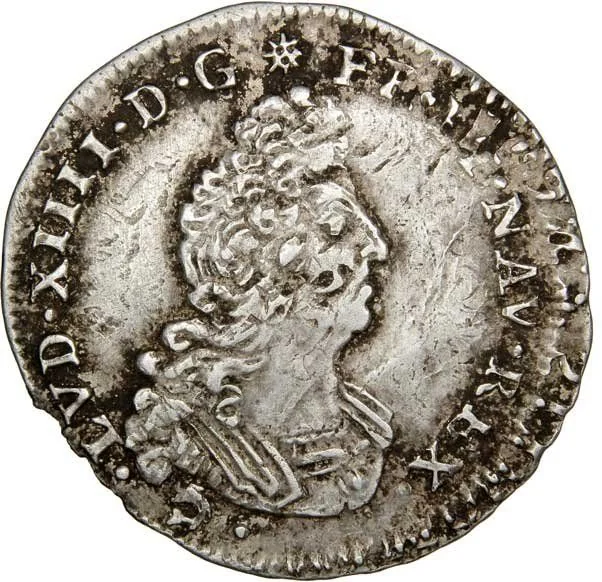
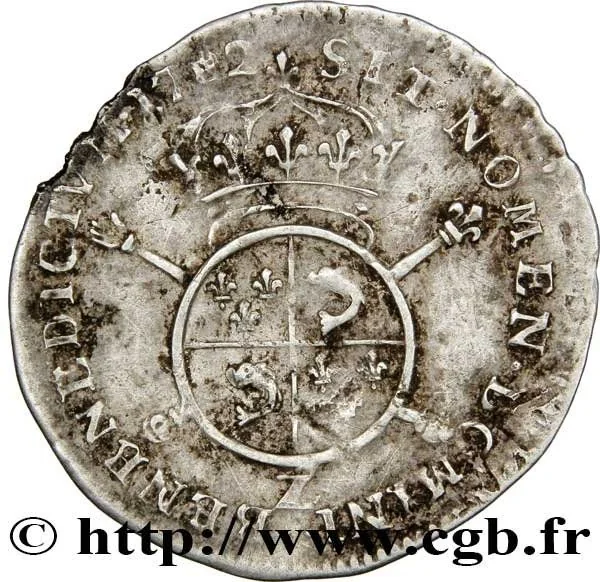
1⁄12 silver ecu – France
Add to wishlist
France
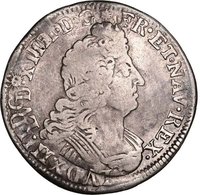
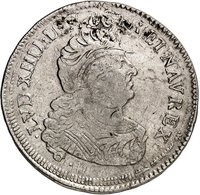
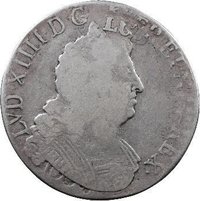
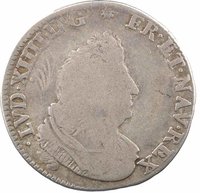
Obverse
Description:
Louis XIV in right-facing bust.
Inscription:
.LVD. XIIII. D. G. FR. ET. NAV. REX.
Script: Latin
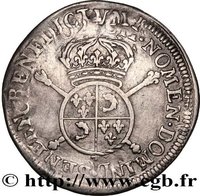
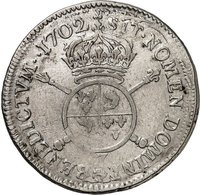
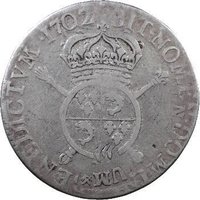
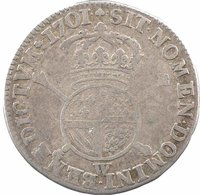
Reverse
Description:
Arms of France and Dauphiné crowned, with scepters behind.
Inscription:
SIT. NOMEN. DOMINI. BENEDICTVM . 1702
Script: Latin
Edge
Corded.
Mints
| Name | Mark |
|---|---|
| Grenoble | Z |
Mintings
| Year | Mint Mark | Mintage | Quality | Collection |
|---|---|---|---|---|
| 1702 | Z | — |
Historical background
In 1702, France was in the midst of the War of the Spanish Succession, a conflict that placed immense financial strain on the royal treasury of Louis XIV. To fund his vast armies and maintain his opulent court at Versailles, the Sun King had resorted to a series of desperate monetary manipulations. The most significant was the Great Recoinage of 1701, orchestrated by Finance Minister Michel Chamillart, which aimed to recall all gold and silver coinage, melt it down, and reissue it at a higher face value. This effectively devalued the currency, creating a short-term influx of cash for the crown but eroding public trust and destabilizing the economy.
The system was a complex and fragile bimetallic standard, with both gold louis d'or and silver écus in circulation. However, the official mint ratios between gold and silver rarely matched their market values, leading to one metal constantly being hoarded or exported. In 1702, the specific problem was a shortage of silver coinage (écus and smaller denominations). As the government issued overvalued new coins, older, full-weight coins were either melted down by speculators or sent abroad, where their precious metal content was worth more than their face value in France. This scarcity of sound coinage disrupted everyday commerce for merchants and peasants alike.
Consequently, the French economy in 1702 was characterized by monetary confusion, inflation, and widespread use of credit instruments and promissory notes to facilitate trade. The government's actions, while fiscally expedient, were economically destructive, undermining confidence in the currency and placing a hidden tax on the populace through rising prices. This financial instability was a critical weakness for France during the war, foreshadowing the severe fiscal crises that would culminate in the later reign of Louis XV and ultimately contribute to the French Revolution.
The system was a complex and fragile bimetallic standard, with both gold louis d'or and silver écus in circulation. However, the official mint ratios between gold and silver rarely matched their market values, leading to one metal constantly being hoarded or exported. In 1702, the specific problem was a shortage of silver coinage (écus and smaller denominations). As the government issued overvalued new coins, older, full-weight coins were either melted down by speculators or sent abroad, where their precious metal content was worth more than their face value in France. This scarcity of sound coinage disrupted everyday commerce for merchants and peasants alike.
Consequently, the French economy in 1702 was characterized by monetary confusion, inflation, and widespread use of credit instruments and promissory notes to facilitate trade. The government's actions, while fiscally expedient, were economically destructive, undermining confidence in the currency and placing a hidden tax on the populace through rising prices. This financial instability was a critical weakness for France during the war, foreshadowing the severe fiscal crises that would culminate in the later reign of Louis XV and ultimately contribute to the French Revolution.
Series: 1702 France circulation coins
✨ Legendary