

1 ducaton – Spanish Netherlands
Add to wishlist
Netherlands
Context
Years: 1684–1687
Country: Netherlands
Issuer: Spanish Netherlands
Ruler: Charles II
Currency:
(1506—1713)
Demonetized: Yes
Material
Weight: 32.5 g
Silver Weight:: 30.68 g
Shape: Irregular round
Composition: 94.4% Silver
Magnetic: No
Technique: Hammered
References
KM: #
Numista: #359975
Value
Bullion value: $75.04
Obverse
Description:
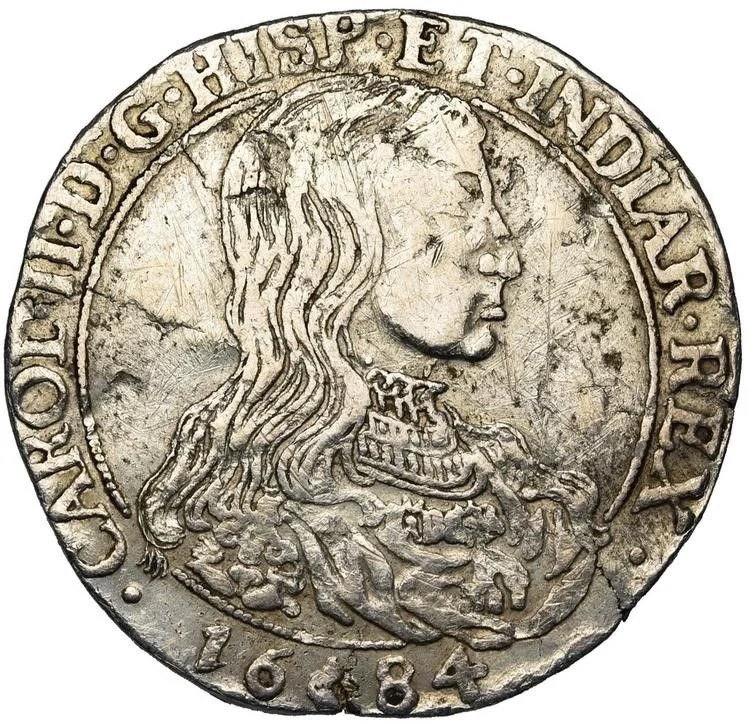
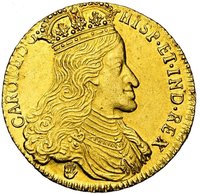
Charles II bust right, date flanking fleur-de-lis.
Inscription:
CAROL · II · D · G · HISP · ET · INDIAR · REX
· 16 ⚜ 84 ·
· 16 ⚜ 84 ·
Script: Latin
Reverse
Description:
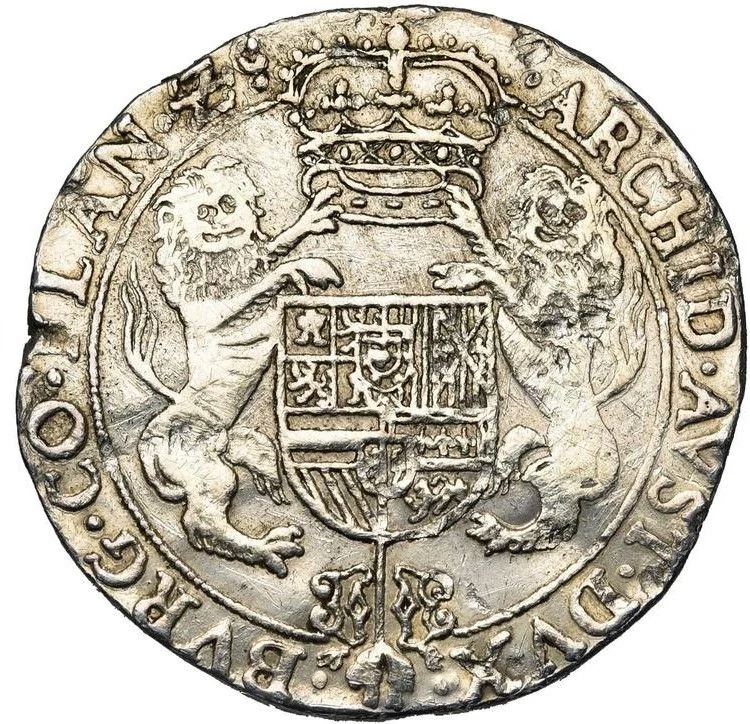
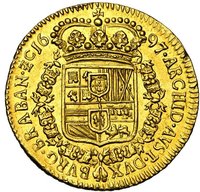
Crowned arms with the Golden Fleece collar, supported by two lions.
Inscription:
ARCHID · AVST · DVX BVRG · CO · FLAND · Zc ·
Script: Latin
Edge
Mints
| Name | Mark |
|---|---|
| Bruges | — |
Mintings
| Year | Mint Mark | Mintage | Quality | Collection |
|---|---|---|---|---|
| 1684 | — | — | ||
| 1687 | — | — |
Historical background
In 1684, the Spanish Netherlands was grappling with a severe and chronic monetary crisis, a legacy of the long-running Franco-Dutch War (1672-1678) and the ongoing War of the Reunions (1683-1684). The region's coinage was in a state of profound disorder, characterized by a chaotic circulation of both domestic and foreign coins, many of which were heavily debased. The repeated devaluations and manipulations of coin values by the authorities, intended to finance military campaigns, had shattered public confidence. This led to widespread hoarding of full-weight coins (Gresham's Law in action), while clipped, counterfeit, and inferior foreign coins dominated everyday transactions, disrupting commerce and creating price instability.
The core of the problem lay in the disparity between the official mint value of coins and their market exchange value. The government, under Governor-General Francisco Antonio de Agurto, Marquis of Gastañaga, struggled to enforce its tariff ordinances, which attempted to set fixed values for the myriad of coins in circulation. In practice, merchants and money-changers operated a parallel market, valuing coins based on their actual metal content rather than royal decree. This created a dual-system that was inefficient and prone to speculation, further eroding the economic stability of the already war-ravaged provinces.
Despite the pressing need for reform, comprehensive action in 1684 was hampered by ongoing military conflict with France. The government's immediate responses were largely reactive and piecemeal, such as issuing new proclamations to prohibit the circulation of specific debased coins or adjusting tariffs. It was not until after the Truce of Ratisbon in 1684 temporarily halted hostilities that more systematic efforts could be contemplated. These efforts would eventually culminate in the important monetary ordinance of 1685, which aimed to recall and recoin the entire circulating medium, a drastic but necessary measure to restore a uniform and trustworthy currency to the Spanish Netherlands.
The core of the problem lay in the disparity between the official mint value of coins and their market exchange value. The government, under Governor-General Francisco Antonio de Agurto, Marquis of Gastañaga, struggled to enforce its tariff ordinances, which attempted to set fixed values for the myriad of coins in circulation. In practice, merchants and money-changers operated a parallel market, valuing coins based on their actual metal content rather than royal decree. This created a dual-system that was inefficient and prone to speculation, further eroding the economic stability of the already war-ravaged provinces.
Despite the pressing need for reform, comprehensive action in 1684 was hampered by ongoing military conflict with France. The government's immediate responses were largely reactive and piecemeal, such as issuing new proclamations to prohibit the circulation of specific debased coins or adjusting tariffs. It was not until after the Truce of Ratisbon in 1684 temporarily halted hostilities that more systematic efforts could be contemplated. These efforts would eventually culminate in the important monetary ordinance of 1685, which aimed to recall and recoin the entire circulating medium, a drastic but necessary measure to restore a uniform and trustworthy currency to the Spanish Netherlands.
✨ Legendary