

1 ducaton – Spanish Netherlands
Add to wishlist
Netherlands
Context
Years: 1682–1684
Country: Netherlands
Issuer: Spanish Netherlands
Ruler: Charles II
Currency:
(1506—1713)
Demonetized: Yes
Material
Weight: 32.5 g
Silver Weight:: 30.68 g
Shape: Irregular round
Composition: 94.4% Silver
Magnetic: No
Technique: Hammered
References
KM: #
Numista: #337066
Value
Bullion value: $75.04
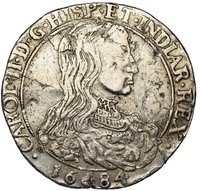
Obverse
Description:
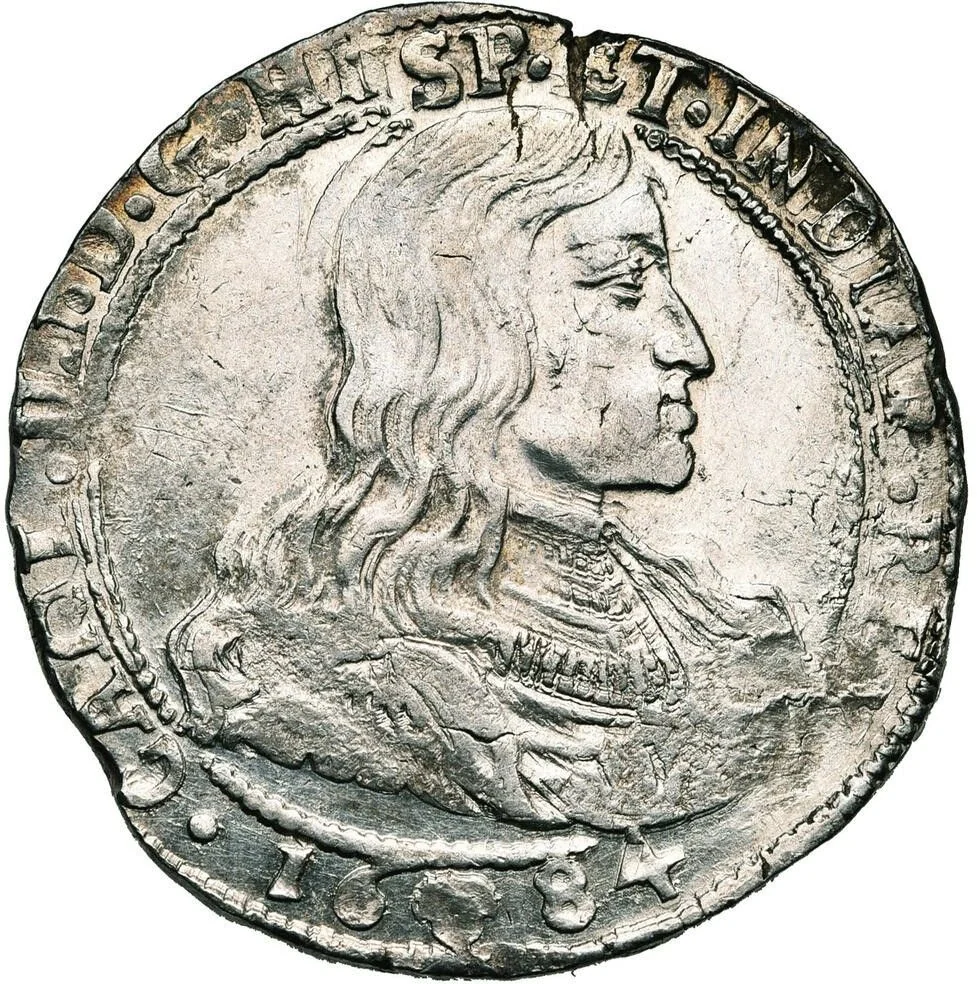
Young Charles facing right in royal robes, date split by mint mark below.
Inscription:
CAROL · II · D · G · HISP · ET· INDIAR · REX ·
1684
1684
Script: Latin
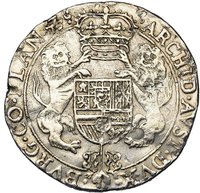
Reverse
Description:
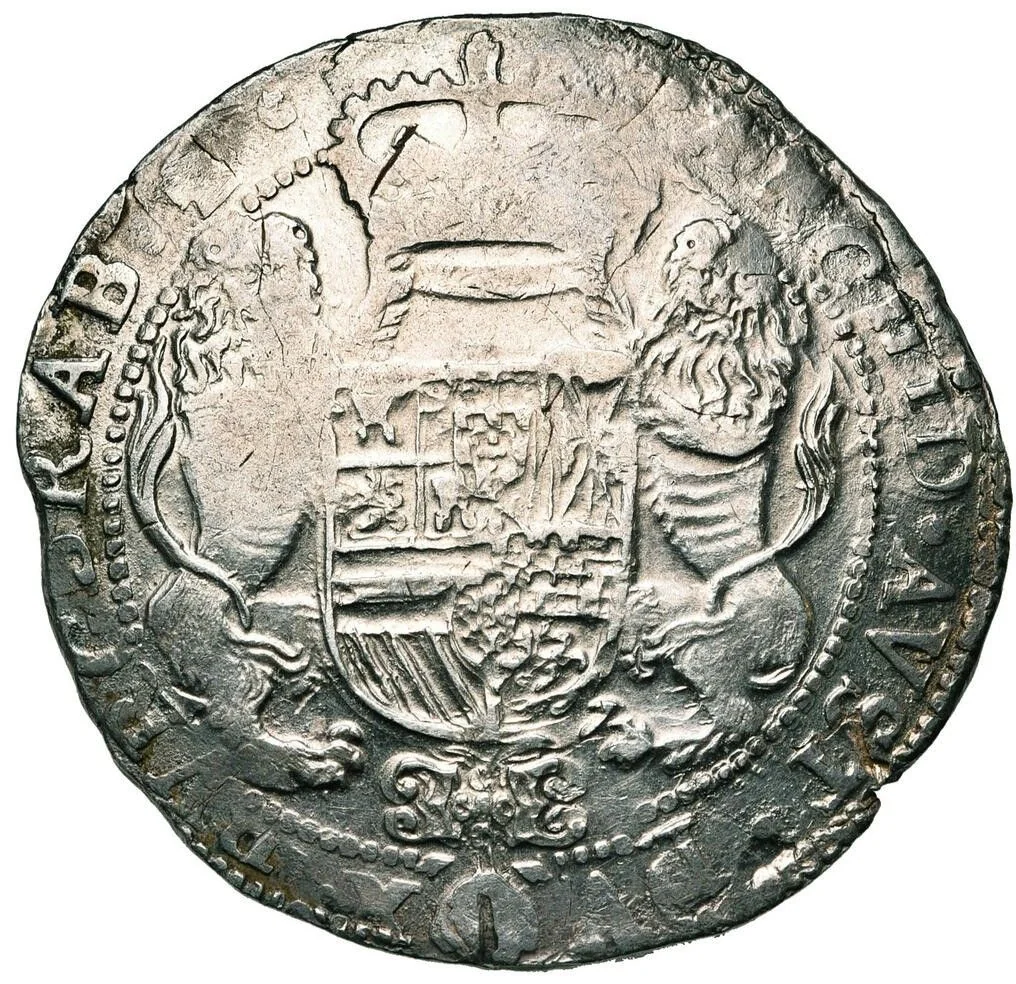
Crowned quartered arms with lion supporters, the Golden Fleece jewel below.
Inscription:
· ARCHID · AVST · DVX · BVRG · BRAB · Zc ·
Script: Latin
Edge
Mints
| Name | Mark |
|---|---|
| Antwerp | Hand |
| Royal Mint of Belgium | Head |
Mintings
| Year | Mint Mark | Mintage | Quality | Collection |
|---|---|---|---|---|
| 1682 | — | — | ||
| 1683 | — | — | ||
| 1684 | — | — |
Historical background
In 1682, the Spanish Netherlands found itself in a state of severe monetary disorder, a lingering crisis stemming from decades of war and economic strain. The region’s coinage was a chaotic mix of domestic and foreign currencies, including Spanish reales, Dutch daalders, German thalers, and French écus, all circulating with fluctuating and disputed values. This "monetary anarchy" was exacerbated by the widespread practice of clipping and debasing coins, which eroded public trust and disrupted both daily commerce and larger trade networks. The central authorities in Brussels struggled to assert control, as numerous city mints often operated with competing standards.
The core of the problem was a persistent imbalance between high-value "good" money and lower-value "bad" money. According to Gresham's Law, the undervalued, full-weight silver coins were either hoarded or exported, while the overvalued, debased coins flooded the market for everyday transactions. This drove up prices for the common people and created a shortage of sound currency for merchants and the state treasury. The situation was further complicated by the economic dominance of the neighboring Dutch Republic, whose stable and strong currency attracted silver from the Spanish Netherlands, draining the region of its monetary base.
Recognizing the crisis, the Habsburg government under Governor-General Francisco Antonio de Agurto attempted a major reform. In 1682, they introduced a new monetary ordinance aimed at standardizing the coinage. The plan sought to recall old, debased coins and replace them with new, full-weight pieces struck at updated values, thereby restoring confidence. However, this ambitious reform faced significant practical challenges, including public resistance to recalling old coinage and the immense cost of recoinage. While a necessary step, the 1682 measures ultimately proved only partially successful, as the underlying structural weaknesses and geopolitical pressures of the war-torn Spanish Netherlands continued to plague its economy.
The core of the problem was a persistent imbalance between high-value "good" money and lower-value "bad" money. According to Gresham's Law, the undervalued, full-weight silver coins were either hoarded or exported, while the overvalued, debased coins flooded the market for everyday transactions. This drove up prices for the common people and created a shortage of sound currency for merchants and the state treasury. The situation was further complicated by the economic dominance of the neighboring Dutch Republic, whose stable and strong currency attracted silver from the Spanish Netherlands, draining the region of its monetary base.
Recognizing the crisis, the Habsburg government under Governor-General Francisco Antonio de Agurto attempted a major reform. In 1682, they introduced a new monetary ordinance aimed at standardizing the coinage. The plan sought to recall old, debased coins and replace them with new, full-weight pieces struck at updated values, thereby restoring confidence. However, this ambitious reform faced significant practical challenges, including public resistance to recalling old coinage and the immense cost of recoinage. While a necessary step, the 1682 measures ultimately proved only partially successful, as the underlying structural weaknesses and geopolitical pressures of the war-torn Spanish Netherlands continued to plague its economy.
✨ Legendary