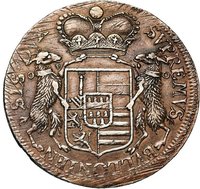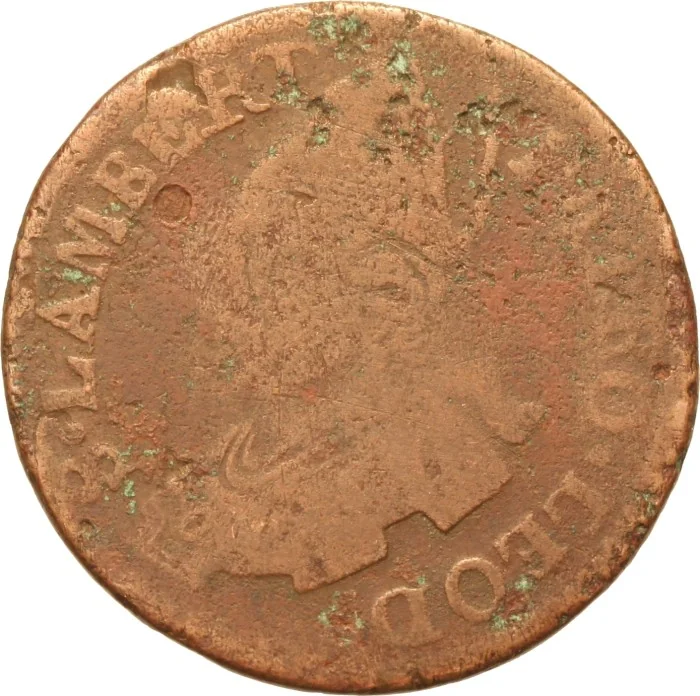
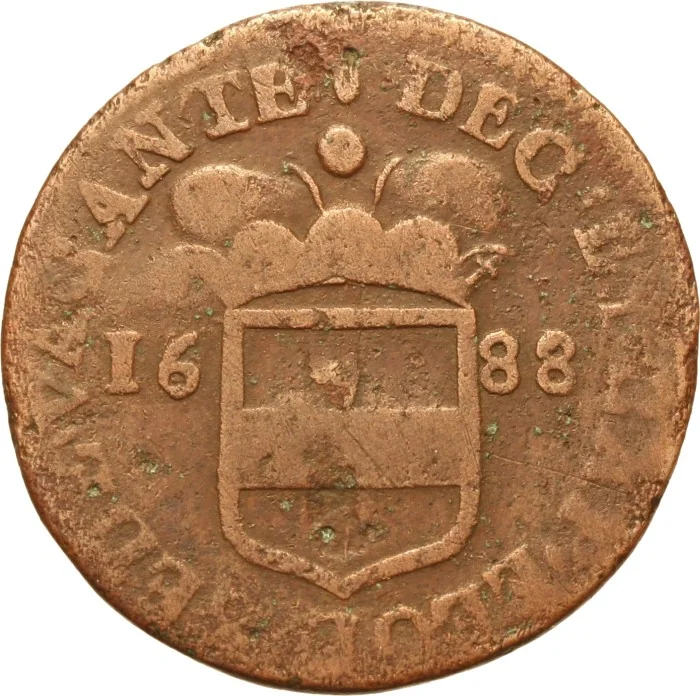
In 1688, the Prince-Bishopric of Liège, a sovereign ecclesiastical state within the Holy Roman Empire, grappled with a complex and deteriorating currency situation. The primary challenge was the widespread circulation of heavily debased coinage, particularly the
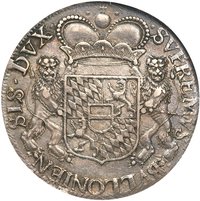
liard, a small denomination coin essential for daily transactions. Successive prince-bishops had allowed the silver content of these coins to be reduced to increase seigniorage profits, leading to an influx of even worse-quality foreign imitations. This created a classic "bad money drives out good" scenario, where full-weight coins were hoarded or exported, leaving the economy flooded with unreliable, low-intrinsic-value currency.
This monetary instability caused severe economic and social distress. The debasement triggered price inflation, eroding the purchasing power of ordinary citizens and wage earners. Trade and commerce were hampered as merchants faced uncertainty about the real value of payments, and confidence in the monetary system collapsed. The situation bred public unrest and complaints from the influential guilds and merchant classes, who demanded monetary reform to restore stability and facilitate reliable economic activity within the prince-bishopric and its key trade partners like the Dutch Republic.
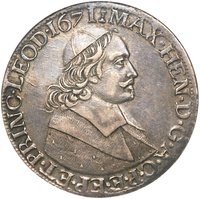
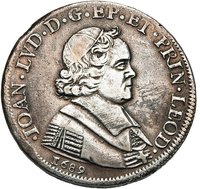
The responsibility for this crisis fell upon Prince-Bishop Maximilian Henry of Bavaria, whose reign (1650-1688) was marked by financial mismanagement and whose health was failing in his final year. The currency debasement had been a short-term fiscal expedient that created a long-term crisis. Consequently, in 1688, the territory was on the brink of a necessary but challenging monetary reform—a task that would fall to his successor, Bishop Jean-Louis d'Elderen, who would initiate a major recoinage in 1690 to restore a stable currency based on the
patagon and address the legacy of inflationary chaos.