

¼ Patagon – Spanish Netherlands
Netherlands
Context
Years: 1626–1657
Country: Netherlands 
Issuer: Spanish Netherlands
Ruler: Philip IV
Currency:
(1506—1713)
Demonetized: Yes
Material
Diameter: 32 mm
Weight: 7 g
Silver weight: 6.11 g
Shape: Irregular round
Composition: 87.3% Silver
Magnetic: No
Technique: Hammered
Alignment: Coin alignment
flip
References
KM: #Click to copy to clipboard47
Numista: #358999
Value
Bullion value: $17.76
Obverse
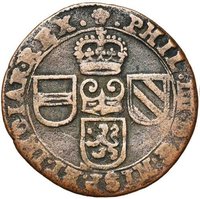
Description:
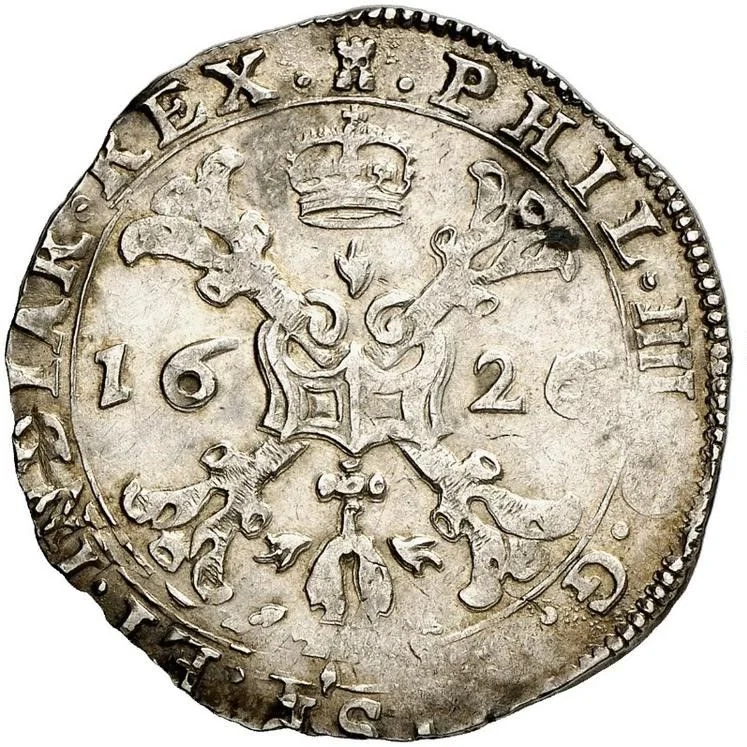
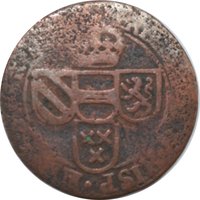
Crowned Burgundian cross with central firesteel, suspending the Golden Fleece jewel above the divided date; mint mark (tower) above.
Inscription:
PHIL · IIII · D · G · HISP · ET · INDIAR · REX ·
16 26
16 26
Script: Latin
Reverse
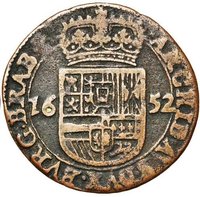
Description:
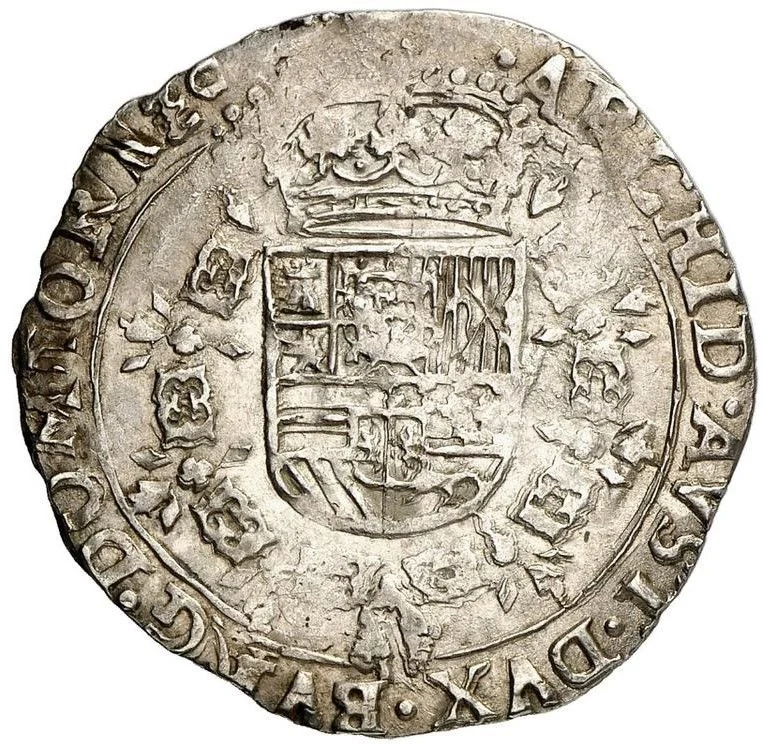
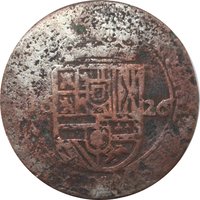
Coat of arms crowned and encircled by the Order of the Golden Fleece's collar.
Inscription:
· ARCHID · AVST · DVX · BVRG · DOM · TORN Zc ·
Script: Latin
Edge
Categories
| Symbols> Coat of Arms |
Mints
| Name | Mark |
|---|---|
| Tournai | Tower |
Mintings
| Year | Mint Mark | Mintage | Quality | Collection |
|---|---|---|---|---|
| 1626 | — | — | ||
| 1630 | — | — | ||
| 1632 | — | — | ||
| 1633 | — | — | ||
| 1634 | — | — | ||
| 1635 | — | — | ||
| 1645 | — | — | ||
| 1647 | — | — | ||
| 1648 | — | — | ||
| 1654 | — | — | ||
| 1655 | — | — | ||
| 1657 | — | — |
Historical background
In 1626, the Spanish Netherlands was grappling with a severe and protracted monetary crisis, a direct consequence of the ongoing Eighty Years' War (1568-1648). The region's economy was strained by the immense costs of maintaining the Army of Flanders, leading the Habsburg authorities to repeatedly debase the coinage. By lowering the silver content in coins like the patagon and real, they aimed to create more money from the same amount of bullion to pay troops, but this triggered a vicious cycle of inflation, loss of public trust, and economic instability.
The situation was further complicated by the circulation of a chaotic mix of currencies. Alongside the debased official coinage, high-quality foreign coins from the Dutch Republic, England, and France circulated freely, as did older, full-weight Spanish coins. This led to Gresham's Law in practice: "bad money drives out good." People hoarded the older, valuable coins for their intrinsic metal worth and used the newer, debased coins for daily transactions, exacerbating the scarcity of sound money and distorting trade. The exchange rates between these myriad coins fluctuated wildly, creating a nightmare for merchants and hindering commerce.
Authorities in Brussels attempted to legislate solutions, issuing ordinances to fix official values for different coins, but these measures were largely ineffective. The market rates consistently diverged from the forced legal rates, and the underlying problem of structural deficit financing remained. Thus, in 1626, the currency situation was characterized by a loss of monetary sovereignty, rampant confusion in daily transactions, and an economy struggling under the weight of war finance, which eroded both the medium of exchange and the prosperity of the once-thriving provinces.
The situation was further complicated by the circulation of a chaotic mix of currencies. Alongside the debased official coinage, high-quality foreign coins from the Dutch Republic, England, and France circulated freely, as did older, full-weight Spanish coins. This led to Gresham's Law in practice: "bad money drives out good." People hoarded the older, valuable coins for their intrinsic metal worth and used the newer, debased coins for daily transactions, exacerbating the scarcity of sound money and distorting trade. The exchange rates between these myriad coins fluctuated wildly, creating a nightmare for merchants and hindering commerce.
Authorities in Brussels attempted to legislate solutions, issuing ordinances to fix official values for different coins, but these measures were largely ineffective. The market rates consistently diverged from the forced legal rates, and the underlying problem of structural deficit financing remained. Thus, in 1626, the currency situation was characterized by a loss of monetary sovereignty, rampant confusion in daily transactions, and an economy struggling under the weight of war finance, which eroded both the medium of exchange and the prosperity of the once-thriving provinces.
✨ Legendary