

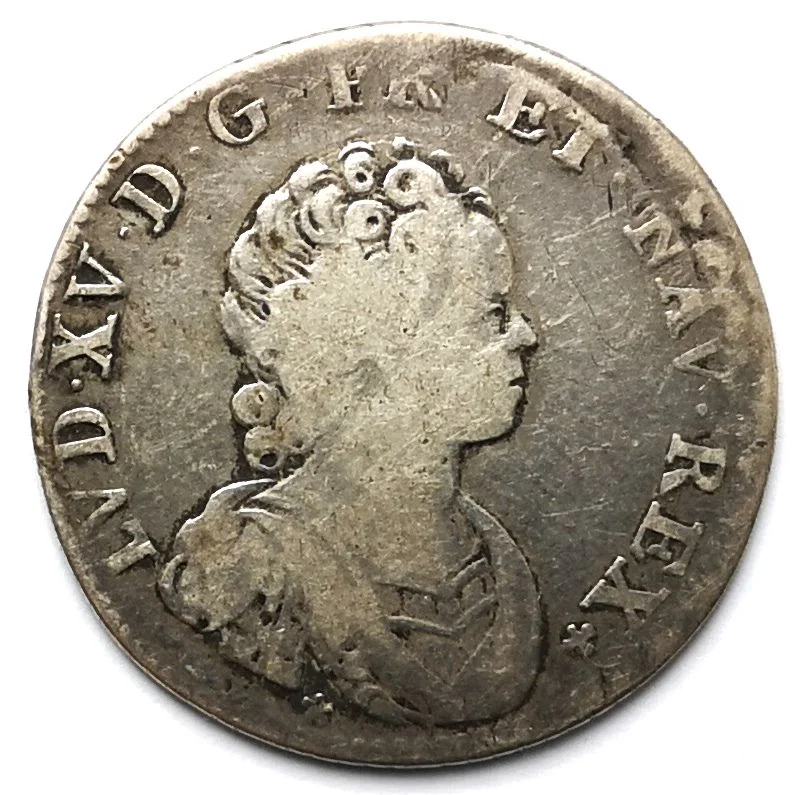
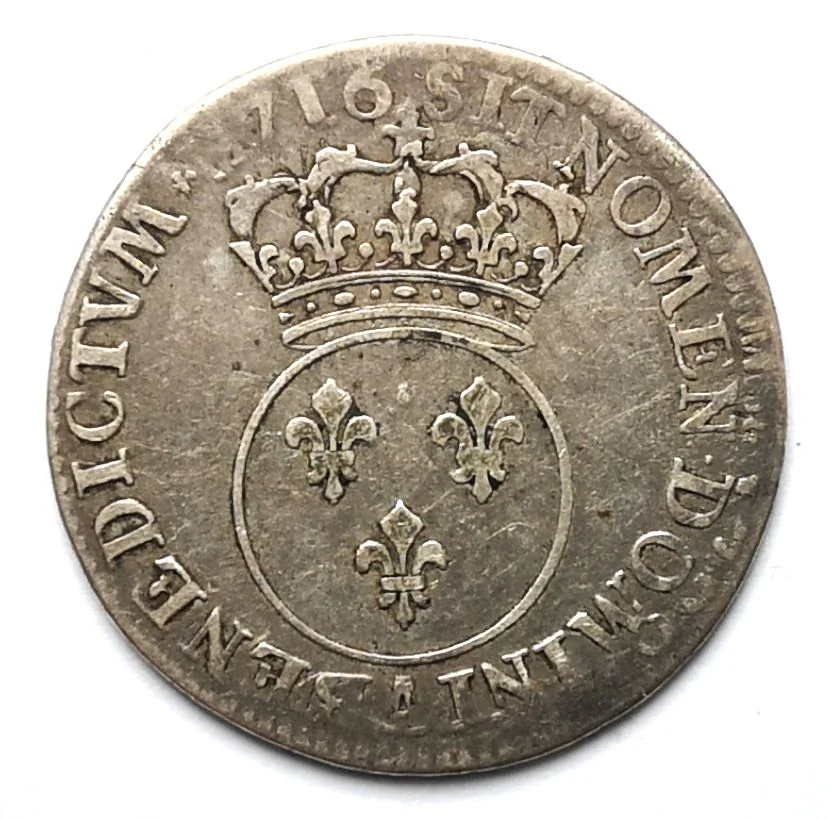
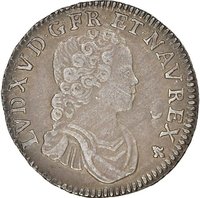
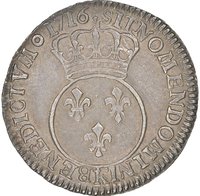
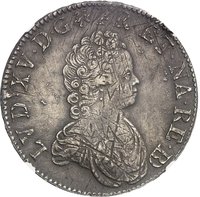
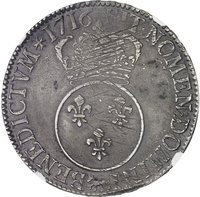
¼ silver ecu – France
Add to wishlist
France
Context
Material
Diameter: 29 mm
Weight: 7.65 g
Silver Weight:: 7.02 g
Thickness: 1.2 mm
Shape: Round
Composition: 91.7% Silver
Standard: Silver quarter ounce
Magnetic: No
Technique: Milled
Alignment: Coin alignment
flip
References
KM: #
Numista: #358718
Value
Bullion value: $17.49
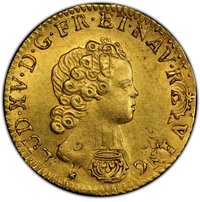
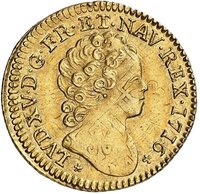
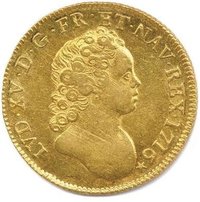
Obverse
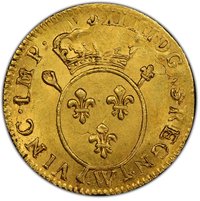
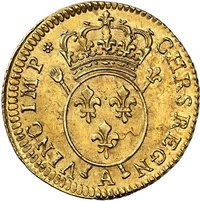
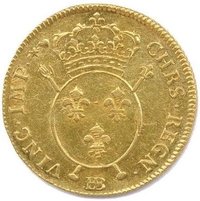
Reverse
Edge
Mints
| Name | Mark |
|---|---|
| Aix-en-Provence | & |
| Rennes | 9 |
| Monnaie de Paris | A |
| Metz | AA |
| Rouen | B |
| Caen | C |
| Lyon | D |
| Tours | E |
| Poitiers | G |
| La Rochelle | H |
| Limoges | I |
| Bordeaux | K |
| Toulouse | M |
| Montpellier | N |
| Riom | O |
| Dijon | P |
| Reims | S |
| Nantes | T |
| Troyes | V |
| Lille | W |
| Amiens | X |
| Bourges | Y |
| Grenoble | Z |
Mintings
| Year | Mint Mark | Mintage | Quality | Collection |
|---|---|---|---|---|
| 1716 | — | — | ||
| 1716 | B | — | ||
| 1716 | C | — | ||
| 1716 | D | 345,000 | ||
| 1716 | & | — | ||
| 1716 | 9 | — | ||
| 1716 | A | — | ||
| 1716 | AA | — | ||
| 1716 | E | — | ||
| 1716 | G | — | ||
| 1716 | O | — | ||
| 1716 | P | — | ||
| 1716 | S | — | ||
| 1716 | T | — | ||
| 1716 | V | — | ||
| 1716 | W | — | ||
| 1716 | X | — | ||
| 1716 | Y | — | ||
| 1716 | Z | 77,000 | ||
| 1716 | H | — | ||
| 1716 | I | — | ||
| 1716 | K | — | ||
| 1716 | M | — | ||
| 1716 | N | — | ||
| 1717 | & | — | ||
| 1717 | 9 | — | ||
| 1717 | B | — | ||
| 1717 | C | — | ||
| 1717 | E | 80,000 | ||
| 1717 | G | — | ||
| 1717 | I | — | ||
| 1717 | K | 144,000 | ||
| 1717 | M | — | ||
| 1717 | P | — | ||
| 1717 | W | — | ||
| 1717 | X | — | ||
| 1718 | N | — | ||
| 1718 | T | — | ||
| 1718 | W | — |
Historical background
In 1716, France stood on the precipice of a profound monetary crisis, the direct legacy of the financially ruinous wars of Louis XIV. The Sun King's death in 1715 left the state effectively bankrupt, burdened by a colossal debt of approximately 3 billion livres and a severe shortage of specie (gold and silver coin). The regency government, led by Philippe d'Orléans for the young Louis XV, faced a collapsing credit system, with government bills (billets d'état) trading at a steep discount and widespread economic stagnation. The traditional solution of recoinage and devaluation had been exhausted, creating an urgent need for a radical solution to restore public credit and stimulate commerce.
It was within this desperate context that the Scottish financier John Law gained the Regent's ear. Law, a proponent of monetarist theory, argued that the nation's wealth lay not in the accumulation of precious metals but in the expansion of credit and the use of paper money, backed by the potential wealth of land and trade. In May 1716, he received a royal charter to establish the Banque Générale Privée, a private bank authorized to issue interest-bearing notes payable on demand in specie. These notes, initially convertible into coin of a fixed weight, were designed to be more reliable and convenient than the discredited government paper.
The bank's early success was notable; its notes, backed by Law's own capital and the Regent's patronage, quickly traded at a premium over metal coin, restoring a measure of confidence. This 1716 experiment was the cautious first step in what would become Law's "System"—a vast, interconnected scheme involving a trading monopoly (the Mississippi Company) and the eventual conversion of the bank into a state institution. Thus, the currency situation of 1716 was a moment of transition, where traditional metallic currency was being deliberately challenged by a bold, untested experiment in paper credit, setting the stage for the spectacular boom and catastrophic bust that would define the coming years.
It was within this desperate context that the Scottish financier John Law gained the Regent's ear. Law, a proponent of monetarist theory, argued that the nation's wealth lay not in the accumulation of precious metals but in the expansion of credit and the use of paper money, backed by the potential wealth of land and trade. In May 1716, he received a royal charter to establish the Banque Générale Privée, a private bank authorized to issue interest-bearing notes payable on demand in specie. These notes, initially convertible into coin of a fixed weight, were designed to be more reliable and convenient than the discredited government paper.
The bank's early success was notable; its notes, backed by Law's own capital and the Regent's patronage, quickly traded at a premium over metal coin, restoring a measure of confidence. This 1716 experiment was the cautious first step in what would become Law's "System"—a vast, interconnected scheme involving a trading monopoly (the Mississippi Company) and the eventual conversion of the bank into a state institution. Thus, the currency situation of 1716 was a moment of transition, where traditional metallic currency was being deliberately challenged by a bold, untested experiment in paper credit, setting the stage for the spectacular boom and catastrophic bust that would define the coming years.
Series: 1716 France circulation coins

✨ Legendary