

Iran
Context
Material
Diameter: 28 mm
Weight: 5.38 g
Silver weight: 5.38 g
Shape: Irregular round
Composition: Silver
Magnetic: No
References
KM: #Click to copy to clipboard303.4
Numista: #358564
Value
Bullion value: $15.54
Obverse
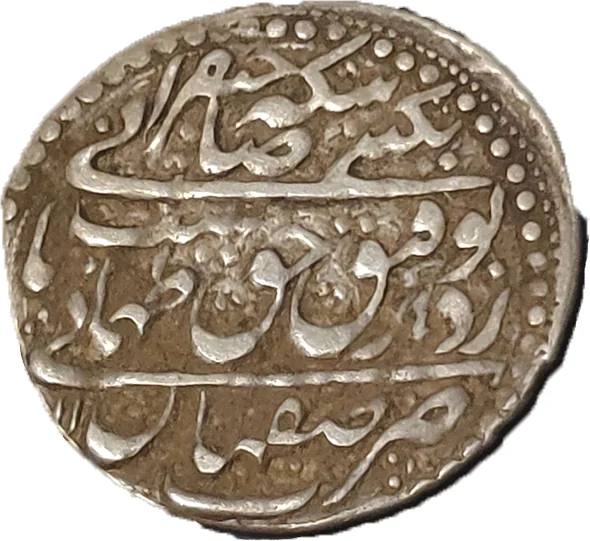
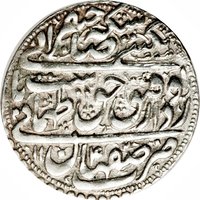
Description:
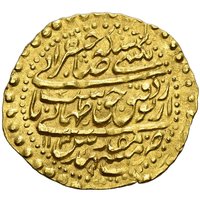
Mint and date at lower left.
Script: Persian (nastaliq)
Reverse
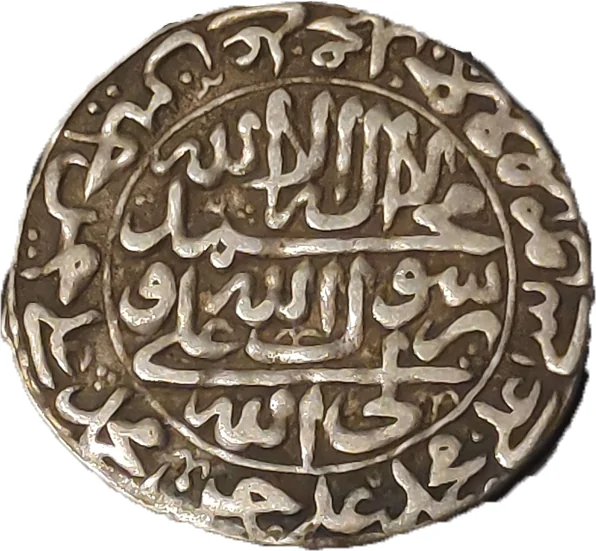
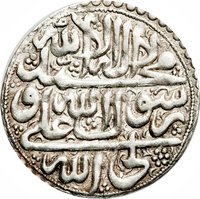
Inscription:
Three line inscription, twelve Shiite imams named in border.
Script: Persian (nastaliq)
Edge
Mintings
| Year | Mint Mark | Mintage | Quality | Collection |
|---|---|---|---|---|
| 1729 | — | — | ||
| 1730 | — | — | ||
| 1731 | — | — | ||
| 1732 | — | — |
Historical background
In 1729, Iran was in the final stages of a prolonged period of instability and fragmentation known as the Hotaki-Safavid civil war. The Safavid Empire, which had once minted a stable silver currency (the abbasi), had been critically weakened. In 1722, the Hotaki Afghans captured the capital, Isfahan, plunging the empire into chaos. By 1729, the legitimate Safavid heir, Tahmasp II, and his brilliant general Nader Qoli (the future Nader Shah) were leading a military campaign to expel the Hotakis and reunify the country. Consequently, the monetary system was in disarray, with no central authority guaranteeing the value or supply of coinage.
The currency situation was characterized by severe debasement and regional fragmentation. Provincial governors and occupying forces, including the Hotakis, Ottomans, and Russians, minted their own coins of varying and often poor silver content to fund their armies. The widespread practice of "clipping" precious metal from the edges of existing coins further eroded trust. This led to a breakdown in long-distance trade and market confidence, as merchants and the public struggled to assess the intrinsic value of the mixed coins in circulation, creating price volatility and economic hardship.
Nader's military successes in 1729 were the first step toward monetary restoration, but the process was still nascent. As he reclaimed territory, he began to assert control over mints, aiming to standardize coinage in the name of Shah Tahmasp II. The primary focus, however, remained on financing the war effort. Therefore, while 1729 marked a turning point toward political reunification, a stable and unified national currency would only be re-established several years later, after Nader Shah had consolidated power and captured the immense Mughal treasury, which provided the bullion needed to restore a sound monetary system.
The currency situation was characterized by severe debasement and regional fragmentation. Provincial governors and occupying forces, including the Hotakis, Ottomans, and Russians, minted their own coins of varying and often poor silver content to fund their armies. The widespread practice of "clipping" precious metal from the edges of existing coins further eroded trust. This led to a breakdown in long-distance trade and market confidence, as merchants and the public struggled to assess the intrinsic value of the mixed coins in circulation, creating price volatility and economic hardship.
Nader's military successes in 1729 were the first step toward monetary restoration, but the process was still nascent. As he reclaimed territory, he began to assert control over mints, aiming to standardize coinage in the name of Shah Tahmasp II. The primary focus, however, remained on financing the war effort. Therefore, while 1729 marked a turning point toward political reunification, a stable and unified national currency would only be re-established several years later, after Nader Shah had consolidated power and captured the immense Mughal treasury, which provided the bullion needed to restore a sound monetary system.
✨ Legendary