

⅙ Pezzetta – Monaco
Monaco

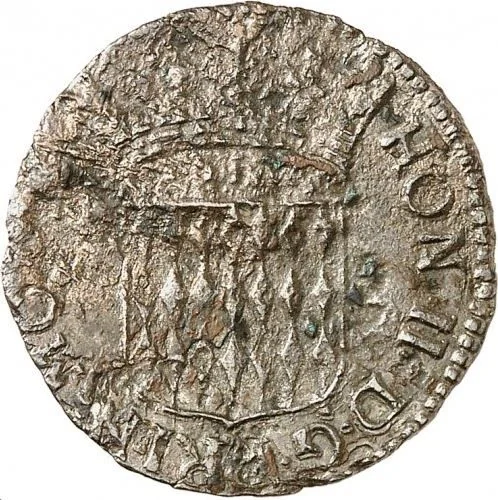
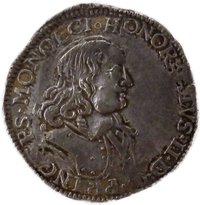
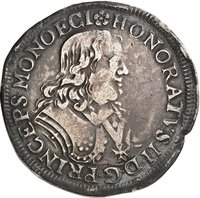
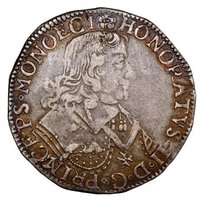
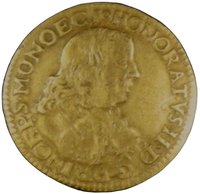
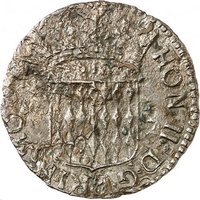
Obverse
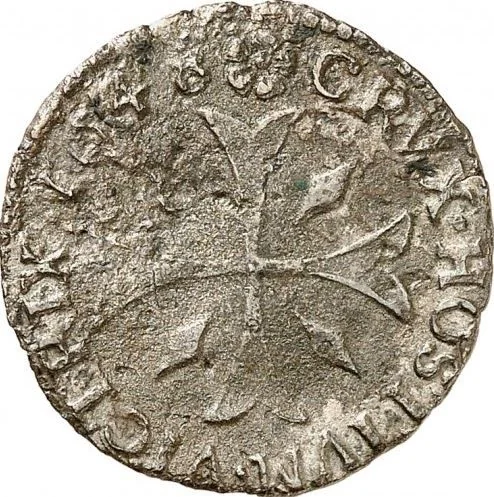
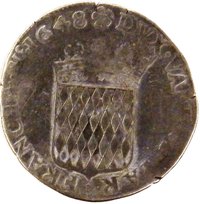
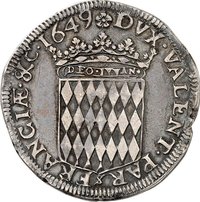
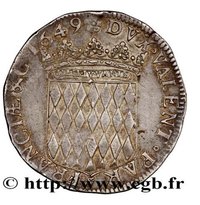
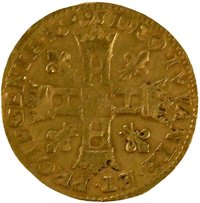
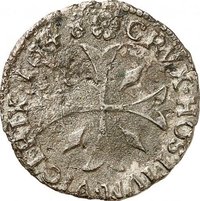
Reverse
Description:
Maltese cross with diamond corners.
Inscription:
. CRVX. HOSTIUM. VICTRIX 1648
Script: Latin
Edge
Plain
Mints
| Name | Mark |
|---|---|
| Monaco | — |
Mintings
| Year | Mint Mark | Mintage | Quality | Collection |
|---|---|---|---|---|
| 1648 | — | — |
Historical background
In 1648, Monaco's currency situation was intrinsically tied to its complex political status. Though a sovereign principality under the Grimaldi family, it existed within the sphere of French economic and monetary influence. The Principality did not mint its own independent coinage at this time. Instead, the circulation was dominated by French livres, sous, and deniers, alongside various Spanish, Italian, and other European coins brought through trade and its strategic port. This monetary plurality was typical of the era but created practical challenges for commerce due to fluctuating values and metal contents.
The year 1648 is significant as it falls during the final stages of the Thirty Years' War and the Franco-Spanish War, conflicts that directly impacted Monaco. While the Treaty of Westphalia in 1648 reshaped Europe, Monaco's immediate monetary relationship was more directly defined by its 1641 Treaty of Péronne with France. This pact replaced Spanish protection with French, making King Louis XIII the "protector" of Monaco. Consequently, French monetary influence became even more entrenched, though the treaty guaranteed Monaco's sovereignty and the Grimaldis' rights.
Therefore, Monaco's currency background in 1648 is one of dependent circulation rather than autonomous policy. The Principality operated within a de facto French monetary zone, lacking a mint of its own, while its port ensured a heterogeneous mix of specie. The political shift from Spanish to French suzerainty solidified the dominance of French coinage in everyday transactions, embedding Monaco's economy within the larger and often unstable French financial system of the mid-17th century.
The year 1648 is significant as it falls during the final stages of the Thirty Years' War and the Franco-Spanish War, conflicts that directly impacted Monaco. While the Treaty of Westphalia in 1648 reshaped Europe, Monaco's immediate monetary relationship was more directly defined by its 1641 Treaty of Péronne with France. This pact replaced Spanish protection with French, making King Louis XIII the "protector" of Monaco. Consequently, French monetary influence became even more entrenched, though the treaty guaranteed Monaco's sovereignty and the Grimaldis' rights.
Therefore, Monaco's currency background in 1648 is one of dependent circulation rather than autonomous policy. The Principality operated within a de facto French monetary zone, lacking a mint of its own, while its port ensured a heterogeneous mix of specie. The political shift from Spanish to French suzerainty solidified the dominance of French coinage in everyday transactions, embedding Monaco's economy within the larger and often unstable French financial system of the mid-17th century.
Series: 1648 Monaco circulation coins

✨ Legendary