

½ cruzado/12 vinténs – Portugal
Add to wishlist
Portugal
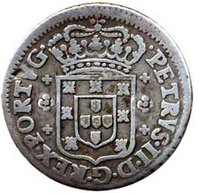
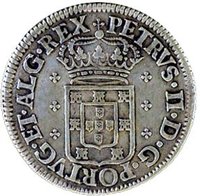
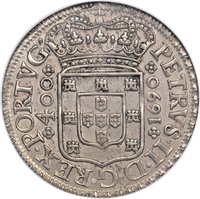
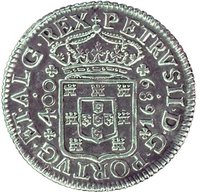
Obverse
Description:
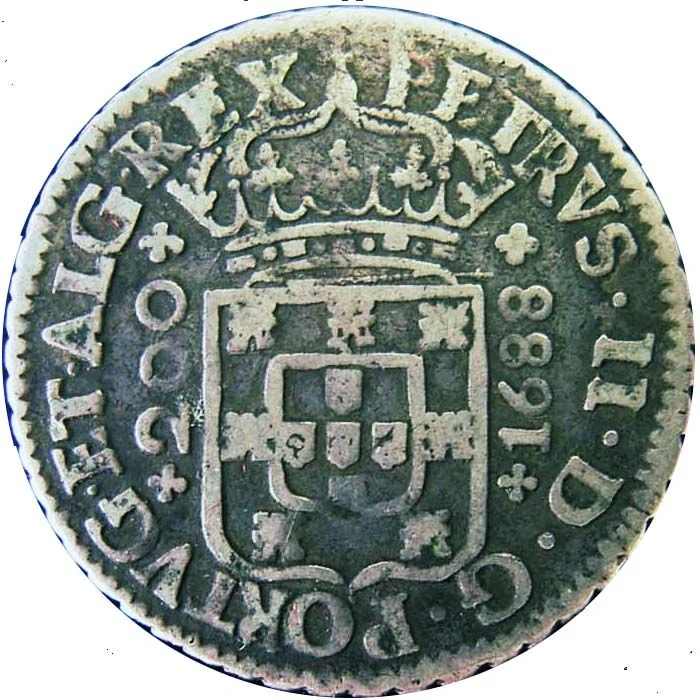
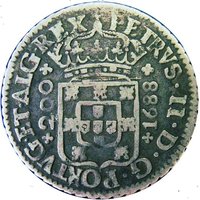
Portuguese royal arms, crowned. Value left, year right. Legends around.
Inscription:
PETRVS.II.D.G.PORTVG.ET.ALG.REX
200
1688
200
1688
Script: Latin
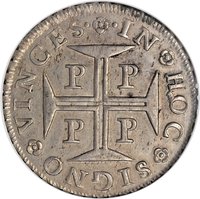
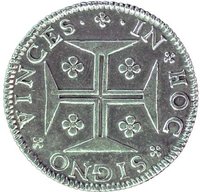
Reverse
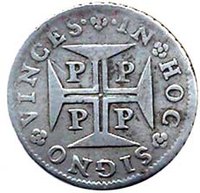
Description:
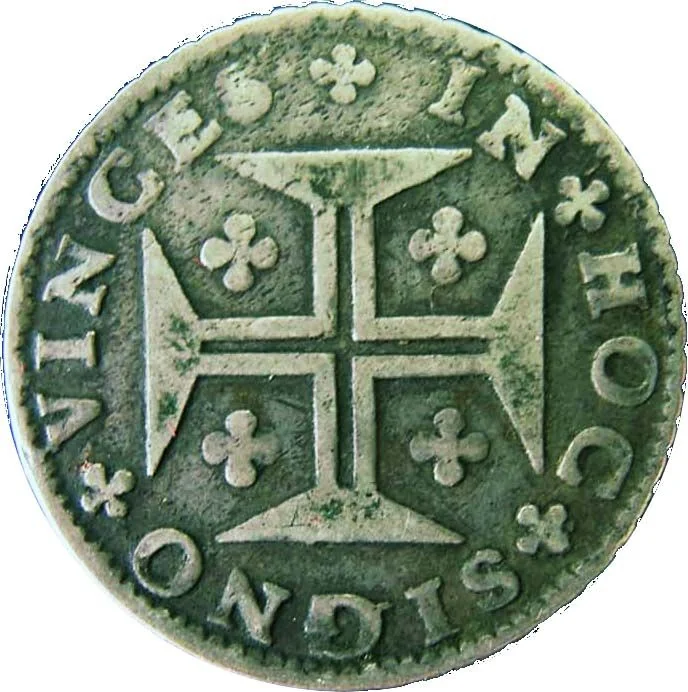
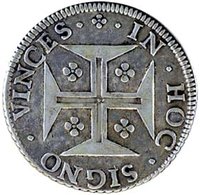
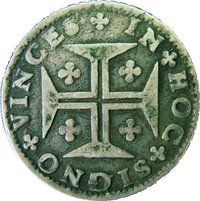
Cross of Christ with corner rosettes, encircled by motto.
Inscription:
*.IN*HOC*SIGNO*VINCES.
Script: Latin
Edge
Rope shaped
Mints
| Name | Mark |
|---|---|
| Imprensa Nacional - Casa da Moeda | — |
Mintings
| Year | Mint Mark | Mintage | Quality | Collection |
|---|---|---|---|---|
| 1688 | — | — | ||
| 1689 | — | — | ||
| 1690 | — | — | ||
| 1691 | — | — | ||
| 1692 | — | — | ||
| 1693 | — | — | ||
| 1696 | — | — | ||
| 1697 | — | — | ||
| 1701 | — | — | ||
| 1703 | — | — | ||
| 1704 | — | — | ||
| 1705 | — | — | ||
| 1706 | — | — |
Historical background
In 1688, Portugal's currency system was in a state of significant strain and transition, a legacy of the Bragança dynasty's efforts to restore economic stability after the 1640 Restoration of independence from Spain. The primary unit was the real (plural: réis), with values expressed in milréis (1,000 réis), a system that was often unwieldy due to the need for very high numbers in transactions. The crown faced persistent challenges of currency debasement—reducing the precious metal content in coins to fund state expenditures, particularly for the military and the expansive empire. This practice, while providing short-term liquidity, eroded public confidence in coinage and fueled inflation, as the intrinsic value of coins fell below their face value.
The situation was exacerbated by a chronic shortage of small-denomination coinage for everyday commerce, which stifled local trade. Furthermore, Portugal suffered from a damaging outflow of gold and silver to pay for imported manufactured goods from northern Europe, a persistent trade deficit that drained the kingdom's bullion reserves. In response, the monarchy under King Pedro II had begun to look toward Brazil as the ultimate solution. While the discovery of major gold deposits in Minas Gerais was still a few years away (c. 1695), early signs of mineral wealth were already fostering hope that American colonies could solve Portugal's bullion shortage.
Consequently, the monetary landscape of 1688 was one of precarious waiting. The government managed a fragile system of largely copper and low-grade silver coins, while dreaming of a future influx of Brazilian gold. This anticipated wealth would soon materialize, leading to a complete transformation of the currency in the following decades, including the famous gold moedas and a period of monetary stability. Thus, 1688 represents a pivotal moment just before Portugal's economy shifted from one of scarcity and debasement to one flush with New World precious metals.
The situation was exacerbated by a chronic shortage of small-denomination coinage for everyday commerce, which stifled local trade. Furthermore, Portugal suffered from a damaging outflow of gold and silver to pay for imported manufactured goods from northern Europe, a persistent trade deficit that drained the kingdom's bullion reserves. In response, the monarchy under King Pedro II had begun to look toward Brazil as the ultimate solution. While the discovery of major gold deposits in Minas Gerais was still a few years away (c. 1695), early signs of mineral wealth were already fostering hope that American colonies could solve Portugal's bullion shortage.
Consequently, the monetary landscape of 1688 was one of precarious waiting. The government managed a fragile system of largely copper and low-grade silver coins, while dreaming of a future influx of Brazilian gold. This anticipated wealth would soon materialize, leading to a complete transformation of the currency in the following decades, including the famous gold moedas and a period of monetary stability. Thus, 1688 represents a pivotal moment just before Portugal's economy shifted from one of scarcity and debasement to one flush with New World precious metals.
Series: 1688 Portugal circulation coins
💎 Extremely Rare