

2 Stuivers – Netherlands
Netherlands
Context
Years: 1796–1799
Issuer: Netherlands 
Period:
(1795—1806)
Currency:
(1581—1817)
Demonetized: Yes
Total mintage: 6,180,000
Material
References
KM: #Click to copy to clipboard13
Numista: #355092
Value
Bullion value: $2.54
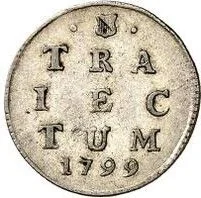
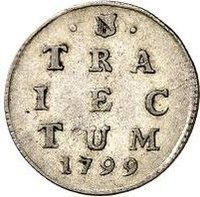
Obverse
Description:
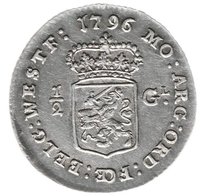
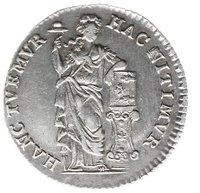
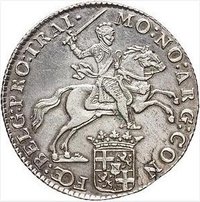
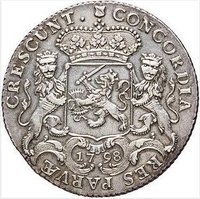
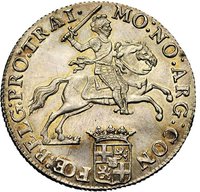
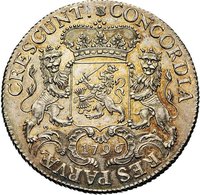
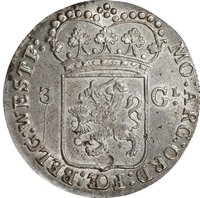
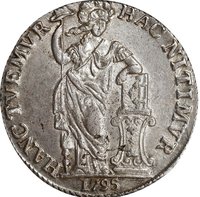
Province name (three lines).
Mint mark •• above, date below.
Mint mark •• above, date below.
Inscription:
· ⬕ ·
TRA
IEC
TUM
1799
TRA
IEC
TUM
1799
Script: Latin
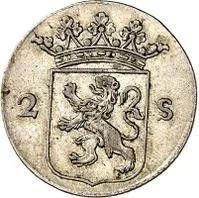
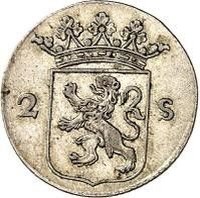
Reverse
Edge
Cabled to the right or to the left
Categories
| Symbol> Crown |
| Symbols> Coat of Arms |
Mints
| Name | Mark |
|---|---|
| Royal Dutch Mint | ⬕ |
Mintings
| Year | Mint Mark | Mintage | Quality | Collection |
|---|---|---|---|---|
| 1796 | — | 2,110,000 | ||
| 1797 | — | — | ||
| 1799 | — | 4,070,000 |
Historical background
In 1796, the Netherlands found itself in a precarious monetary situation, caught between the collapse of the old order and the turbulent birth of a new republic. The Dutch Republic, a former financial powerhouse of Europe, had been overthrown in 1795 with French revolutionary support, replaced by the Batavian Republic. This political upheaval shattered confidence in the existing financial system. The economy was severely strained by the costs of war, the British naval blockade, and the loss of revenue from colonial trade, leading to widespread public debt and a sharp economic decline.
The currency landscape was one of extreme confusion and devaluation. The historic guilder (or florin), long a trusted international currency, was now circulating alongside a chaotic mix of provincial coins, city coins, and a flood of foreign and debased currency. Most critically, the new Batavian government, lacking solid credit, was forced to finance itself primarily by printing paper money—assignaten—modeled on the disastrous French experiment. These notes rapidly depreciated, leading to severe inflation, hoarding of specie, and a deep public distrust in any government-issued currency.
Consequently, 1796 was a year of monetary crisis and legislative struggle. The Batavian National Assembly recognized the urgent need for reform and debated centralizing and stabilizing the currency under a unified, national standard. However, political factionalism and the overwhelming economic pressures stalled decisive action. The situation remained unresolved, with the economy operating on a patchwork of depreciating paper and scarce, trusted coin, setting the stage for the more comprehensive currency reforms that would follow in the coming years under French-imposed rule.
The currency landscape was one of extreme confusion and devaluation. The historic guilder (or florin), long a trusted international currency, was now circulating alongside a chaotic mix of provincial coins, city coins, and a flood of foreign and debased currency. Most critically, the new Batavian government, lacking solid credit, was forced to finance itself primarily by printing paper money—assignaten—modeled on the disastrous French experiment. These notes rapidly depreciated, leading to severe inflation, hoarding of specie, and a deep public distrust in any government-issued currency.
Consequently, 1796 was a year of monetary crisis and legislative struggle. The Batavian National Assembly recognized the urgent need for reform and debated centralizing and stabilizing the currency under a unified, national standard. However, political factionalism and the overwhelming economic pressures stalled decisive action. The situation remained unresolved, with the economy operating on a patchwork of depreciating paper and scarce, trusted coin, setting the stage for the more comprehensive currency reforms that would follow in the coming years under French-imposed rule.
✨ Legendary