

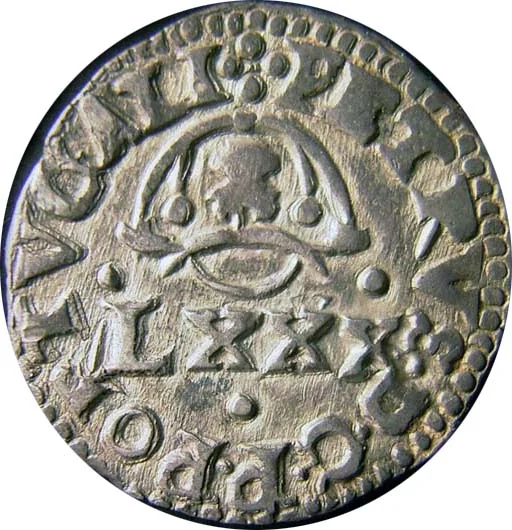
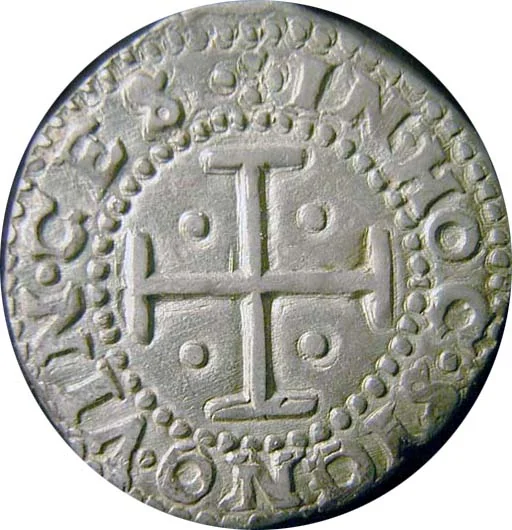
80 réis – Portugal
Add to wishlist
Portugal
Material
Diameter: 22 mm
Weight: 3.67 g
Silver Weight:: 3.36 g
Shape: Irregular round
Composition: 91.67% Silver
Magnetic: No
Technique: Hammered
References
KM: #
Numista: #35491
Value
Bullion value: $8.40
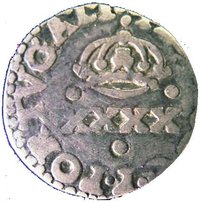
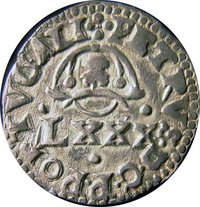
Obverse
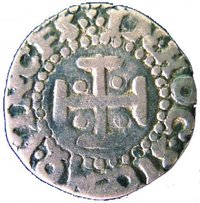
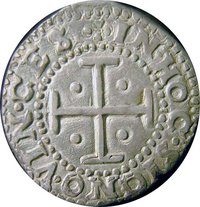
Reverse
Edge
Mints
| Name | Mark |
|---|---|
| Imprensa Nacional - Casa da Moeda | — |
Mintings
| Year | Mint Mark | Mintage | Quality | Collection |
|---|---|---|---|---|
| — | — | — |
Historical background
In 1672, Portugal’s currency system was in a state of profound crisis, a legacy of the costly struggle to restore independence from Spain (1640-1668). The long war had drained the treasury, forcing the Crown, under King Afonso VI and the influential Count of Castelo Melhor, to engage in severe monetary debasement. The principal silver coin, the cruzado, saw its precious metal content drastically reduced, while vast quantities of low-quality copper reis coins were minted to finance military and administrative costs. This led to a classic manifestation of Gresham’s Law, where "bad money drives out good," as hoarding of older, full-weight coins became widespread, further destabilizing the economy.
The situation was exacerbated by a significant outflow of gold and silver to pay for imported goods and military supplies, creating a chronic trade deficit. Prices soared as the proliferation of base coinage fueled inflation, eroding public confidence and disrupting both domestic commerce and international trade. Merchants in Lisbon and Porto faced uncertainty in transactions, as the real value of the circulating copper réis was volatile and often discredited. The monetary chaos reflected the broader challenges of a still-fragile kingdom asserting its global position while managing a strained economy.
Recognizing the threat to economic stability and state credibility, the Portuguese government was actively seeking solutions. The focus was on restoring a sound, bimetallic system, though major reform would only be realized a few years later with the sweeping monetary policies of King Pedro II. The 1672 moment thus represents the turbulent low point before a necessary restructuring, highlighting the direct link between the fiscal demands of state-building and the integrity of the currency in early modern Portugal.
The situation was exacerbated by a significant outflow of gold and silver to pay for imported goods and military supplies, creating a chronic trade deficit. Prices soared as the proliferation of base coinage fueled inflation, eroding public confidence and disrupting both domestic commerce and international trade. Merchants in Lisbon and Porto faced uncertainty in transactions, as the real value of the circulating copper réis was volatile and often discredited. The monetary chaos reflected the broader challenges of a still-fragile kingdom asserting its global position while managing a strained economy.
Recognizing the threat to economic stability and state credibility, the Portuguese government was actively seeking solutions. The focus was on restoring a sound, bimetallic system, though major reform would only be realized a few years later with the sweeping monetary policies of King Pedro II. The 1672 moment thus represents the turbulent low point before a necessary restructuring, highlighting the direct link between the fiscal demands of state-building and the integrity of the currency in early modern Portugal.
Series: 1672 Portugal circulation coins
✨ Legendary