

1 krone – Denmark
Add to wishlist
Denmark
Context
Material
References
KM: #
Numista: #112715
Value
Bullion value: $38.04
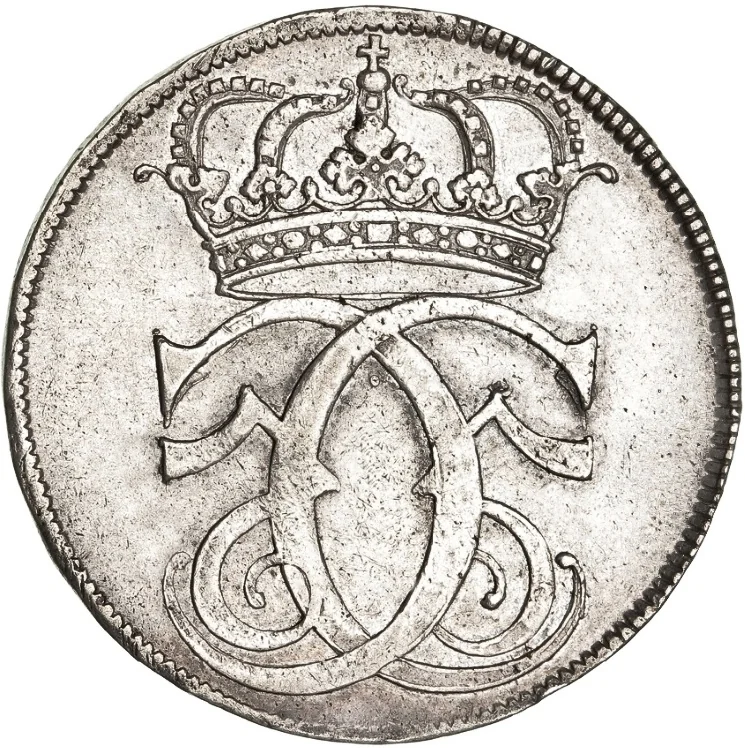
Obverse
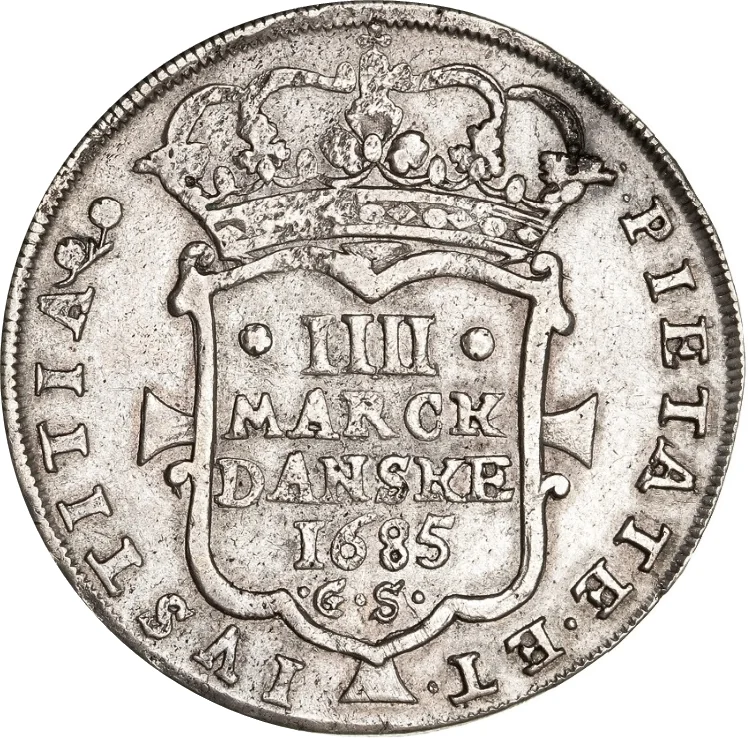
Reverse
Description:
Shield with crown, date, and value, on a short cross. King's motto encircles.
Inscription:
* IIII *
MARCK
DANSKE
1685
GS
PIETATE. ET. IUSTITIA.
MARCK
DANSKE
1685
GS
PIETATE. ET. IUSTITIA.
Script: Latin
Edge
Categories
| Symbols> Coat of Arms |
Mintings
| Year | Mint Mark | Mintage | Quality | Collection |
|---|---|---|---|---|
| 1684 | GS | — | ||
| 1685 | GS | — |
Historical background
In 1684, Denmark operated under a silver standard, with the primary currency being the rigsdaler (rix-dollar), subdivided into marks and skilling. However, the monetary system was under significant strain. Decades of war in the 17th century had led to repeated debasements—reducing the silver content in coins—to fund state expenditures. This created a chronic problem of currency instability, where older, purer coins were hoarded or melted down for their intrinsic metal value, while newer, weaker coins circulated at a discount, leading to confusion and a lack of public trust in the coinage.
King Christian V and his government were actively attempting to reform this chaotic system. A major monetary ordinance had been issued in 1683, aiming to standardize the currency and restore its integrity. The ordinance of 1684 was a continuation of this effort, formally establishing a new kurant system intended to be a stable accounting and silver currency. The state sought to fix the exchange rates between the various coins in circulation and tie them firmly to the silver rigsdaler, attempting to move away from the earlier practice of fluctuating "currency" (kurant) and "mark" values.
Despite these central reforms, the situation on the ground remained complex. Older debased coins, including so-called "clipped" coins from the reign of Christian IV, remained in widespread circulation alongside the new issues. Furthermore, a multitude of foreign coins, particularly German and Dutch, circulated in Danish trade centers, complicating everyday transactions. Therefore, while 1684 represents a pivotal year of attempted stabilization and administrative order from the crown, the practical currency environment in Denmark was still one of transition, marked by the coexistence of old and new money and the ongoing challenge of enforcing royal monetary policy across the kingdom.
King Christian V and his government were actively attempting to reform this chaotic system. A major monetary ordinance had been issued in 1683, aiming to standardize the currency and restore its integrity. The ordinance of 1684 was a continuation of this effort, formally establishing a new kurant system intended to be a stable accounting and silver currency. The state sought to fix the exchange rates between the various coins in circulation and tie them firmly to the silver rigsdaler, attempting to move away from the earlier practice of fluctuating "currency" (kurant) and "mark" values.
Despite these central reforms, the situation on the ground remained complex. Older debased coins, including so-called "clipped" coins from the reign of Christian IV, remained in widespread circulation alongside the new issues. Furthermore, a multitude of foreign coins, particularly German and Dutch, circulated in Danish trade centers, complicating everyday transactions. Therefore, while 1684 represents a pivotal year of attempted stabilization and administrative order from the crown, the practical currency environment in Denmark was still one of transition, marked by the coexistence of old and new money and the ongoing challenge of enforcing royal monetary policy across the kingdom.
💎 Extremely Rare