

1 Krone – Denmark
Denmark
Context

Material
References
KM: #Click to copy to clipboard370
Numista: #112663
Value
Bullion value: $43.22
Obverse
Description:
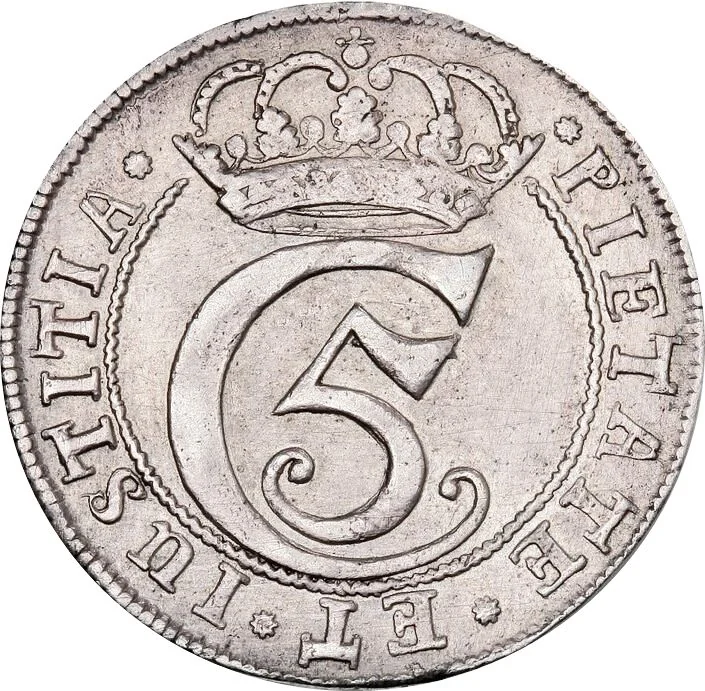
King's monogram in plain style within a circle. Motto around the rim, outside the circle, reading clockwise from the top right.
Inscription:
* PIETATE * ET * IUSTITIA *
Script: Latin
Reverse
Description:
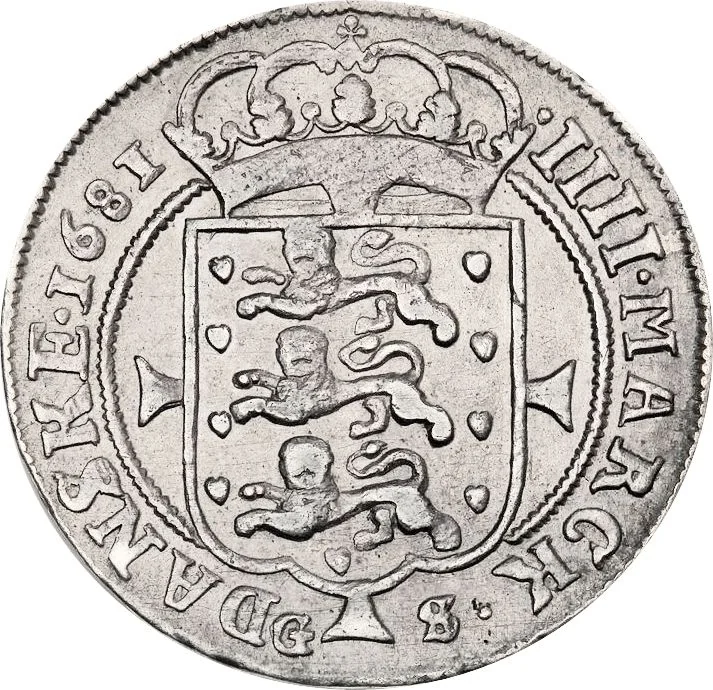
A crowned, pointed shield with Denmark's arms over a short cross in a beaded circle. The legend, including the date, reads clockwise from the top right. The mintmark, split by the lower cross arm, runs counterclockwise within the legend.
Inscription:
* IIII * MARCK | DANSKE * 1681
G | S
G | S
Script: Latin
Edge
Categories
| Symbols> Coat of Arms |
Mints
| Name | Mark |
|---|---|
| Copenhagen | GS |
Historical background
In 1681, Denmark operated under a complex and strained monetary system, a legacy of the costly wars and economic policies of the preceding decades. The official currency was based on the silver rigsdaler, but its value was unstable due to repeated debasements. King Christian V’s government had frequently reduced the silver content in coins to generate short-term revenue, leading to a circulation filled with coins of varying intrinsic worth. This created a dual system where older, purer coins were hoarded or exported, while newer, weaker coins dominated everyday trade, causing widespread confusion and inflation.
The situation was further complicated by the widespread use of foreign currencies, particularly German and Dutch coins, which were often trusted more than the debased domestic issues. To manage this chaos, the state regularly issued kuranter (exchange rate ordinances) that attempted to fix the value of the multitude of circulating coins in relation to the rigsdaler. These official rates, however, frequently failed to reflect market reality, leading to a thriving black market in currency exchange and undermining both public trust and state finances.
Recognizing the systemic crisis, the crown was actively seeking reform. The year 1681 fell within a period of administrative modernization under the absolute monarchy, with efforts focused on stabilizing the currency as a foundation for economic recovery. These efforts would culminate just two years later, in 1683, with the introduction of a major monetary ordinance that aimed to standardize the coinage and restore confidence, marking a pivotal step toward a more unified and reliable national currency system.
The situation was further complicated by the widespread use of foreign currencies, particularly German and Dutch coins, which were often trusted more than the debased domestic issues. To manage this chaos, the state regularly issued kuranter (exchange rate ordinances) that attempted to fix the value of the multitude of circulating coins in relation to the rigsdaler. These official rates, however, frequently failed to reflect market reality, leading to a thriving black market in currency exchange and undermining both public trust and state finances.
Recognizing the systemic crisis, the crown was actively seeking reform. The year 1681 fell within a period of administrative modernization under the absolute monarchy, with efforts focused on stabilizing the currency as a foundation for economic recovery. These efforts would culminate just two years later, in 1683, with the introduction of a major monetary ordinance that aimed to standardize the coinage and restore confidence, marking a pivotal step toward a more unified and reliable national currency system.
💎 Extremely Rare