

2 mark – Denmark
Add to wishlist
Denmark
Context
Material
References
KM: #
Numista: #112647
Value
Bullion value: $19.09
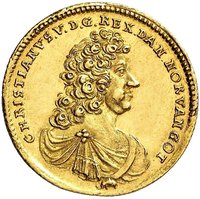
Obverse
Description:
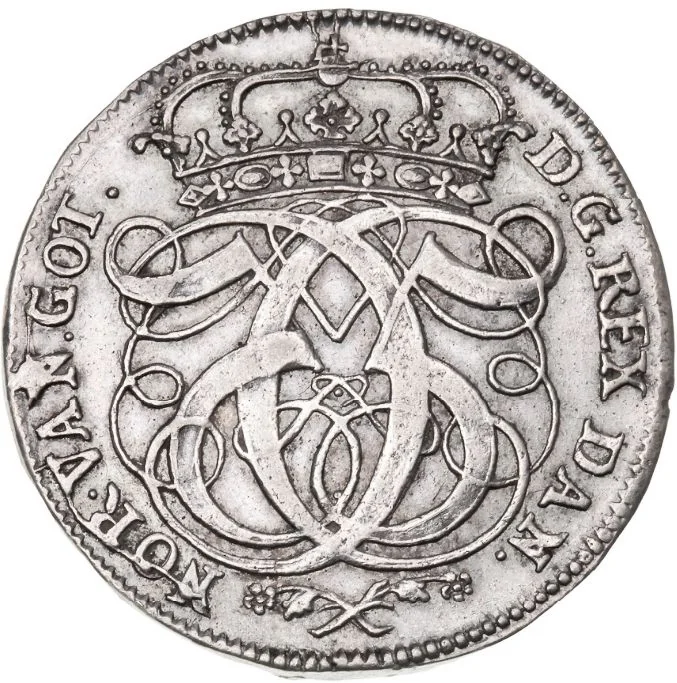
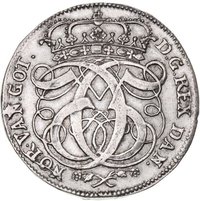
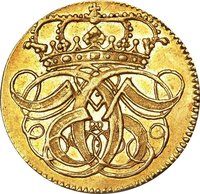
Crown above mirrored, ornate King's monogram. Sides have clockwise legend. Large or crossed flowers below.
Inscription:
5CC5
D.G.REX.DAN. | NOR. VAN. GOT.
D.G.REX.DAN. | NOR. VAN. GOT.
Script: Latin
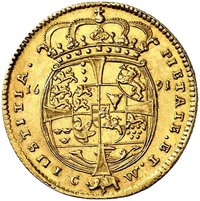
Reverse
Description:
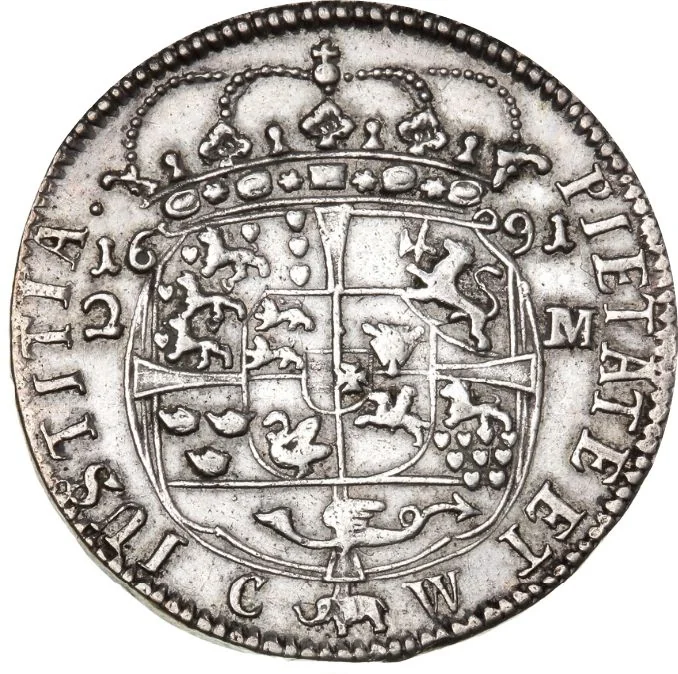
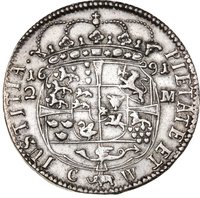
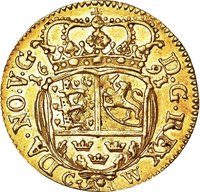
Denmark’s crowned coat of arms features the Order of Elephant pendant. The date and value flank the top, the mintmark is below the pendant, and the king’s mottos encircle the rim.
Inscription:
16 | 91
2 | M
PIETATE ET | IUSTITIA.
C | W
2 | M
PIETATE ET | IUSTITIA.
C | W
Script: Latin
Edge
Categories
| Symbols> Coat of Arms |
Mints
| Name | Mark |
|---|---|
| Copenhagen | CW |
Mintings
| Year | Mint Mark | Mintage | Quality | Collection |
|---|---|---|---|---|
| 1691 | CW | — |
Historical background
In 1691, Denmark operated under a silver standard, with the rigsdaler specie as the primary unit of account. However, the monetary system was complex and strained. The state's chronic fiscal difficulties, exacerbated by costly wars in the preceding decades, had led to repeated debasements of the circulating coinage. By this period, a proliferation of different coins—including older, full-value kroner and newer, degraded skilling coins—circulated simultaneously, creating confusion and undermining public trust. The intrinsic silver content of a coin often mattered more than its face value, leading to frequent revaluation orders from the crown as it attempted to manage the money supply.
The situation was further complicated by the widespread use of kreditivesedler (credit notes), an early form of paper money issued by the state treasury since the 1680s to pay its creditors, particularly in Copenhagen. These notes, theoretically redeemable for silver, were a response to the severe shortage of sound coinage. In practice, however, they often traded at a significant discount to their face value, as public confidence in the state's ability to redeem them was low. This created a dual system where commodity prices could be quoted in both unstable current coins and the more stable but scarce rigsdaler specie.
Overall, the currency situation in 1691 was characterized by instability, fragmentation, and a lack of uniform value. The government of Christian V struggled to assert control, caught between the need to finance its obligations and the economic damage caused by a depreciating and unreliable medium of exchange. This precarious environment hindered trade and investment, reflecting the broader financial challenges of the Danish absolutist state in the late 17th century.
The situation was further complicated by the widespread use of kreditivesedler (credit notes), an early form of paper money issued by the state treasury since the 1680s to pay its creditors, particularly in Copenhagen. These notes, theoretically redeemable for silver, were a response to the severe shortage of sound coinage. In practice, however, they often traded at a significant discount to their face value, as public confidence in the state's ability to redeem them was low. This created a dual system where commodity prices could be quoted in both unstable current coins and the more stable but scarce rigsdaler specie.
Overall, the currency situation in 1691 was characterized by instability, fragmentation, and a lack of uniform value. The government of Christian V struggled to assert control, caught between the need to finance its obligations and the economic damage caused by a depreciating and unreliable medium of exchange. This precarious environment hindered trade and investment, reflecting the broader financial challenges of the Danish absolutist state in the late 17th century.
Series: 1691 Denmark circulation coins
✨ Legendary