

1 mark – Denmark
Add to wishlist
Denmark
Context
Material
References
KM: #
Numista: #112565
Value
Bullion value: $9.12
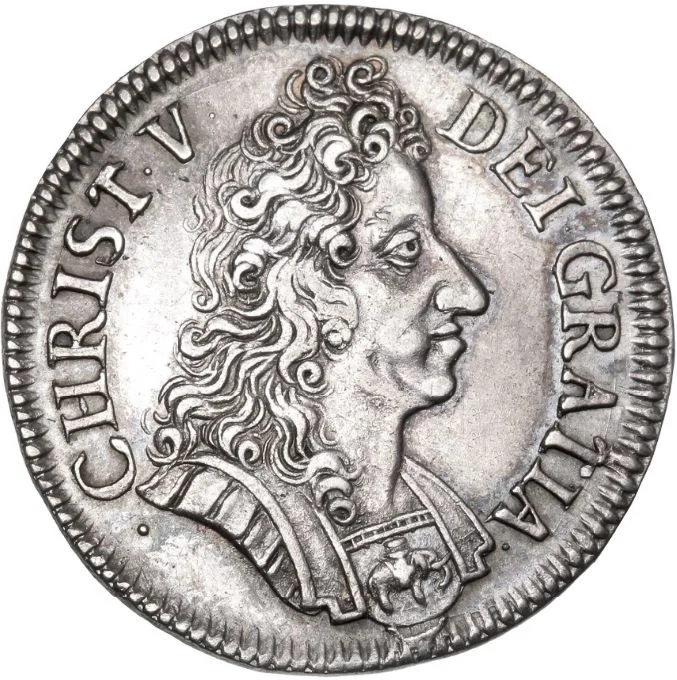
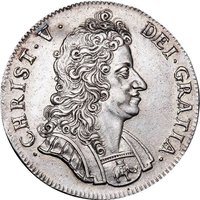
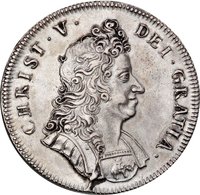
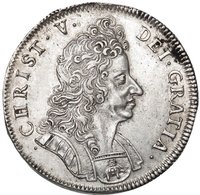
Obverse
Description:
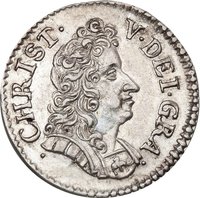
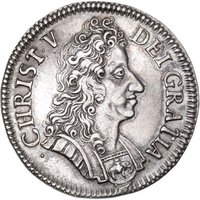
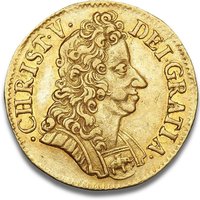
Christian V bust right, curled hair. Legend split along rim.
Inscription:
· CHRIST · V · | DEI GRATIA ·
Script: Latin
Engraver: Anton Meybusch
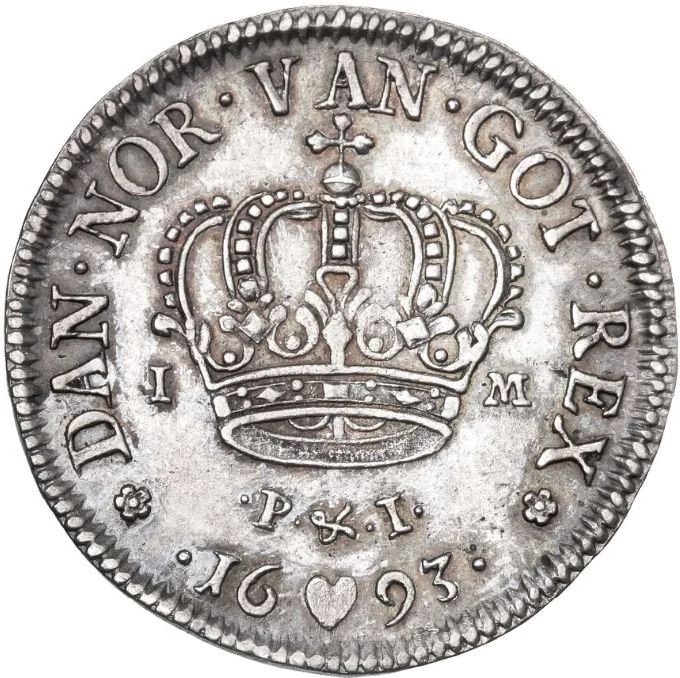
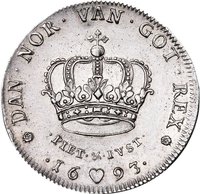
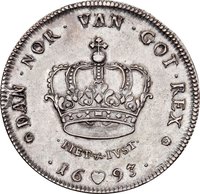
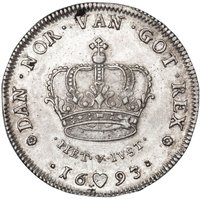
Reverse
Description:
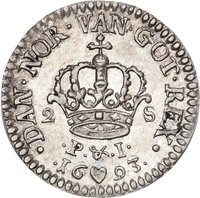
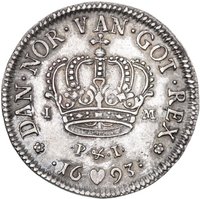
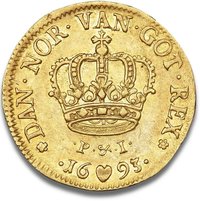
Crown over royal initials divides value. Motto and legend encircle, date below motto split by a heart.
Inscription:
* DAN · NOR · VAN · GOT · REX *
· P · & · I ·
I | M
· 16 ♥ 93 ·
· P · & · I ·
I | M
· 16 ♥ 93 ·
Script: Latin
Engraver: Anton Meybusch
Edge
Plain
Mints
| Name | Mark |
|---|---|
| Copenhagen | ♥ |
Historical background
In 1693, Denmark operated under a silver standard, but the kingdom was grappling with a severe monetary crisis. Decades of war, particularly the Scanian War (1675-1679), had drained the treasury, leading successive monarchs to debase the currency. The government repeatedly reduced the silver content in coins like the skilling and mark while demanding taxes be paid in older, full-weight coinage. This practice, known as "crying up" and "crying down," created a chaotic dual-currency system and eroded public trust, as people hoarded good coins and spent bad ones, driving the latter's value even lower.
The situation was exacerbated by a wider European shortage of precious metals. Furthermore, the state's chronic budget deficits led to the establishment of the Kurantbanken (the "Courant Bank") in 1736, but the groundwork for this instability was firmly laid in the 1690s. At this time, the kingdom lacked a central bank, and the money supply was a confusing mix of domestic debased coins, foreign currency, and credit notes, making commerce difficult and fostering inflation.
Ultimately, the monetary turmoil of 1693 was a symptom of the fiscal strains of absolutist rule under King Christian V. The state's manipulation of coinage to fund its expenditures amounted to a hidden tax that disproportionately burdened the common people and merchants. This period highlights the transition from medieval coinage to more modern financial systems, representing a painful but necessary prelude to the financial reforms and the establishment of a national bank that would follow in the next century to stabilize the Danish economy.
The situation was exacerbated by a wider European shortage of precious metals. Furthermore, the state's chronic budget deficits led to the establishment of the Kurantbanken (the "Courant Bank") in 1736, but the groundwork for this instability was firmly laid in the 1690s. At this time, the kingdom lacked a central bank, and the money supply was a confusing mix of domestic debased coins, foreign currency, and credit notes, making commerce difficult and fostering inflation.
Ultimately, the monetary turmoil of 1693 was a symptom of the fiscal strains of absolutist rule under King Christian V. The state's manipulation of coinage to fund its expenditures amounted to a hidden tax that disproportionately burdened the common people and merchants. This period highlights the transition from medieval coinage to more modern financial systems, representing a painful but necessary prelude to the financial reforms and the establishment of a national bank that would follow in the next century to stabilize the Danish economy.
Series: 1693 Denmark circulation coins
✨ Legendary