

1 Teston – Papal States
Vatican City
Context
Years: 1636–1638
Country: Vatican City 
Issuer: Papal States
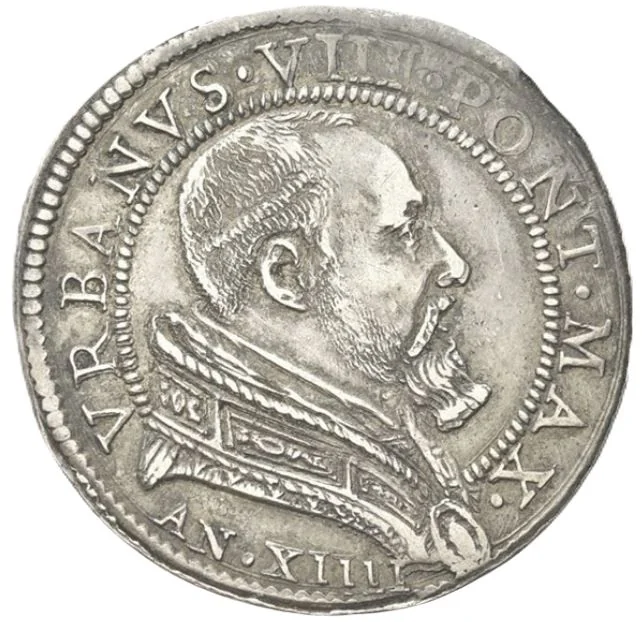
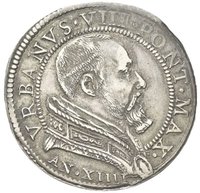
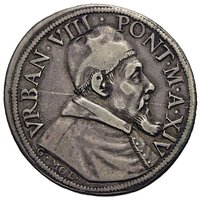
Ruler: Urban VIII
Currency:
(1534—1835)
Demonetized: Yes
Material
References
KM: #Click to copy to clipboard191
Numista: #112388
Value
Bullion value: $25.55
Obverse
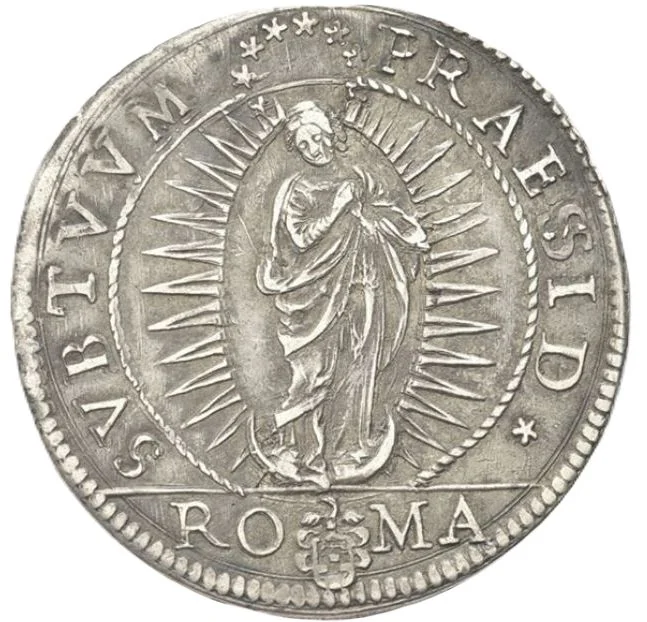
Reverse
Description:
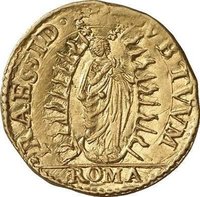
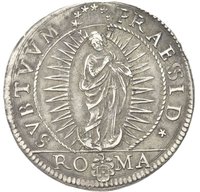
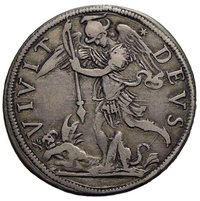
Virgin Mary standing on a crescent moon, radiant.
Inscription:
SVB TVVM PRAESID·
RO MA
RO MA
Script: Latin
Edge
Mints
| Name | Mark |
|---|---|
| Rome | — |
Mintings
| Year | Mint Mark | Mintage | Quality | Collection |
|---|---|---|---|---|
| 1636 | — | — | ||
| 1638 | — | — |
Historical background
In 1636, the Papal States, under Pope Urban VIII Barberini, were grappling with a severe and multifaceted monetary crisis. The primary issue was the chronic debasement of the copper moneta piccola (small coinage), particularly the baiocco and the quattrino, upon which the daily economy of the common people depended. To finance ambitious projects like the fortification of Castel Sant'Angelo and the ongoing Thirty Years' War, the papal treasury repeatedly reduced the silver and copper content of these coins while officially maintaining their face value. This led to a classic manifestation of Gresham's Law, where "bad money drives out good," as older, fuller-weight coins were hoarded or melted down, leaving only the inferior currency in circulation.
The situation was exacerbated by a critical shortage of large silver scudi and gold coins, the currency of international trade and state finance. This scarcity created a dysfunctional two-tiered system: a destabilized small-change economy for the populace and a strained large-currency economy for commerce and government. Prices for basic goods became volatile and inflated as merchants, distrusting the ever-weaker copper coins, demanded more of them for transactions. The result was widespread social hardship, confusion in the markets, and a profound loss of public trust in the papal monetary authority.
Despite recognizing the problem, the Barberini administration's attempts at reform were largely ineffective and often contradictory. Edicts attempting to fix exchange rates between copper and silver were routinely ignored in practice, as market forces dictated a much lower value for the debased coins. The crisis was not merely economic but also political and reputational, eroding the spiritual and temporal credibility of the Papacy. By 1636, the monetary chaos was a stark symbol of the fiscal overreach and administrative challenges facing the Papal States, undermining its stability years before the more famous 1640s collapse of the Roman giro banking system.
The situation was exacerbated by a critical shortage of large silver scudi and gold coins, the currency of international trade and state finance. This scarcity created a dysfunctional two-tiered system: a destabilized small-change economy for the populace and a strained large-currency economy for commerce and government. Prices for basic goods became volatile and inflated as merchants, distrusting the ever-weaker copper coins, demanded more of them for transactions. The result was widespread social hardship, confusion in the markets, and a profound loss of public trust in the papal monetary authority.
Despite recognizing the problem, the Barberini administration's attempts at reform were largely ineffective and often contradictory. Edicts attempting to fix exchange rates between copper and silver were routinely ignored in practice, as market forces dictated a much lower value for the debased coins. The crisis was not merely economic but also political and reputational, eroding the spiritual and temporal credibility of the Papacy. By 1636, the monetary chaos was a stark symbol of the fiscal overreach and administrative challenges facing the Papal States, undermining its stability years before the more famous 1640s collapse of the Roman giro banking system.
✨ Legendary