

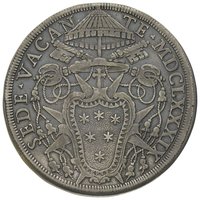
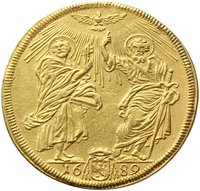
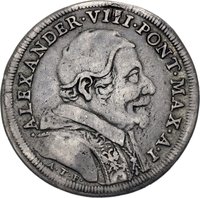
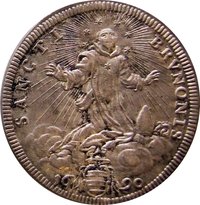
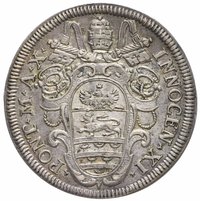
Obverse
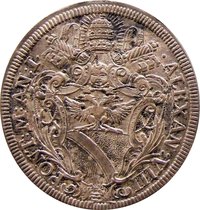
Description:
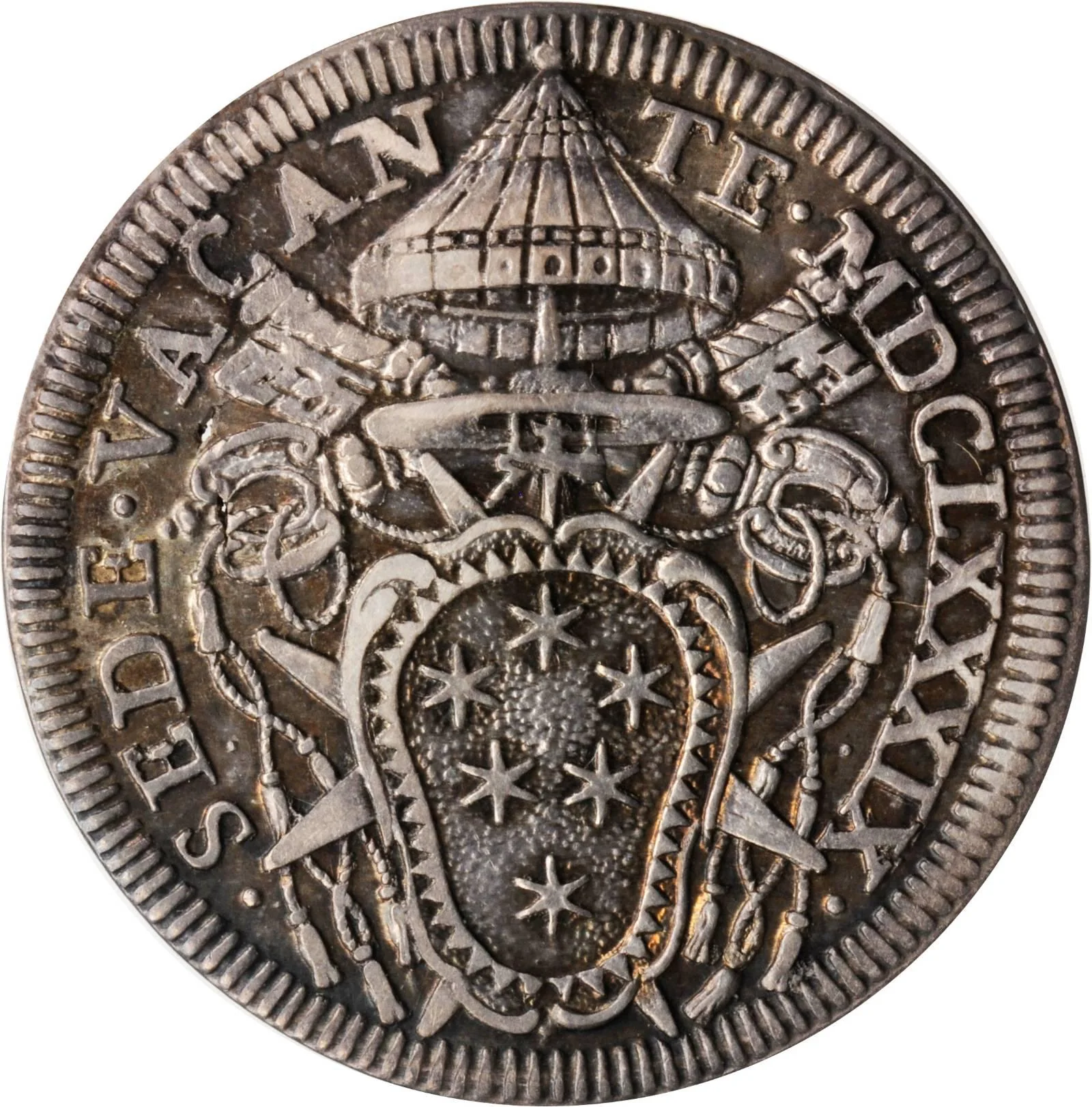
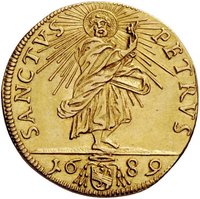
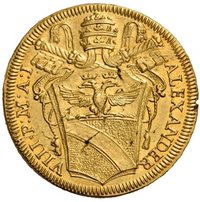
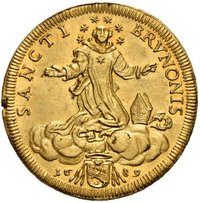
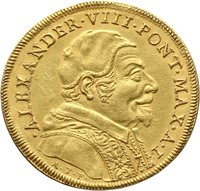
Cardinal Paluzzo Paluzzi-Altieri's coat of arms.
Inscription:
·SEDE·VACAN TE·MDCLXXXIX·
Script: Latin
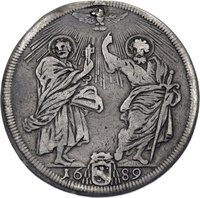
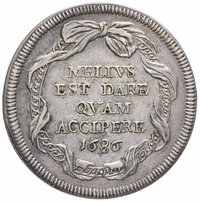
Reverse
Edge
Mints
| Name | Mark |
|---|---|
| Rome | — |
Mintings
| Year | Mint Mark | Mintage | Quality | Collection |
|---|---|---|---|---|
| 1689 | — | — |
Historical background
In 1689, the Papal States operated under a complex and strained monetary system typical of early modern Italian polities. The currency was based on a bimetallic standard of gold and silver, with the primary unit of account being the papal scudo (or scudo romano). This scudo was subdivided into 100 baiochi, each of which was further divided into 10 quattrini. In practice, a chaotic variety of physical coins circulated, including not only those minted by the papal zecca (mint) in Rome but also a flood of foreign coins from other Italian states, Spain, and the broader Mediterranean. This proliferation made commerce cumbersome, as merchants and officials constantly had to assess the weight, purity, and fluctuating exchange rates of countless coins.
The financial situation of the Papal States in this period was under significant pressure, directly impacting its currency. Pope Alexander VIII (Pietro Ottoboni, r. 1689-1691), who ascended to the throne in October of that year, inherited a treasury depleted by the military campaigns of his predecessor, Innocent XI, against the Ottoman Empire. To finance these wars and the general administration of the state, previous administrations had often resorted to debasement—reducing the precious metal content in coins while maintaining their face value. This practice, alongside the inflow of lower-quality foreign coinage, led to recurring inflation and a loss of confidence in the currency, particularly in small-denomination coins used by the common people.
Consequently, monetary policy in 1689 was primarily focused on managing this instability rather than enacting sweeping reform. The Apostolic Chamber, responsible for finances, engaged in ongoing efforts to control the mint, regulate exchange rates, and occasionally recall and recoin debased currency. However, these measures were often reactive and struggled against entrenched economic problems, counterfeiting, and the sheer difficulty of imposing a uniform monetary system across the Papal States' disparate territories. Thus, the currency situation remained a persistent challenge, reflecting the broader fiscal and administrative strains of the papacy in the late 17th century.
The financial situation of the Papal States in this period was under significant pressure, directly impacting its currency. Pope Alexander VIII (Pietro Ottoboni, r. 1689-1691), who ascended to the throne in October of that year, inherited a treasury depleted by the military campaigns of his predecessor, Innocent XI, against the Ottoman Empire. To finance these wars and the general administration of the state, previous administrations had often resorted to debasement—reducing the precious metal content in coins while maintaining their face value. This practice, alongside the inflow of lower-quality foreign coinage, led to recurring inflation and a loss of confidence in the currency, particularly in small-denomination coins used by the common people.
Consequently, monetary policy in 1689 was primarily focused on managing this instability rather than enacting sweeping reform. The Apostolic Chamber, responsible for finances, engaged in ongoing efforts to control the mint, regulate exchange rates, and occasionally recall and recoin debased currency. However, these measures were often reactive and struggled against entrenched economic problems, counterfeiting, and the sheer difficulty of imposing a uniform monetary system across the Papal States' disparate territories. Thus, the currency situation remained a persistent challenge, reflecting the broader fiscal and administrative strains of the papacy in the late 17th century.
✨ Legendary