

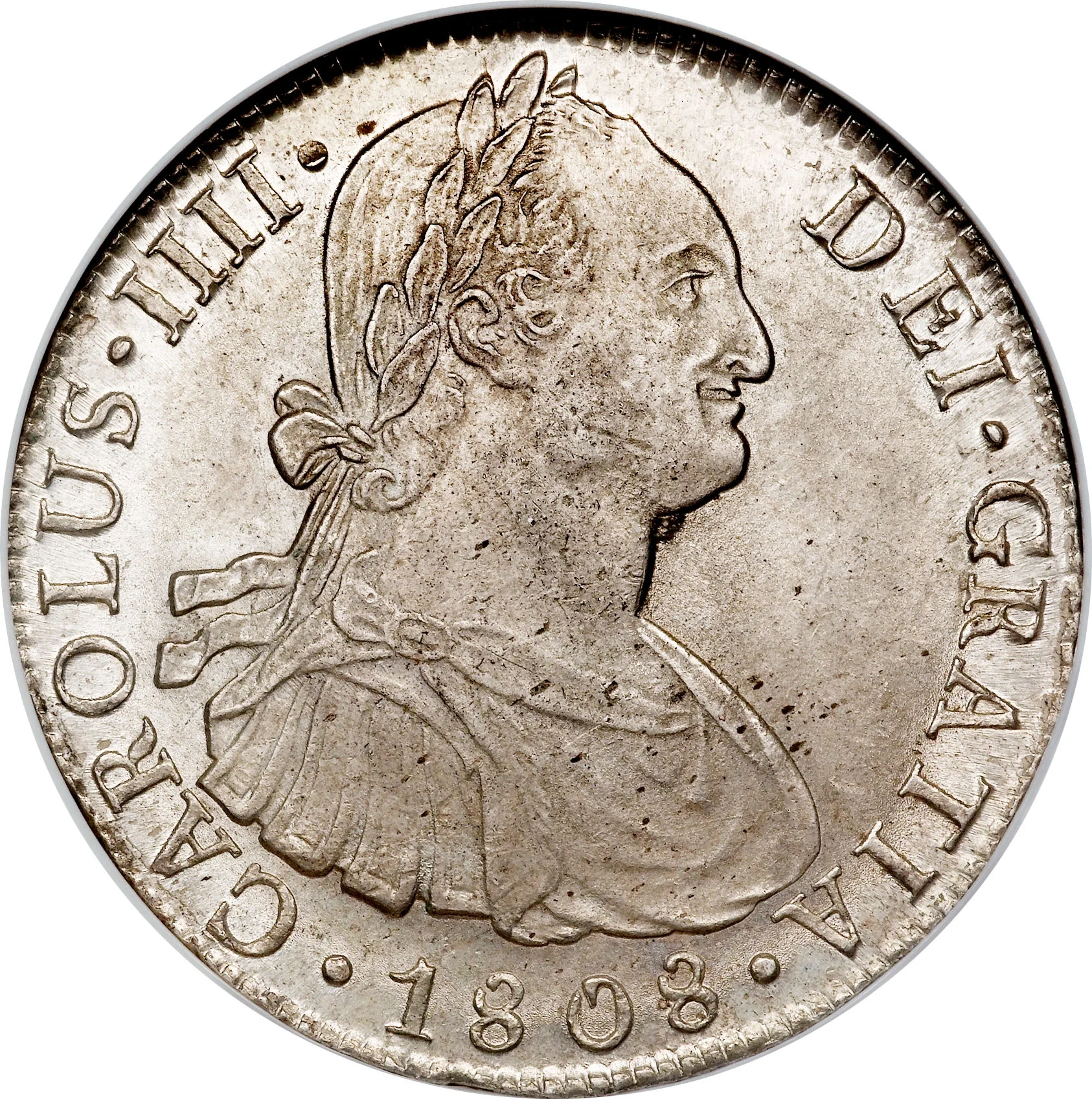
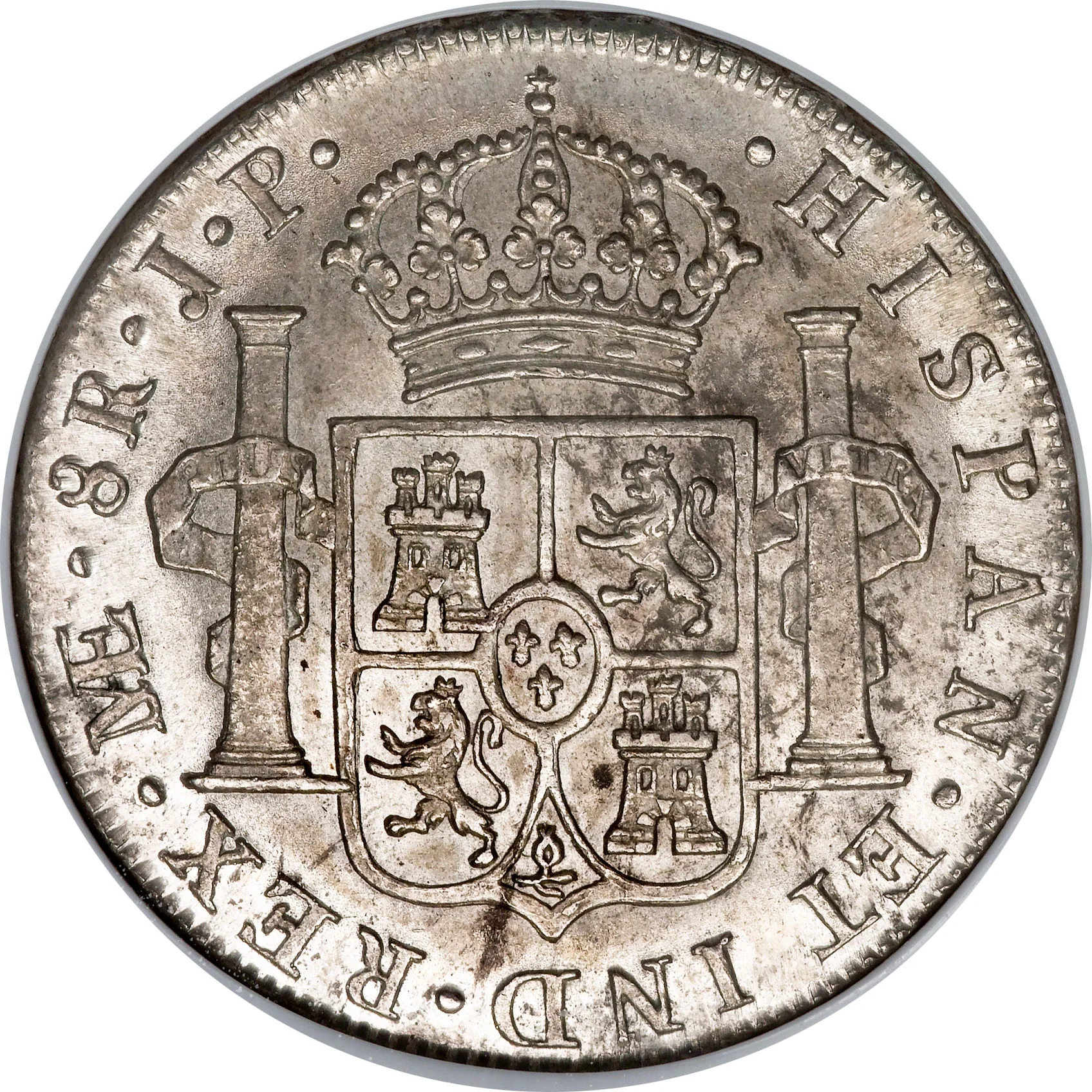
8 Reales – Peru
Peru
Context
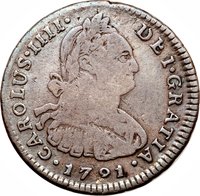
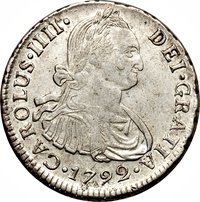
Years: 1791–1808
Issuer: Peru 
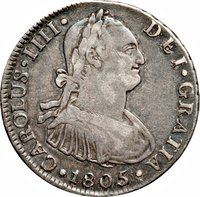
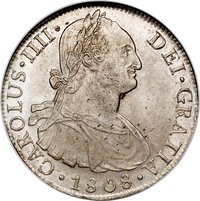
Ruler: Charles IV
Currency:
(1568—1858)
Demonetized: Yes
Total mintage: 70,294,000
Material
References
KM: #Click to copy to clipboard97
Numista: #35033
Value
Bullion value: $68.25
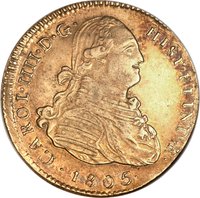
Obverse
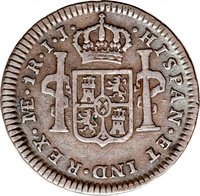
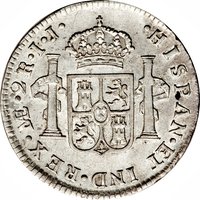
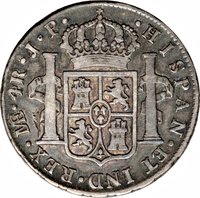
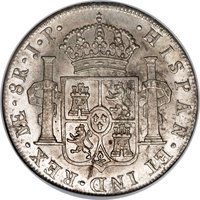
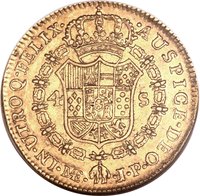
Reverse
Description:
Crowned shield between pillars.
Inscription:
·HISPAN·ET IND·REX·LIMAE·8 R·J·P·
Script: Latin
Edge
Rectangle and circle security edge.
Categories
| Person> Monarch |
| Symbols> Coat of Arms |
Mintings
| Year | Mint Mark | Mintage | Quality | Collection |
|---|---|---|---|---|
| 1791 | LIMAE | 4,102,000 | ||
| 1792 | LIMAE | 4,661,000 | ||
| 1793 | LIMAE | 5,005,000 | ||
| 1794 | LIMAE | 5,024,000 | ||
| 1795 | LIMAE | 4,998,000 | ||
| 1796 | LIMAE | — | ||
| 1797 | LIMAE | 4,391,000 | ||
| 1798 | LIMAE | 4,654,000 | ||
| 1799 | LIMAE | 5,367,000 | ||
| 1800 | LIMAE | 4,207,000 | ||
| 1801 | LIMAE | 4,223,000 | ||
| 1802 | LIMAE | 3,875,000 | ||
| 1803 | LIMAE | — | ||
| 1804 | LIMAE | 3,979,000 | ||
| 1805 | LIMAE | 4,030,000 | ||
| 1806 | LIMAE | 4,199,000 | ||
| 1807 | LIMAE | 3,562,000 | ||
| 1808 | LIMAE | 4,017,000 |
Historical background
In 1791, the currency situation in the Viceroyalty of Peru was complex and strained, operating under the monetary system of the Spanish Empire. The official currency was based on silver, with the primary unit being the peso fuerte (strong peso) or "piece of eight," which was minted from the vast silver output of mines like Potosí (in present-day Bolivia, then part of the Viceroyalty). However, a chronic shortage of circulating coinage plagued the economy. This was due to several factors: heavy remittances of silver to Spain, the outflow of coins to pay for imports from other colonies and Europe, and the hoarding of specie by merchants and institutions. The result was an economy where physical money, especially small-denomination coins for daily transactions, was scarce.
To address the shortage, the colonial authorities and merchants relied heavily on provisional currencies. These included sealed copper coins (moneda de cobre) and, more commonly, credit instruments like libranzas (drafts) and vales (promissory notes). Furthermore, due to the immense geographic area of the viceroyalty, a variety of counterstamped and cut coins from other nations, especially Spanish-American pesos from Mexico, circulated unofficially. This created a heterogeneous and often confusing monetary environment where the value and authenticity of coins were constant concerns for traders and the public.
The situation was further complicated by the fiscal policies of the Bourbon Reforms, which aimed to centralize control and increase revenue for the Crown. The establishment of the Casa de Moneda (mint) in Lima in 1565 remained central, but its output was insufficient to meet demand. In 1791, the system was functional yet fragile, marked by a disconnect between the colony's vast mineral wealth and the practical scarcity of reliable circulating medium. This monetary instability would persist and contribute to the economic grievances that simmered in the decades leading up to Peruvian independence.
To address the shortage, the colonial authorities and merchants relied heavily on provisional currencies. These included sealed copper coins (moneda de cobre) and, more commonly, credit instruments like libranzas (drafts) and vales (promissory notes). Furthermore, due to the immense geographic area of the viceroyalty, a variety of counterstamped and cut coins from other nations, especially Spanish-American pesos from Mexico, circulated unofficially. This created a heterogeneous and often confusing monetary environment where the value and authenticity of coins were constant concerns for traders and the public.
The situation was further complicated by the fiscal policies of the Bourbon Reforms, which aimed to centralize control and increase revenue for the Crown. The establishment of the Casa de Moneda (mint) in Lima in 1565 remained central, but its output was insufficient to meet demand. In 1791, the system was functional yet fragile, marked by a disconnect between the colony's vast mineral wealth and the practical scarcity of reliable circulating medium. This monetary instability would persist and contribute to the economic grievances that simmered in the decades leading up to Peruvian independence.
Series: 1791 Peru circulation coins
🌟 Uncommon