

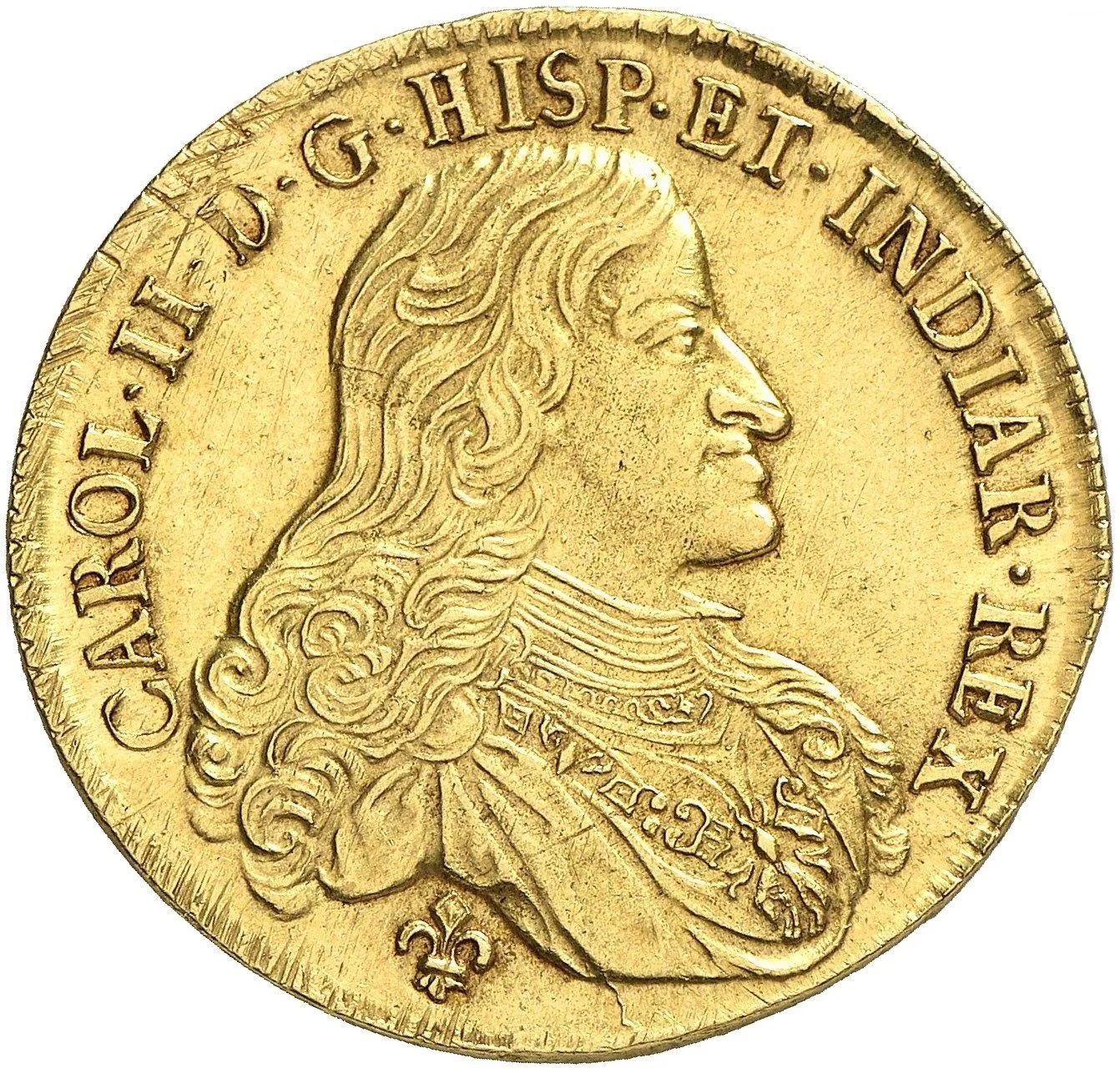
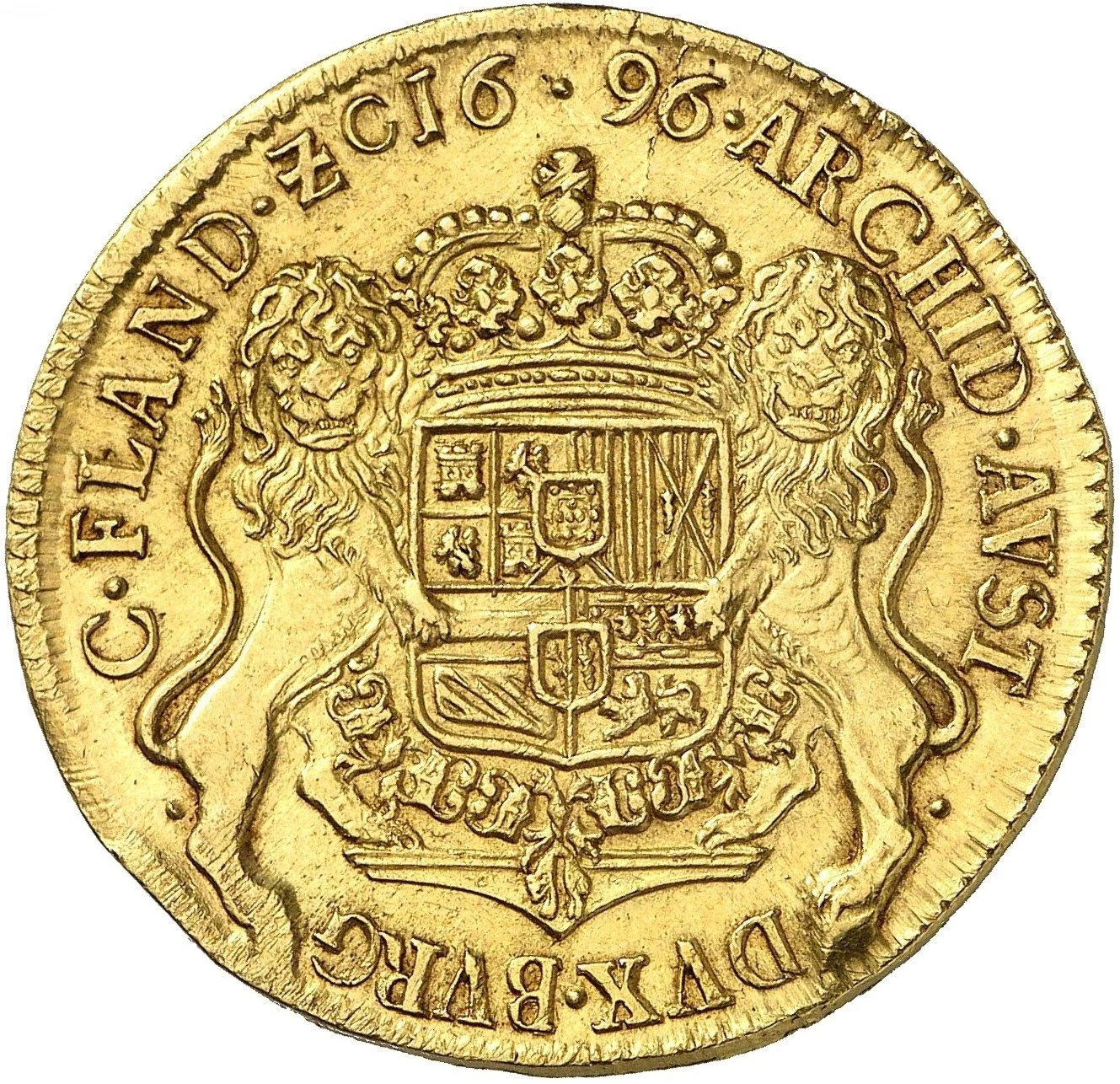
½ Gold Ducaton – Spanish Netherlands
Netherlands
Context
Years: 1696–1700
Country: Netherlands 
Issuer: Spanish Netherlands
Ruler: Charles II
Currency:
(1506—1713)
Subdivision: ½ Gold Ducaton = 4 Sovereigns
Demonetized: Yes
Material
References
KM: #Click to copy to clipboard93
Numista: #349131
Value
Bullion value: $3505.79
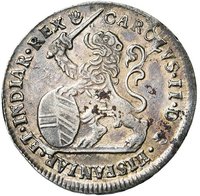
Obverse
Description:
Bust of King Charles II of Spain facing right, in wig, armor, mantle, and the Order of the Golden Fleece, with a fleur-de-lis below.
Inscription:
CAROL · II · D · G · HISP · ET · INDIAR · REX
Script: Latin
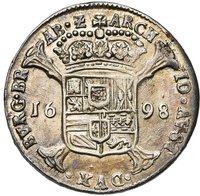
Reverse
Description:
Crowned arms of Charles II of Spain, lion-flanked, with the Golden Fleece below.
Inscription:
ARCHID · AVST · DVX · BVRG · C · FLAND · Z c 16 · 96 ·
Script: Latin
Edge
Mints
| Name | Mark |
|---|---|
| Bruges | — |
Mintings
| Year | Mint Mark | Mintage | Quality | Collection |
|---|---|---|---|---|
| 1696 | — | — | ||
| 1700 | — | — |
Historical background
In 1696, the Spanish Netherlands was embroiled in a severe monetary crisis, a direct consequence of the Nine Years' War (1688-1697). The region, a battleground between Louis XIV's France and the Grand Alliance, faced immense fiscal strain from maintaining armies and fortifications. To meet these expenses, the government in Brussels, under the rule of the Habsburg King Charles II of Spain, resorted to repeated debasements of its coinage. By lowering the silver content in coins like the patagon while keeping their face value, authorities created short-term revenue but triggered a classic "bad money drives out good" scenario, as older, full-weight coins were hoarded or melted down.
This debasement spiraled into a chaotic circulation of coins of varying intrinsic values from different mints and periods, alongside foreign currencies. The resulting confusion crippled commerce, as merchants struggled to assess real values, and credit markets tightened. Prices soared in a vicious cycle of inflation, severely impacting the local population and economy. Attempts to legislate fixed exchange rates between old and new coins failed, as market forces simply ignored the official ordinances.
The crisis reached a pivotal point in 1696 with the attempted "Restoration of Money" under the financial administrator, Count Bergeyck. His plan was a drastic recoinage: to call in all circulating silver, melt it, and reissue new, full-value currency. However, the scheme was undermined by a lack of public trust and insufficient bullion reserves. The population, fearing loss, hoarded their remaining good coins, while the government could not back the new issue adequately. Although some new patagons were struck, the restoration was only partially successful, leaving a legacy of monetary instability that would persist into the following century.
This debasement spiraled into a chaotic circulation of coins of varying intrinsic values from different mints and periods, alongside foreign currencies. The resulting confusion crippled commerce, as merchants struggled to assess real values, and credit markets tightened. Prices soared in a vicious cycle of inflation, severely impacting the local population and economy. Attempts to legislate fixed exchange rates between old and new coins failed, as market forces simply ignored the official ordinances.
The crisis reached a pivotal point in 1696 with the attempted "Restoration of Money" under the financial administrator, Count Bergeyck. His plan was a drastic recoinage: to call in all circulating silver, melt it, and reissue new, full-value currency. However, the scheme was undermined by a lack of public trust and insufficient bullion reserves. The population, fearing loss, hoarded their remaining good coins, while the government could not back the new issue adequately. Although some new patagons were struck, the restoration was only partially successful, leaving a legacy of monetary instability that would persist into the following century.
✨ Legendary