

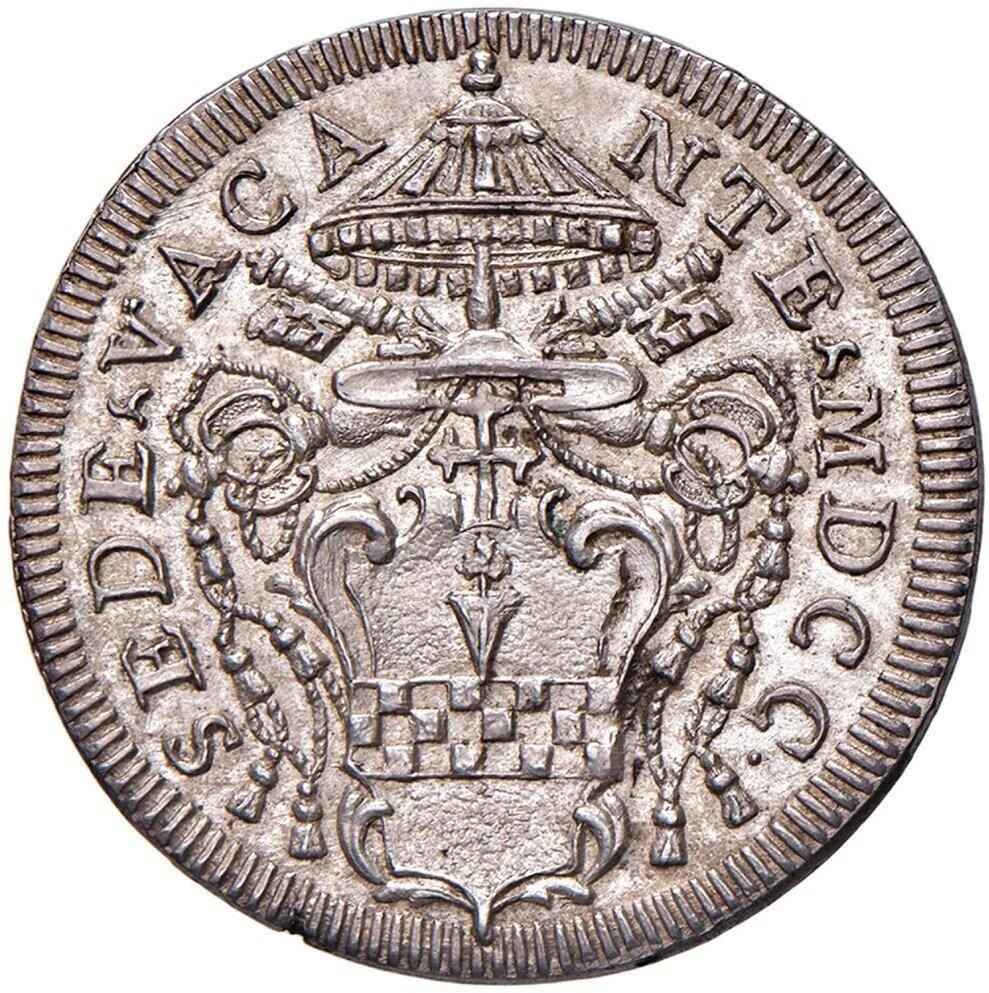
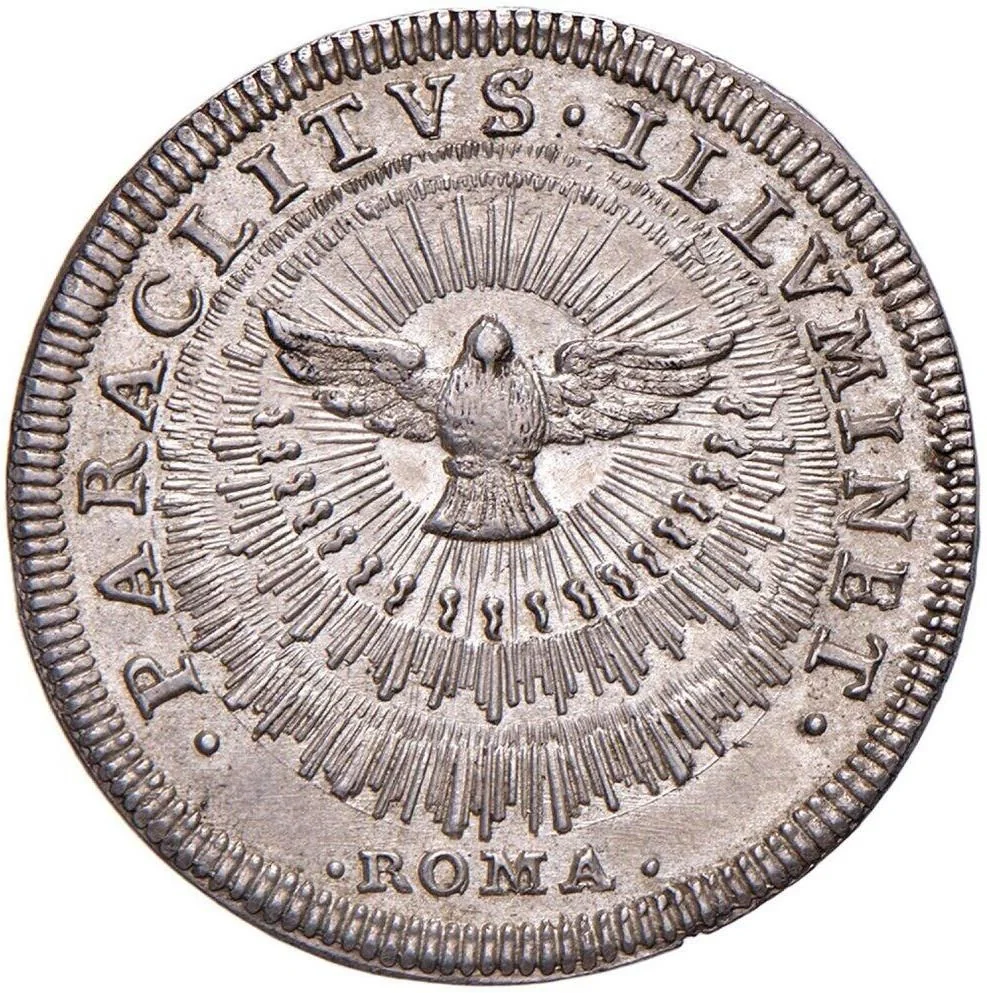
1 Teston – Papal States
Circulating commemorative coins
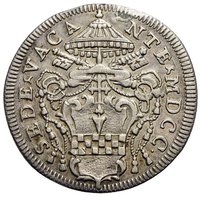
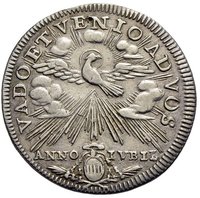
Commemoration: Vacant Seat 1700
Vatican City
Context

Material
References
KM: #Click to copy to clipboard645
Numista: #347436
Value
Bullion value: $23.43
Obverse
Reverse
Edge
Mints
| Name | Mark |
|---|---|
| Rome | — |
Mintings
| Year | Mint Mark | Mintage | Quality | Collection |
|---|---|---|---|---|
| 1700 | — | — |
Historical background
During the early 18th century, the Papal States' monetary system was characterized by significant fragmentation and debasement, a legacy of the preceding turbulent century. The central papal mint in Rome struggled to assert a unified currency, while several major cities within the States, such as Bologna and Ancona, retained the right to issue their own coinage. This resulted in a complex and often confusing circulation of multiple coin types with varying values, including the scudo (in gold and silver), the giulio, and the baiocco. The financial strain of the War of the Spanish Succession (1701-1714), in which Pope Clement XI (1700-1721) was reluctantly involved, placed heavy demands on the papal treasury, exacerbating the temptation to debase coinage to raise short-term revenue.
The primary silver coin was the papal scudo, but its silver content and value were unstable. A more common unit of account was the lira, divided into 20 soldi or 240 denari, used for everyday transactions and bookkeeping, though it did not exist as a physical coin. The chronic shortage of small change (moneta spicciola) for daily commerce was a persistent problem, often alleviated by the circulation of low-value copper coins from neighboring states and the widespread practice of cutting larger coins into pieces. This monetary confusion hindered trade and created opportunities for fraud, as the public had to constantly navigate the fluctuating exchange rates between various physical coins and the notional accounting system.
Pope Clement XI attempted reforms, notably with the 1703 issue of new silver giulii and a gold scudo, but these efforts were largely overwhelmed by the scale of the problem and the entrenched system of local minting rights. The underlying issue was not merely technical but stemmed from the Papal States' weak central administration and its reliance on outdated fiscal structures. Consequently, the currency situation remained a reflection of the broader economic and political stagnation within the Papal States, lacking the centralized monetary authority that was strengthening in contemporary nation-states like France or England, and would persist as a challenge for successive pontiffs throughout the 1700s.
The primary silver coin was the papal scudo, but its silver content and value were unstable. A more common unit of account was the lira, divided into 20 soldi or 240 denari, used for everyday transactions and bookkeeping, though it did not exist as a physical coin. The chronic shortage of small change (moneta spicciola) for daily commerce was a persistent problem, often alleviated by the circulation of low-value copper coins from neighboring states and the widespread practice of cutting larger coins into pieces. This monetary confusion hindered trade and created opportunities for fraud, as the public had to constantly navigate the fluctuating exchange rates between various physical coins and the notional accounting system.
Pope Clement XI attempted reforms, notably with the 1703 issue of new silver giulii and a gold scudo, but these efforts were largely overwhelmed by the scale of the problem and the entrenched system of local minting rights. The underlying issue was not merely technical but stemmed from the Papal States' weak central administration and its reliance on outdated fiscal structures. Consequently, the currency situation remained a reflection of the broader economic and political stagnation within the Papal States, lacking the centralized monetary authority that was strengthening in contemporary nation-states like France or England, and would persist as a challenge for successive pontiffs throughout the 1700s.
✨ Legendary