

1 patagon – Spanish Netherlands
Add to wishlist
Netherlands
Context
Years: 1612–1621
Country: Netherlands
Issuer: Spanish Netherlands
Currency:
(1506—1713)
Subdivision: 1 patagon = 48 Stuivers
Demonetized: Yes
Material
Weight: 28.25 g
Silver Weight:: 24.66 g
Shape: Irregular round
Composition: 87.3% Silver
Magnetic: No
Technique: Hammered
References
KM: #
Numista: #347298
Value
Bullion value: $63.02
Obverse
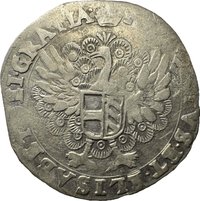
Description:
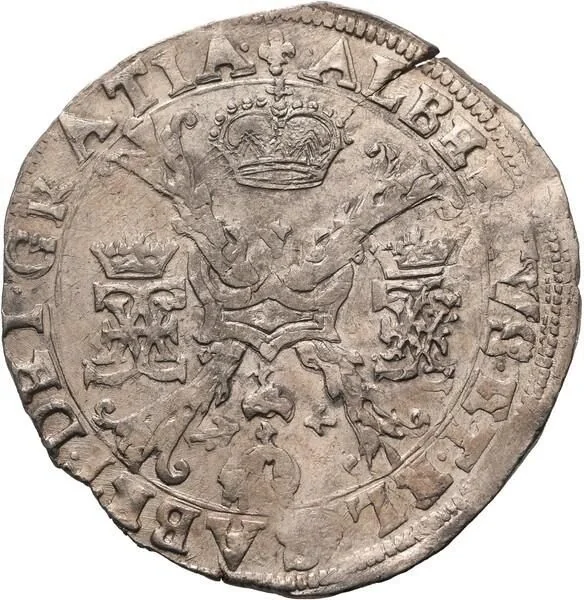
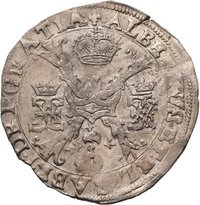
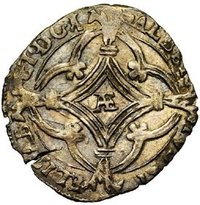
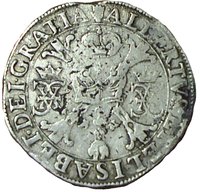
Burgundian cross with central firesteel, suspending the Golden Fleece jewel, between two crowned monograms; fleur-de-lis mint mark above.
Inscription:
· ALBERTVS · ET · ELISABET · DEI · GRATIA ·
Script: Latin
Reverse
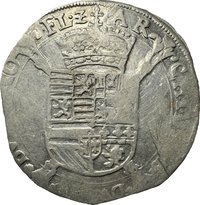
Description:
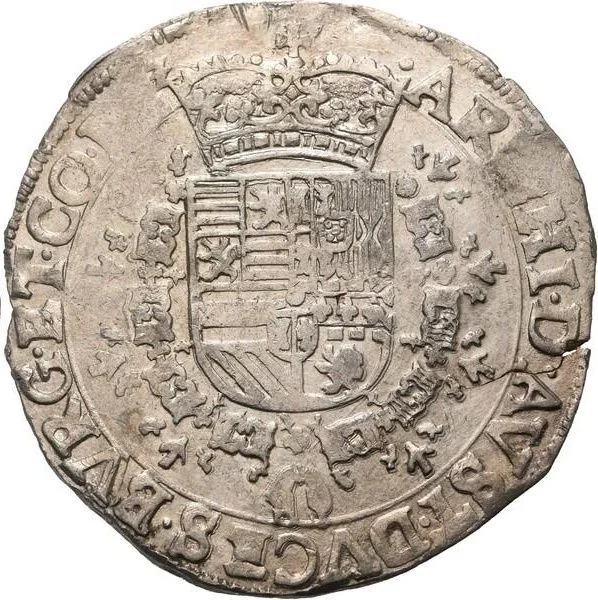
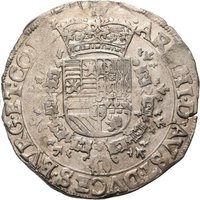
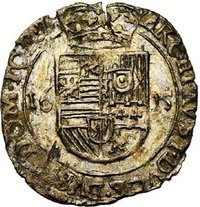
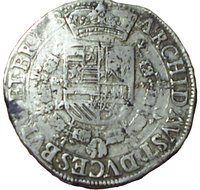
Crowned coat of arms encircled by the Golden Fleece collar. Date above crown, if present.
Inscription:
· ARCHI · D: AVST · DVCES · BVRG · ET · CO˙ FL
Script: Latin
Edge
Categories
| Symbols> Coat of Arms |
| Symbols> Monogram |
Mints
| Name | Mark |
|---|---|
| Bruges | Lis |
Mintings
| Year | Mint Mark | Mintage | Quality | Collection |
|---|---|---|---|---|
| — | — | — | ||
| 1616 | — | — | ||
| 1617 | — | — | ||
| 1618 | — | — | ||
| 1619 | — | — | ||
| 1620 | — | — | ||
| 1621 | — | — |
Historical background
In 1612, the Spanish Netherlands found itself in a precarious monetary situation, a direct consequence of the ongoing Eighty Years' War (1568–1648). The protracted conflict against the Dutch Republic had drained the Habsburg treasury, leading to repeated debasements of the coinage. Authorities, particularly under Archdukes Albert and Isabella, would recall coins, melt them down, and reissue them with lower precious metal content but the same face value. This practice generated short-term revenue for the war effort but eroded public trust and caused severe inflation, as the intrinsic value of coins diverged wildly from their nominal worth.
The region was also plagued by a chaotic circulation of diverse currencies. Alongside the debased local issues, high-quality coins from neighboring states, like the Dutch rijksdaalder and French écu, circulated widely. These "good" coins were often hoarded or exported, leaving the inferior, debased currency in daily use—a classic example of Gresham's Law, where "bad money drives out good." This monetary fragmentation crippled commerce, as merchants and citizens faced constant uncertainty about exchange rates and the real value of their payments.
Faced with this crisis, the Archducal government attempted reform. The goal was to stabilize the currency by introducing new, full-weight coins and fixing their values relative to one another. However, these efforts in the early 1610s, including ordinances in 1611 and 1612, met with limited success. The fundamental pressures of wartime finance remained, and without addressing the structural deficit or achieving military victory, the authorities struggled to restore confidence. Thus, in 1612, the monetary system remained unstable, a persistent economic weakness undermining the region's prosperity and the Habsburg's political control.
The region was also plagued by a chaotic circulation of diverse currencies. Alongside the debased local issues, high-quality coins from neighboring states, like the Dutch rijksdaalder and French écu, circulated widely. These "good" coins were often hoarded or exported, leaving the inferior, debased currency in daily use—a classic example of Gresham's Law, where "bad money drives out good." This monetary fragmentation crippled commerce, as merchants and citizens faced constant uncertainty about exchange rates and the real value of their payments.
Faced with this crisis, the Archducal government attempted reform. The goal was to stabilize the currency by introducing new, full-weight coins and fixing their values relative to one another. However, these efforts in the early 1610s, including ordinances in 1611 and 1612, met with limited success. The fundamental pressures of wartime finance remained, and without addressing the structural deficit or achieving military victory, the authorities struggled to restore confidence. Thus, in 1612, the monetary system remained unstable, a persistent economic weakness undermining the region's prosperity and the Habsburg's political control.
✨ Legendary