Logo Title
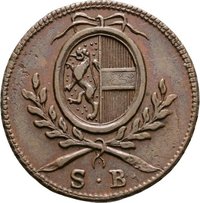
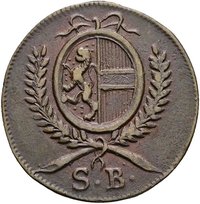
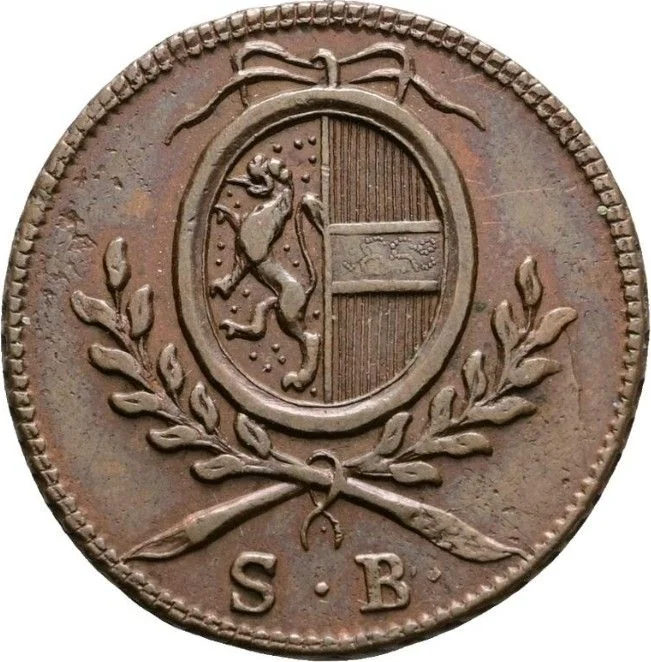
obverse
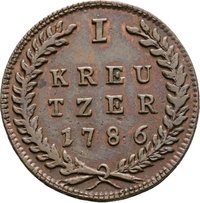
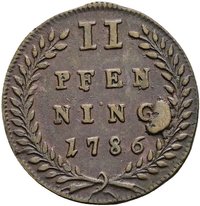
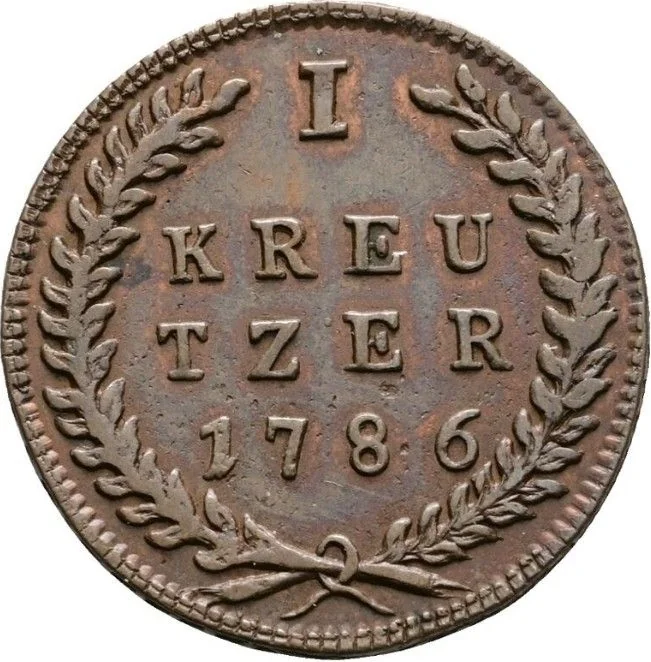
reverse
Auktionen Frühwald
Context
Years: 1786–1790
Currency:
Demonetized: Yes
Material
Diameter: 24 mm
Weight: 5.68 g
Shape: Round
Composition: Copper
Magnetic: No
Technique: Milled
Alignment: Medal alignment
Obverse
OBVERSE ↑
flip
Reverse
REVERSE ↑
References
KM: #Click to copy to clipboard458
Numista: #34570

Obverse

Description:
Oval ornate shield with Salzburg arms, ribbons above, wreath below, and SB letters at bottom.
Inscription:
S . B
Script: Latin

Reverse

Description:
Date encircled by wreath.
Inscription:
I

KREU

TZER

1786
Script: Latin

Edge


Mints

NameMark
Salzburg

Mintings

YearMint MarkMintageQualityCollection
1786
1790

Historical background

In 1786, the currency situation within the Prince-Archbishopric of Salzburg was characterized by a complex and often cumbersome system typical of the Holy Roman Empire's fragmented monetary landscape. The principality did not possess an independent mint of its own for large-scale coinage. Instead, its circulating money was a mixture of foreign and domestic issues. The most important coins in daily use were the Salzburg Gulden (florin), which was subdivided into 60 Kreuzer. However, the actual coins in circulation were heavily influenced by the powerful neighboring Bavarian monetary system, with Bavarian coins circulating widely alongside those from other German states and even remnants of older Tyrolean issues.

This monetary plurality created significant practical challenges. The value and silver content of coins from different territories varied, leading to constant difficulties in exchange, price calculations, and trade. Archbishop Hieronymus von Colloredo, a reform-minded ruler influenced by Enlightenment principles, recognized these inefficiencies. His administration sought to bring order to the system, but its authority was limited without a sovereign mint. Consequently, the monetary economy relied heavily on the stability and policies of larger neighbors, particularly Bavaria and Austria, making Salzburg vulnerable to external monetary decisions and debasements.

The year 1786 falls within a period of relative stability under Colloredo, but it was a stability of managed complexity rather than simplicity. Just a few years later, this fragile system would face existential upheaval. The secularization of 1803, which dissolved the Prince-Archbishopric, abruptly ended Salzburg's autonomous monetary arrangements. Its territories were subsequently absorbed by other powers, primarily the Austrian Empire, which imposed its own unified currency system, rendering the old Salzburg Gulden a relic of the ecclesiastical state's former independence.

Series: 1786 Bishopric of Salzburg circulation coins

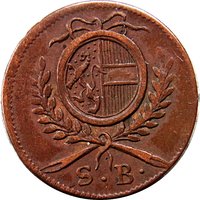
1 Pfennig obverse
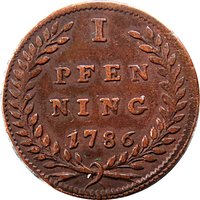
1 Pfennig reverse
1 Pfennig
1786-1790
2 Pfennigs obverse
2 Pfennigs reverse
2 Pfennigs
1786-1791
1 Kreuzer obverse
1 Kreuzer reverse
1 Kreuzer
1786-1790
5 Kreuzer obverse
5 Kreuzer reverse
5 Kreuzer
1786-1788
💎 Very Rare