

2 ducats – Denmark
Add to wishlist
Denmark
Context
References
KM: #
Numista: #345594
Value
Bullion value: $1054.73
Obverse
Description:
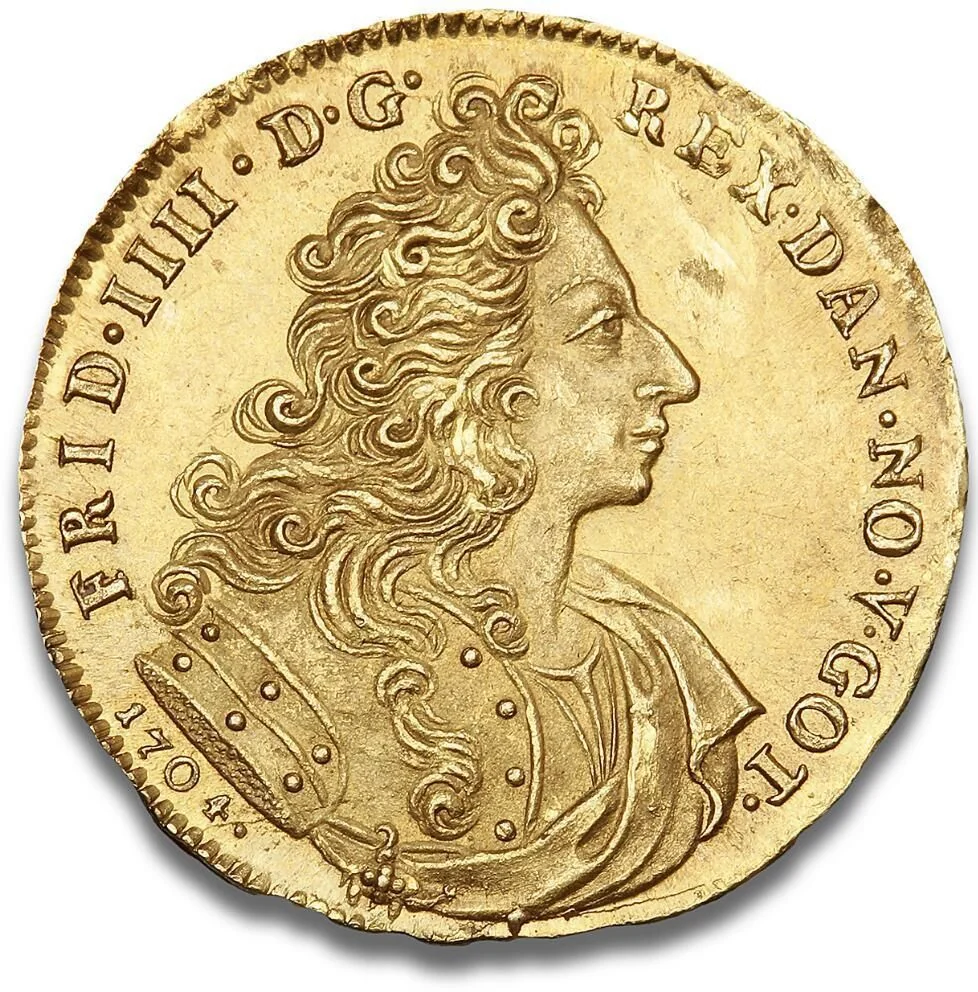
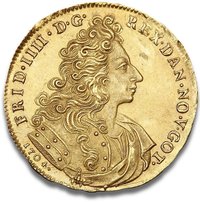
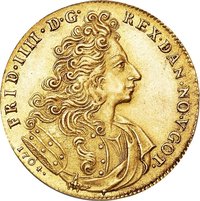
Armored bust of Frederik IV facing right, wearing a mantle and the Order of the Elephant. Date below elbow.
Inscription:
FRID • IIII • D • G • REX • DAN • NO • V • GOT •
1704
1704
Script: Latin
Reverse
Edge
Mintings
| Year | Mint Mark | Mintage | Quality | Collection |
|---|---|---|---|---|
| 1701 | — | — | ||
| 1704 | — | — |
Historical background
In 1701, Denmark operated under a bimetallic monetary system, a legacy of the 1625 krone and mark ordinance that had established the rigsdaler as the primary unit of account. However, the reality of the currency situation was one of significant complexity and instability. The system was plagued by a chronic shortage of high-quality, full-weight coinage, leading to a circulation filled with a confusing mix of older, worn domestic coins and a multitude of foreign currencies—primarily German, Dutch, and Swedish—which traded at fluctuating values. This created a constant challenge for commerce, as merchants and the state had to navigate the daily discrepancies between the official kurant (accounting) values and the actual market value of the physical coins.
The root cause of this instability was the ongoing Great Northern War (1700-1721), in which Denmark-Norway was a key participant. The immense cost of financing the military placed severe strain on the state treasury, leading to repeated debasements of the coinage. To generate short-term revenue, the monarchy would recall coins, re-mint them with a lower precious metal content, and pocket the difference. This practice, while fiscally expedient, eroded public trust and fueled inflation, as more coins of lesser intrinsic value chased the same goods. The situation was exacerbated by the widespread clipping and counterfeiting of coins, further degrading the monetary stock.
Consequently, the year 1701 fell within a period of monetary weakness and ad-hoc management. The state’s focus was on wartime finance rather than systemic reform, leaving the economy to cope with an unreliable medium of exchange. This turbulent environment would eventually necessitate major reforms, most notably under King Christian V’s later regulations and, more decisively, with the introduction of the rigsbankdaler in 1713, which aimed to separate the state's fiscal needs from the circulating currency. For the time being, however, Denmark’s currency situation remained fragmented and unstable, a direct reflection of the pressures of war on the nascent absolutist state.
The root cause of this instability was the ongoing Great Northern War (1700-1721), in which Denmark-Norway was a key participant. The immense cost of financing the military placed severe strain on the state treasury, leading to repeated debasements of the coinage. To generate short-term revenue, the monarchy would recall coins, re-mint them with a lower precious metal content, and pocket the difference. This practice, while fiscally expedient, eroded public trust and fueled inflation, as more coins of lesser intrinsic value chased the same goods. The situation was exacerbated by the widespread clipping and counterfeiting of coins, further degrading the monetary stock.
Consequently, the year 1701 fell within a period of monetary weakness and ad-hoc management. The state’s focus was on wartime finance rather than systemic reform, leaving the economy to cope with an unreliable medium of exchange. This turbulent environment would eventually necessitate major reforms, most notably under King Christian V’s later regulations and, more decisively, with the introduction of the rigsbankdaler in 1713, which aimed to separate the state's fiscal needs from the circulating currency. For the time being, however, Denmark’s currency situation remained fragmented and unstable, a direct reflection of the pressures of war on the nascent absolutist state.
✨ Legendary