

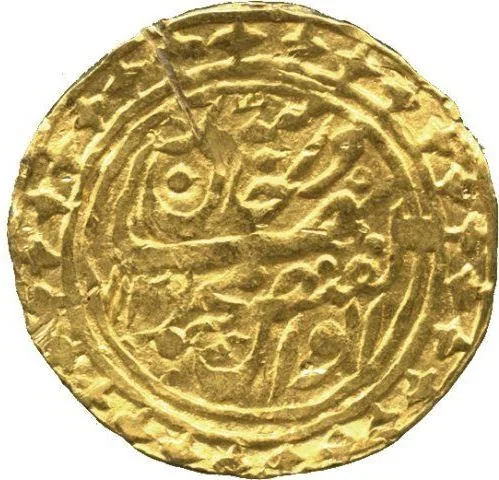
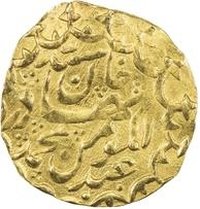
Obverse
Description:
Ruler's name and titles in double circle.
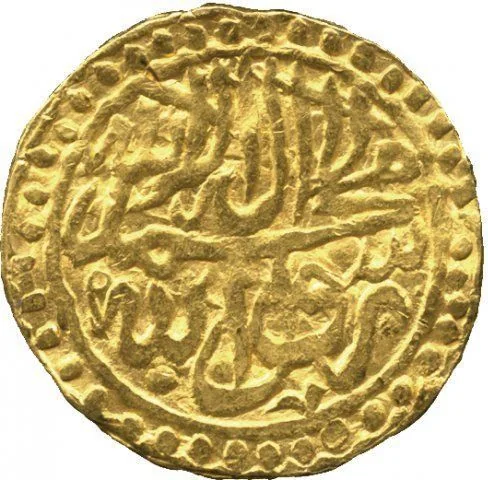
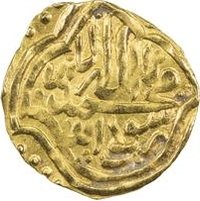
Reverse
Description:
Kalima in double circle, pellets between.
Edge
Mintings
| Year | Mint Mark | Mintage | Quality | Collection |
|---|---|---|---|---|
| — | — | — | ||
| 1713 | — | — | ||
| 1719 | — | — |
Historical background
In 1705, the Janid dynasty (also known as the Ashtarkhanids) ruled over the Khanate of Bukhara, a state in decline amidst regional instability and economic strain. The currency system, inherited from earlier Timurid and Shaybanid rulers, was primarily based on the silver tanga and the copper fulus, but it was in a state of severe debasement and fragmentation. Decades of political infighting, military campaigns against the Safavids and Khiva, and a general loss of control over trade routes had drained the state treasury, leading successive khans to reduce the silver content in coinage to fund their expenditures, a practice that eroded public trust and the currency's value.
The monetary landscape was further complicated by the widespread circulation of older, full-weight coins from more prosperous eras, which were hoarded or used for large transactions, alongside the new, inferior coins. This created a two-tiered system where the intrinsic value of a coin mattered more than its face value. Furthermore, the Khanate’s mints (in Bukhara, Balkh, and elsewhere) often operated with inconsistent standards, and provincial governors sometimes issued their own copper fulus, leading to a lack of uniformity and facilitating rampant counterfeiting, which added to the market chaos.
Consequently, the currency situation of 1705 reflected and exacerbated the dynasty's broader crises. Debasement triggered price inflation, particularly for everyday goods traded in copper, harming the common population and undermining the stability of the bazaars, which were central to the region's economy. This monetary instability weakened the Janid state's authority, as its most tangible economic instrument—coinage—became a symbol of its fragility, contributing to the social discontent that would persist until the dynasty's eventual overthrow by the Manghit chiefs in the later 18th century.
The monetary landscape was further complicated by the widespread circulation of older, full-weight coins from more prosperous eras, which were hoarded or used for large transactions, alongside the new, inferior coins. This created a two-tiered system where the intrinsic value of a coin mattered more than its face value. Furthermore, the Khanate’s mints (in Bukhara, Balkh, and elsewhere) often operated with inconsistent standards, and provincial governors sometimes issued their own copper fulus, leading to a lack of uniformity and facilitating rampant counterfeiting, which added to the market chaos.
Consequently, the currency situation of 1705 reflected and exacerbated the dynasty's broader crises. Debasement triggered price inflation, particularly for everyday goods traded in copper, harming the common population and undermining the stability of the bazaars, which were central to the region's economy. This monetary instability weakened the Janid state's authority, as its most tangible economic instrument—coinage—became a symbol of its fragility, contributing to the social discontent that would persist until the dynasty's eventual overthrow by the Manghit chiefs in the later 18th century.
✨ Legendary