

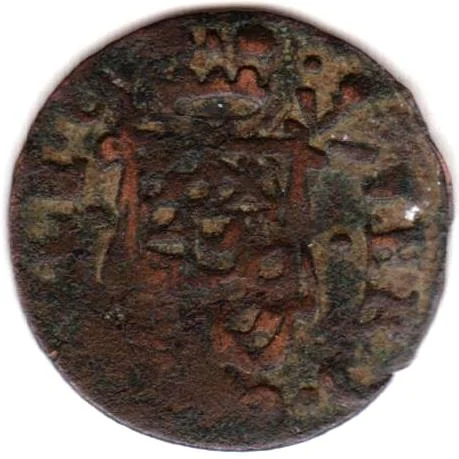
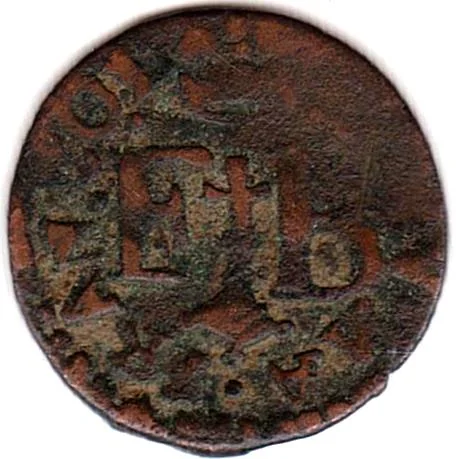
1 Gigot – Prince-bishopric of Liege
Belgium
Context
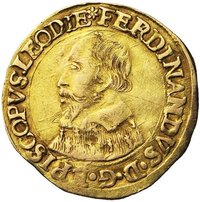
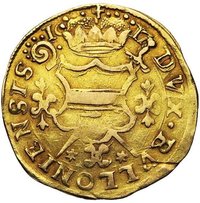
Years: 1612–1650
Country: Belgium 
Issuer: Prince-bishopric of Liege
Ruler: Ferdinand of Bavaria
Currency:
(1545—1650)
Demonetized: Yes
Material
References
KM: #Click to copy to clipboard25
Numista: #342134
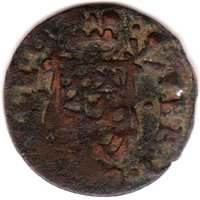
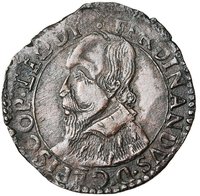
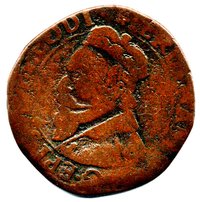
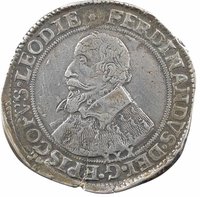
Obverse
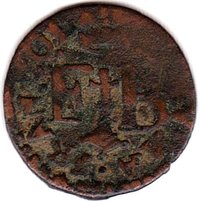
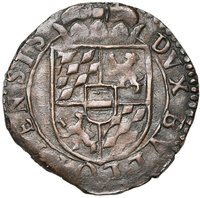
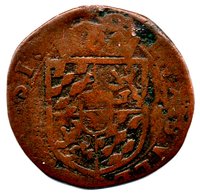
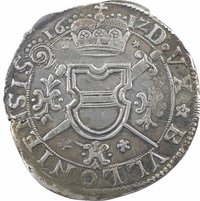
Reverse
Edge
Mints
| Name | Mark |
|---|---|
| Liège | — |
Mintings
| Year | Mint Mark | Mintage | Quality | Collection |
|---|---|---|---|---|
| — | — | — |
Historical background
In 1612, the Prince-Bishopric of Liège found itself in a complex and challenging monetary situation, typical of the fragmented Holy Roman Empire. The principality did not possess an exclusive right to mint its own coins; this privilege was shared with powerful subsidiary entities, notably the city of Liège and the Cathedral Chapter. This resulted in a proliferation of different coins in circulation, including local issues and a vast array of foreign currencies from neighboring states like the Spanish Netherlands, the Dutch Republic, and France, leading to chronic confusion and instability in everyday commerce.
The core of the problem was the frequent debasement of coinage. Authorities, often in need of revenue, would reduce the precious metal content in newly minted coins while assigning them the same face value. This practice, while profitable for the minting authority in the short term, eroded public trust and drove older, purer coins out of circulation (Gresham's Law). Consequently, the value of money was in constant flux, harming trade, discouraging investment, and creating uncertainty for both merchants and the general population.
Attempts at regulation were made. The Prince-Bishop and the three Estates (clergy, nobility, and commons) periodically issued ordinances to fix exchange rates between the myriad of coins and to standardize the monetary units of account—the florin and the sou. However, these edicts, such as those promulgated by Prince-Bishop Ernest of Bavaria (r. 1581-1612), were difficult to enforce across the territorially disjointed principality. Thus, in 1612, the monetary landscape remained one of persistent disorder, a significant administrative weakness that would plague the prince-bishopric for much of the 17th century.
The core of the problem was the frequent debasement of coinage. Authorities, often in need of revenue, would reduce the precious metal content in newly minted coins while assigning them the same face value. This practice, while profitable for the minting authority in the short term, eroded public trust and drove older, purer coins out of circulation (Gresham's Law). Consequently, the value of money was in constant flux, harming trade, discouraging investment, and creating uncertainty for both merchants and the general population.
Attempts at regulation were made. The Prince-Bishop and the three Estates (clergy, nobility, and commons) periodically issued ordinances to fix exchange rates between the myriad of coins and to standardize the monetary units of account—the florin and the sou. However, these edicts, such as those promulgated by Prince-Bishop Ernest of Bavaria (r. 1581-1612), were difficult to enforce across the territorially disjointed principality. Thus, in 1612, the monetary landscape remained one of persistent disorder, a significant administrative weakness that would plague the prince-bishopric for much of the 17th century.
✨ Legendary