Logo Title
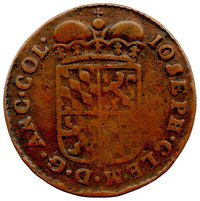
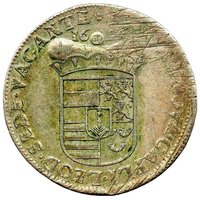
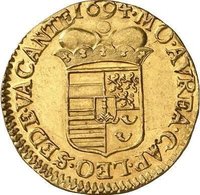
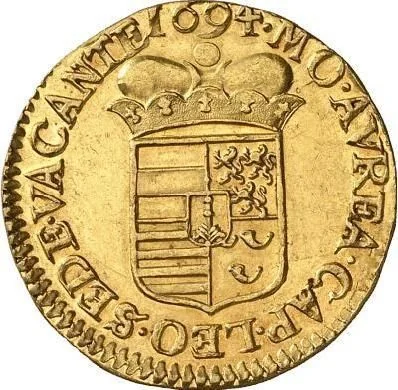
obverse
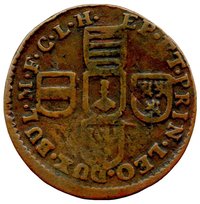
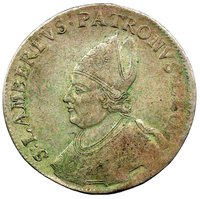
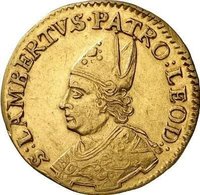
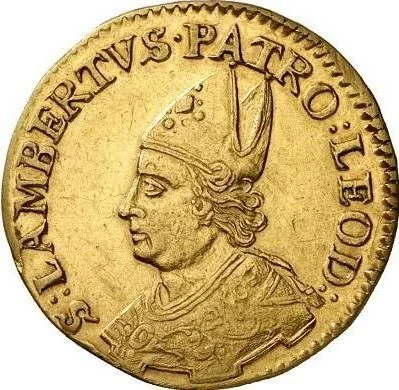
reverse
Fritz Rudolf Künker GmbH & Co. KG, Osnabrück and Lübke & Wiedemann KG, Leonberg
Context
Year: 1694
Country: Belgium Country flag
Period:
(1723—1724)
Currency:
(1650—1795)
Demonetized: Yes
Material
Weight: 7 g
Gold weight: 6.90 g
Composition: 98.6% Gold
Magnetic: No
References
KM: #Click to copy to clipboard110
Numista: #340118
Value
Bullion value: $1147.51

Obverse

Description:
Arms with a crown.
Inscription:
• MO • AVREA • CAP • LEO • SEDE • VACANTE 1694
Script: Latin

Reverse

Description:
Saint Lambert bust, left profile.
Inscription:
S: LAMBERTVS • PATRO: LEOD:
Script: Latin

Edge

Mintings

YearMint MarkMintageQualityCollection
1694

Historical background

In 1694, the Prince-Bishopric of Liège, a semi-independent ecclesiastical state within the Holy Roman Empire, faced a severe monetary crisis typical of the "Kipper- und Wipperzeit" (the clipping and culling period) that plagued Central Europe in the late 17th century. The core problem was the widespread debasement of coinage. Facing immense financial pressure from the Nine Years' War (1688-1697), neighboring states like France and the Spanish Netherlands heavily debased their own currencies to fund military expenditures. This flood of poor-quality, low-intrinsic-value coinage spilled into Liège, driving out its better, full-weight coins (Gresham's Law) and causing rampant inflation, commercial disruption, and public distrust.

The situation was exacerbated by the actions of Prince-Bishop Jean-Louis d’Elderen (r. 1688-1694) himself. In a desperate attempt to raise revenue for the bishopric's defenses and obligations, his government engaged in official debasement. The mint in Liège began striking coins, particularly double patards and liards, with reduced silver or copper content while maintaining their face value. This short-term fiscal measure further eroded confidence, as merchants and the populace struggled with the instability of not knowing the true worth of the money in their hands, leading to price surges and economic hardship.

The death of Bishop d’Elderen in February 1694 did not immediately resolve the crisis, leaving a fraught monetary environment for his successor, Joseph Clemens of Bavaria. The year 1694 thus represents a peak of instability, characterized by a vicious cycle of competitive debasement, currency confusion, and inflation. The crisis underscored the vulnerability of small states like Liège to the monetary policies of powerful neighbors during wartime and the damaging consequences of resorting to currency manipulation as a quick fiscal fix.

Series: 1694 Prince-bishopric of Liege circulation coins

1 Liard obverse
1 Liard reverse
1 Liard
1694-1723
1 Patagon obverse
1 Patagon reverse
1 Patagon
1694
2 Ducats obverse
2 Ducats reverse
2 Ducats
1694
1 Patagon obverse
1 Patagon reverse
1 Patagon
1694-1702
Legendary