

2 ducats – Hungary
Add to wishlist
Hungary
Obverse
Description:
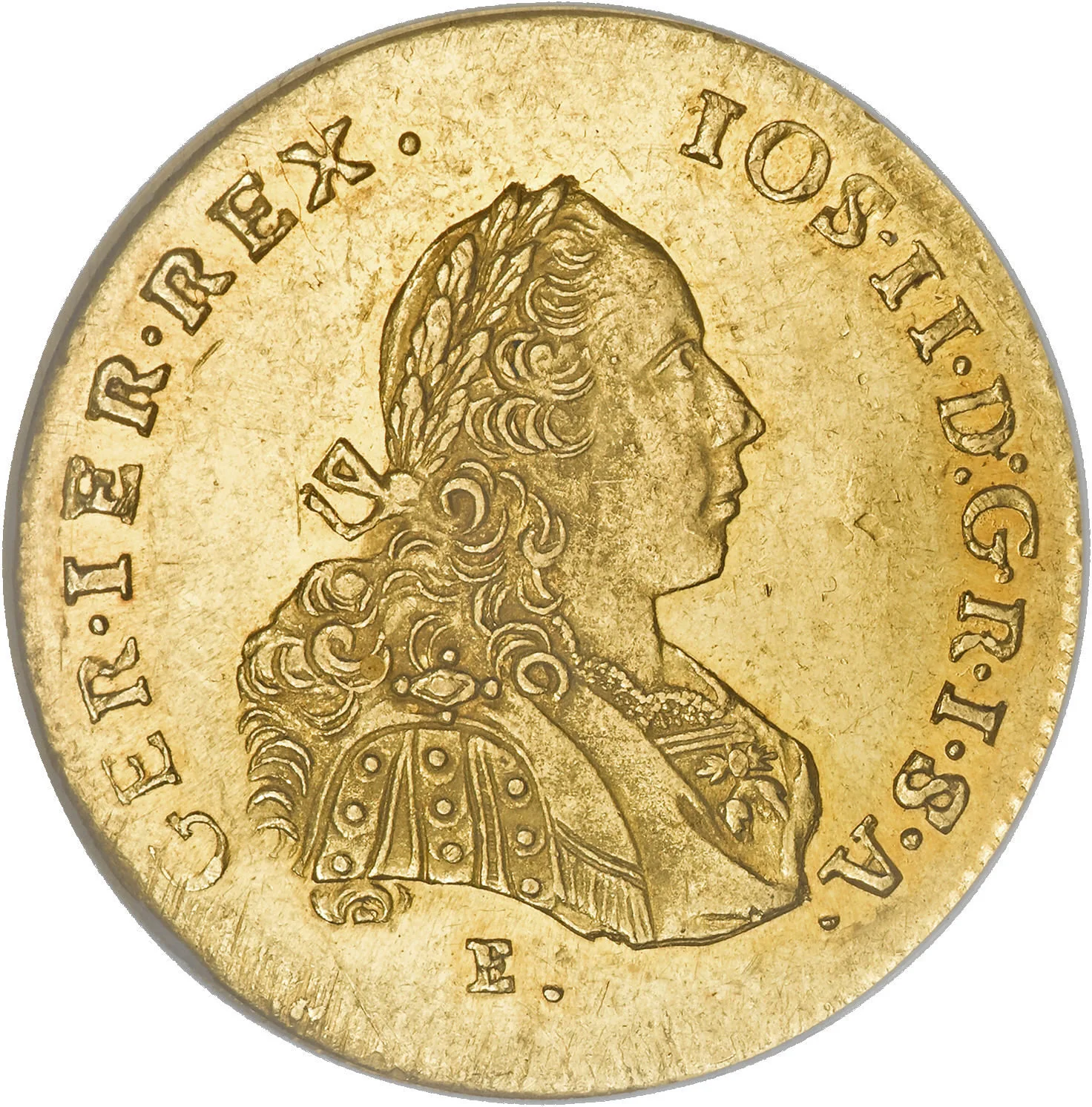
Right-facing laureate portrait, legend from 1 o'clock, mint mark below bust.
Inscription:
IOS · II · D · G · R · I · S · A · GER · IER· REX
E.
E.
Script: Latin
Reverse
Description:
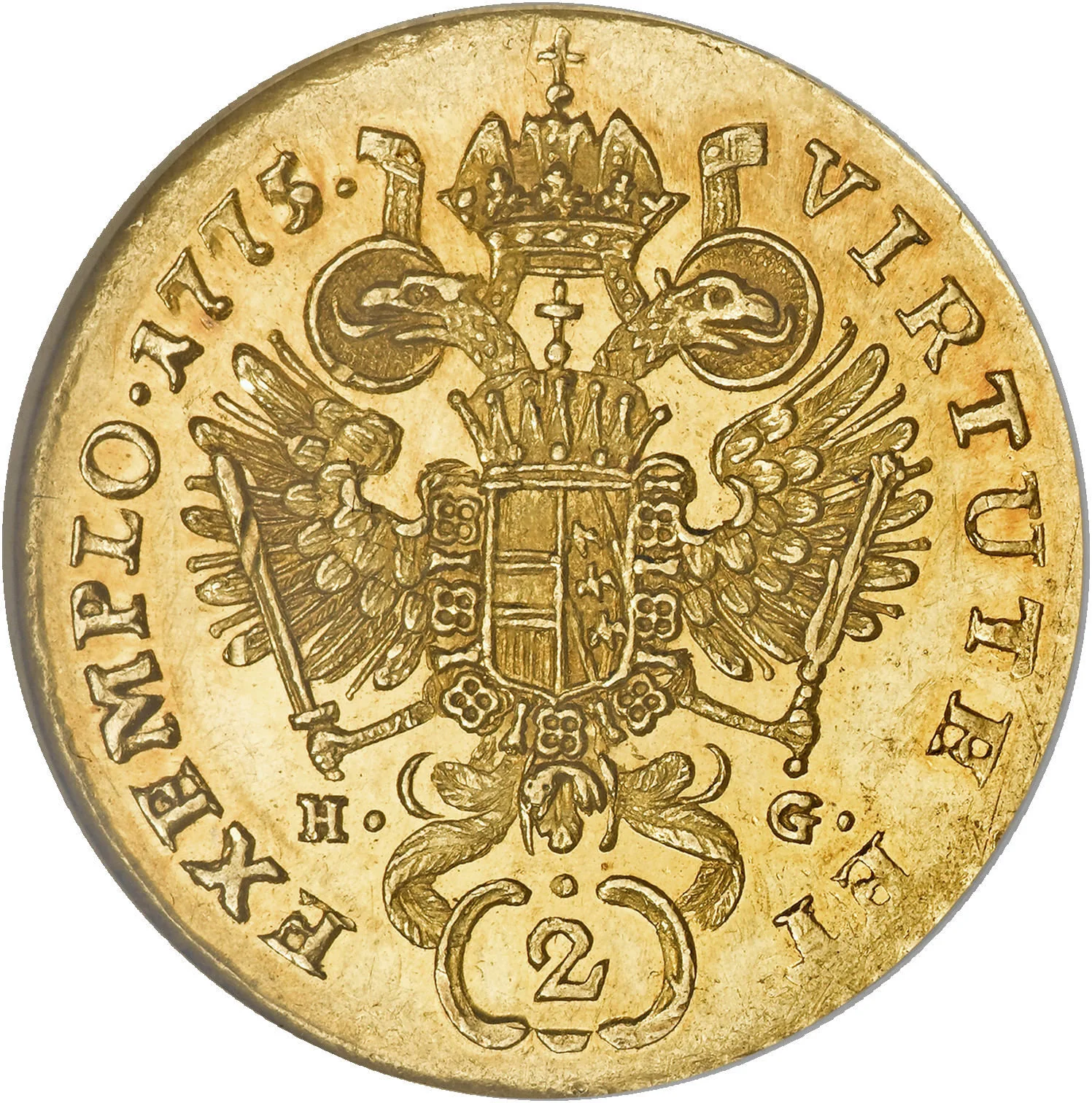
Crowned double-headed eagle with Habsburg-Lorraine arms, mintmark split by tail feathers, value (2) framed below, legend around from 1 o'clock.
Inscription:
VIRTUTE ET EXEMPLO 1775
H· G ·
2
H· G ·
2
Script: Latin
Edge
Mints
| Name | Mark |
|---|---|
| Alba Iulia | E |
Mintings
Historical background
In 1768, Hungary's currency situation was characterized by the complex and often unstable monetary system of the Habsburg Monarchy, which the Kingdom of Hungary was a part of. The primary circulating coin was the silver Conventionsthaler (or Konventionstaler), established by a 1753 monetary convention between Austria and Bavaria. This large silver coin was the standard for large transactions and trade, valued at 2 Gulden (or Florins) in the common accounting system. However, the everyday reality for most Hungarians involved a plethora of smaller silver and copper coins, such as kreuzers and denars, whose values and metal content were frequently manipulated.
The system was under significant strain due to the financial demands of the Seven Years' War (1756-1763), which had just concluded. To help finance the war, the state had engaged in debasement—reducing the precious metal content in coins—particularly in lower-denomination copper and billon (low-grade silver) coins. This led to chronic inflation, a loss of public confidence in the currency, and widespread confusion in exchange rates between the various regions of the Empire and their different monetary traditions. Furthermore, a substantial amount of obsolete and foreign coinage still circulated, complicating commerce.
Empress Maria Theresa and her advisors were actively working to centralize and stabilize the monetary system. This effort would culminate in the major monetary reform of 1769/1770, which was already in preparation in 1768. This reform aimed to standardize coinage across the Habsburg lands, introducing new, unified silver Thalers and Gulden, and phasing out debased and irregular coins. Therefore, the currency situation in 1768 was one of transition, marked by the lingering disorder of wartime finance and the imminent imposition of a more controlled, imperial monetary order from Vienna.
The system was under significant strain due to the financial demands of the Seven Years' War (1756-1763), which had just concluded. To help finance the war, the state had engaged in debasement—reducing the precious metal content in coins—particularly in lower-denomination copper and billon (low-grade silver) coins. This led to chronic inflation, a loss of public confidence in the currency, and widespread confusion in exchange rates between the various regions of the Empire and their different monetary traditions. Furthermore, a substantial amount of obsolete and foreign coinage still circulated, complicating commerce.
Empress Maria Theresa and her advisors were actively working to centralize and stabilize the monetary system. This effort would culminate in the major monetary reform of 1769/1770, which was already in preparation in 1768. This reform aimed to standardize coinage across the Habsburg lands, introducing new, unified silver Thalers and Gulden, and phasing out debased and irregular coins. Therefore, the currency situation in 1768 was one of transition, marked by the lingering disorder of wartime finance and the imminent imposition of a more controlled, imperial monetary order from Vienna.

✨ Legendary