Logo Title
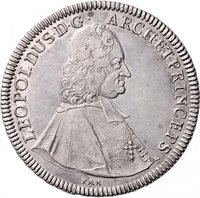
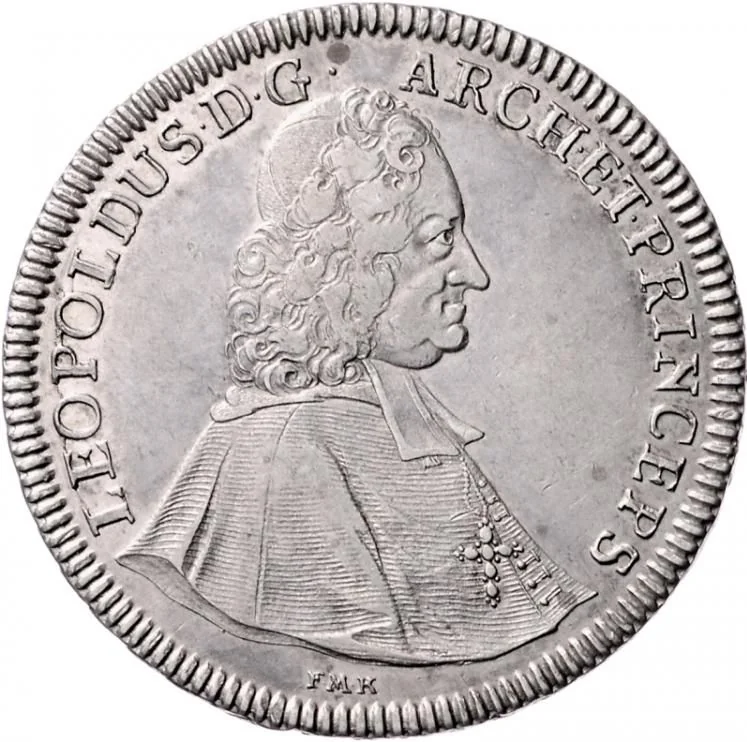
obverse
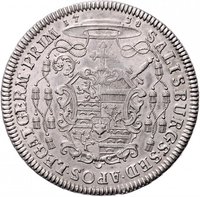
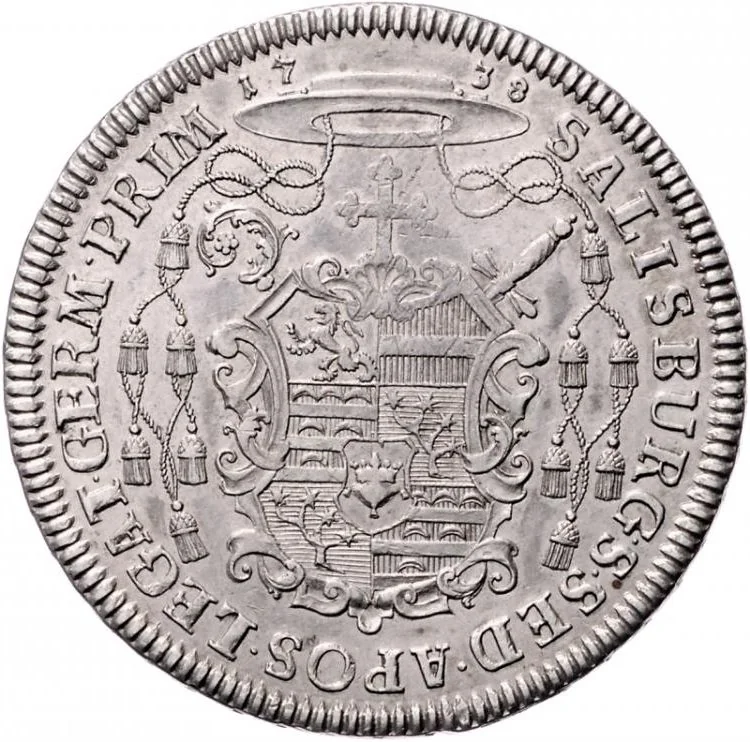
reverse
Auktionen Frühwald
Context
Years: 1738–1744
Currency:
Demonetized: Yes
Material
Diameter: 42 mm
Weight: 29.1 g
Silver weight: 29.10 g
Shape: Round
Composition: Silver
Magnetic: No
References
KM: #Click to copy to clipboard338
Numista: #33744
Value
Bullion value: $82.32

Obverse

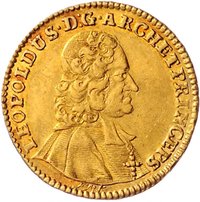
Description:
Archbishop facing right, legend encircling. Signed FMK.
Inscription:
LEOPOLDUS D G ARCH ET PRINCEPS

FMK
Script: Latin

Reverse

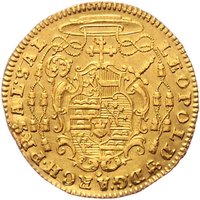
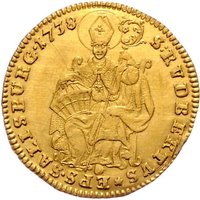
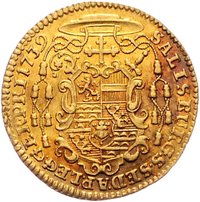
Description:
Archbishop's arms under a hat, on a shield with sword, cross, and crozier. Legend around (starts at 1 o'clock).
Inscription:
SALISBURG S SED APOST LEGAT GER PRIMAS
Script: Latin

Edge

Mintings

YearMint MarkMintageQualityCollection
1738FMK
1739FMK
1740FMK
1742FMK
1744FMK

Historical background

In 1738, the Prince-Archbishopric of Salzburg was navigating a complex and challenging currency landscape typical of the Holy Roman Empire's fragmented monetary system. The primary circulating coin was the Salzburg Gulden, subdivided into 60 Kreuzer. However, the territory did not operate in isolation; it was part of a wider network of trade and monetary conventions. Most significantly, the region adhered to the Austrian monetary standard, pegging its currency to the Reichsthaler, a large silver coin used as an accounting unit across the Empire. This created a system where local coinage coexisted with and was valued against foreign currencies from neighboring states like Bavaria and Austria, leading to frequent exchange complications and opportunities for arbitrage.

The period was marked by significant monetary instability, driven by two key factors. First, the early 18th century saw widespread debasement across German states, where rulers reduced the precious metal content in coins to generate seigniorage revenue for their treasuries. Second, and more directly impactful for Salzburg in 1738, was the recent and traumatic expulsion of the Protestant population (1731-1732) under Archbishop Leopold Anton von Firmian. This event, while religiously motivated, had severe economic consequences, depopulating regions, disrupting agriculture and mining, and draining capital as emigrants took their wealth. The resulting fiscal pressure likely incentivized the minting of lighter or debased coinage to replenish state coffers.

Consequently, Archbishop Leopold Anton von Firmian's administration faced the practical difficulties of maintaining a stable medium of exchange for daily commerce while managing a strained fiscal environment. Trade required reliable specie, yet the state's need for revenue and the influx of foreign coins created a chaotic mix in the markets. This situation demanded constant ordinances to fix exchange rates and combat the circulation of inferior money, placing Salzburg within the broader 18th-century struggle between territorial monetary sovereignty and the need for regional monetary uniformity, a tension not fully resolved until the 19th century.

Series: 1738 Bishopric of Salzburg circulation coins

1 Ducat obverse
1 Ducat reverse
1 Ducat
1738-1740
1 Ducat obverse
1 Ducat reverse
1 Ducat
1738-1744
1 Thaler - 1 Guldiner obverse
1 Thaler - 1 Guldiner reverse
1 Thaler - 1 Guldiner
1738-1744
Legendary