

10 Kreuzers – Austrian Empire
Austria
Context
Years: 1792–1797
Country: Austria 
Issuer: Austrian Empire
Ruler: Francis II
Currency:
(1754—1857)
Demonetized: Yes
Total mintage: 1,033,000
Material
References
KM: #Click to copy to clipboard2130
Numista: #33680
Value
Bullion value: $5.61
Obverse
Description:
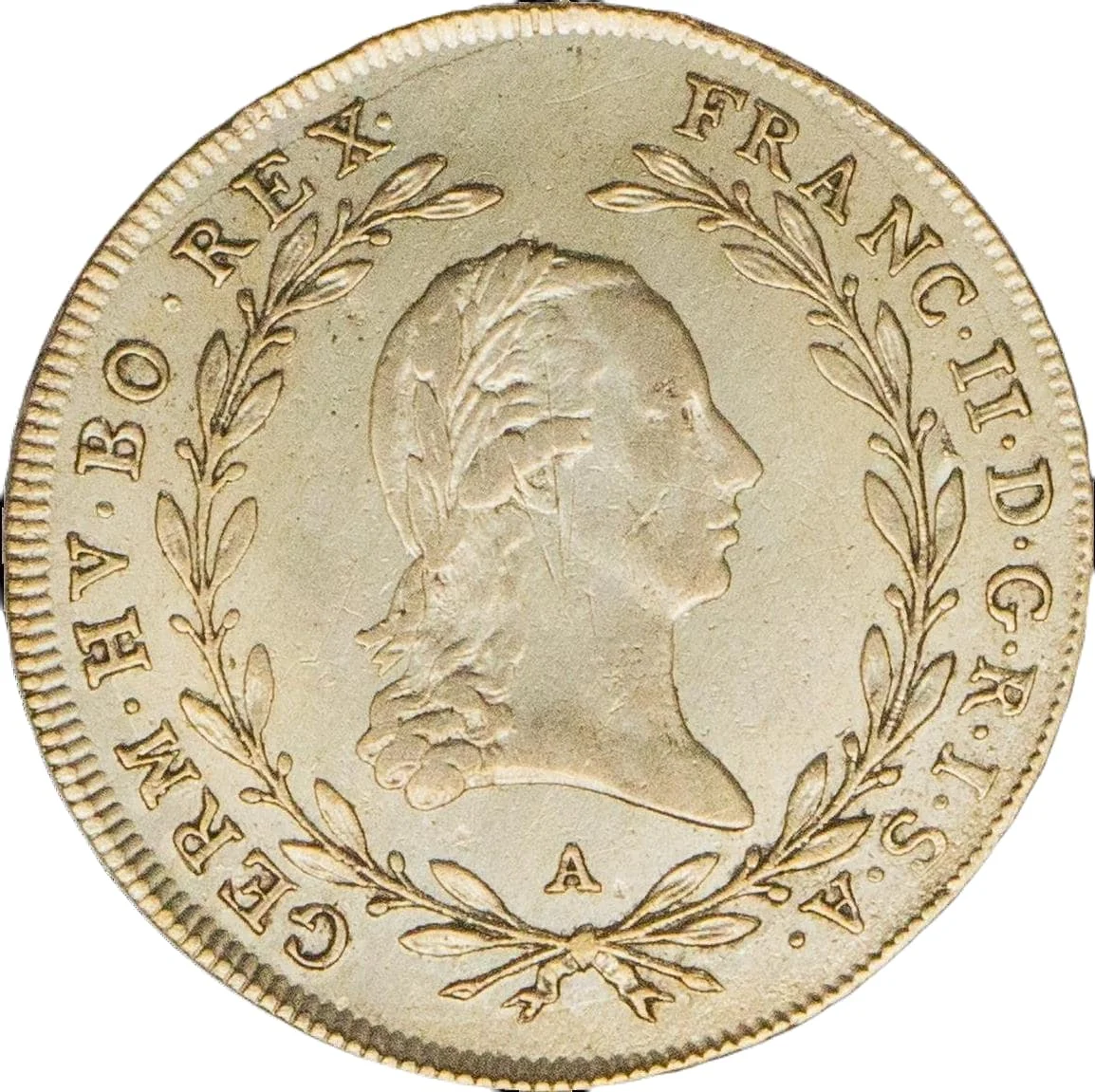
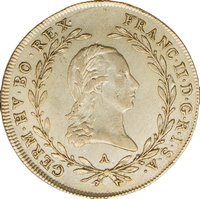
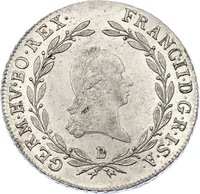
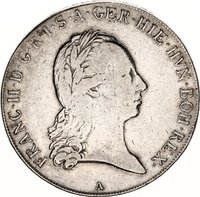
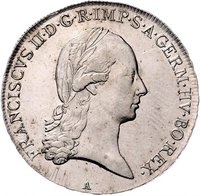
Right portrait, workshop mark below, foliage wreath. Legend begins at 1 o'clock.
Inscription:
FRANC II D G R I S A / GERM HV BO REX
Script: Latin
Reverse
Inscription:
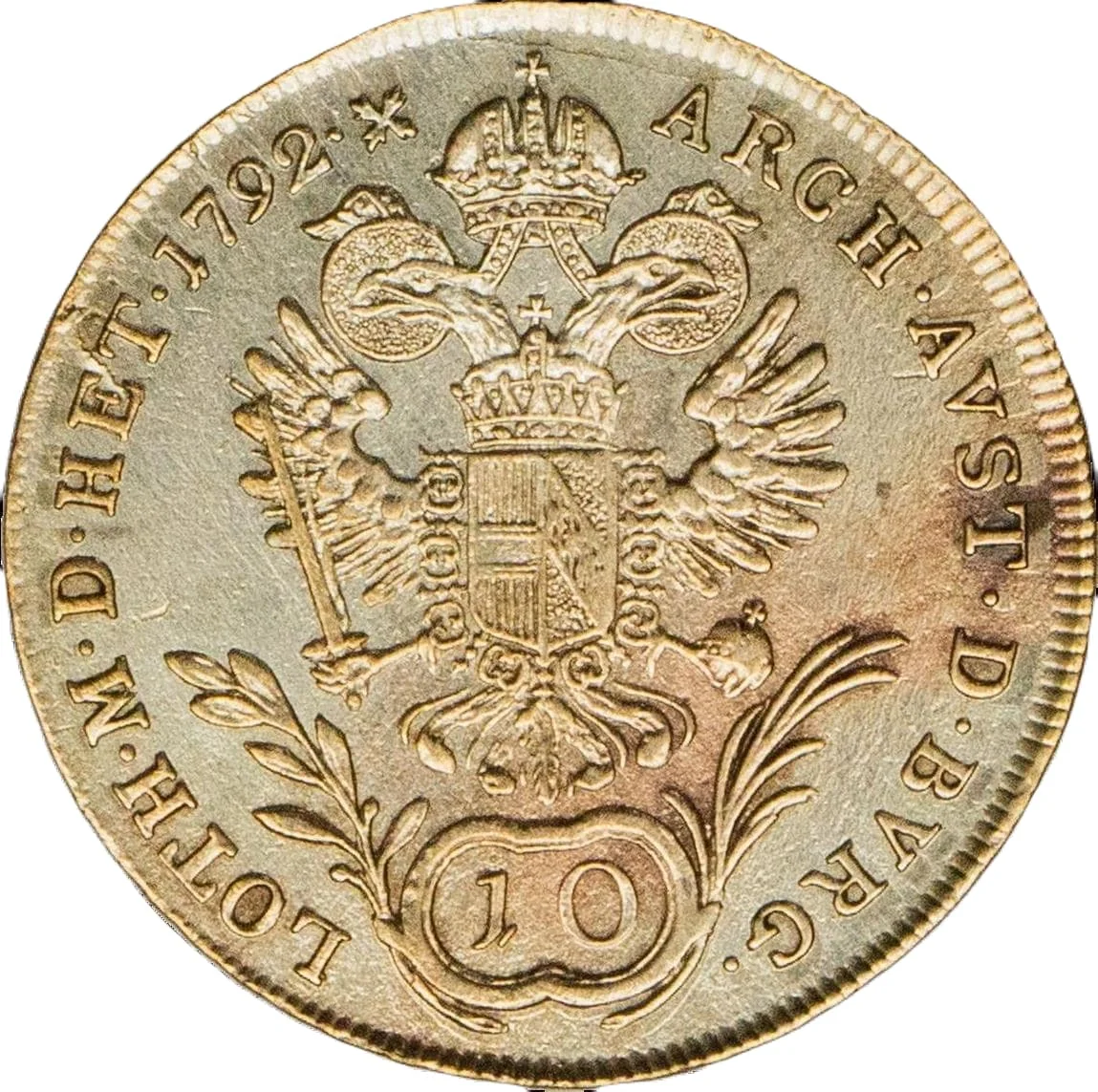
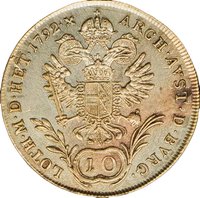
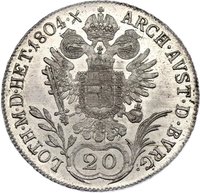
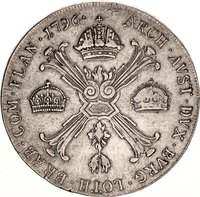
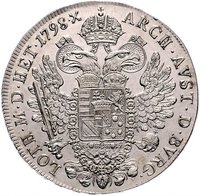
ARCH AVST D BVRG / 10 / LOTH M D HET
Script: Latin
Edge
Decorated
Mints
| Name | Mark |
|---|---|
| Münze Österreich | A |
| Kremnica | B |
| Prague | C |
| Alba Iulia | E |
| Hall | F |
| Baia Mare | G |
Mintings
Historical background
In 1792, the currency system of the Habsburg Monarchy (commonly called the Austrian Empire) was a complex and fragile patchwork, reflecting the empire's diverse and non-integrated lands. The primary unit was the Conventionsthaler (or Conventionstaler), established by the monetary convention of 1753. This silver-based coin, containing a defined amount of fine silver, was intended to create stability across the empire and its German neighbors. However, in practice, it circulated alongside a plethora of older regional coins, such as the Reichsthaler and the Kreutzer, and the accounting unit known as the Gulden (florin), which was valued at 2/3 of a Conventionsthaler.
This system was under severe strain due to the relentless financial demands of the Habsburg's wars, particularly against the Ottoman Empire and, most recently, the revolutionary wars with France. To cover massive state expenditures, the government of Emperor Leopold II and then Francis II increasingly relied on debt and the debasement of coinage. The Vienna Mint began issuing lightweight or debased coinage, a process that would accelerate dramatically under his successor. This practice eroded public trust and began to drive full-weight silver coins out of circulation, in accordance with Gresham's Law.
Consequently, on the eve of the Napoleonic Wars, Austria's monetary situation was precarious. While nominally on a silver standard, the state's fiscal desperation was laying the groundwork for a decisive move away from hard currency. Just a few years later, in 1796, the government would take the drastic step of introducing paper money not backed by silver, the Wiener Stadt Banco-Zettel, marking the beginning of a long era of inflationary finance. Thus, 1792 represents the final year of an increasingly unstable silver-based system, poised on the brink of a fundamental and disruptive transformation.
This system was under severe strain due to the relentless financial demands of the Habsburg's wars, particularly against the Ottoman Empire and, most recently, the revolutionary wars with France. To cover massive state expenditures, the government of Emperor Leopold II and then Francis II increasingly relied on debt and the debasement of coinage. The Vienna Mint began issuing lightweight or debased coinage, a process that would accelerate dramatically under his successor. This practice eroded public trust and began to drive full-weight silver coins out of circulation, in accordance with Gresham's Law.
Consequently, on the eve of the Napoleonic Wars, Austria's monetary situation was precarious. While nominally on a silver standard, the state's fiscal desperation was laying the groundwork for a decisive move away from hard currency. Just a few years later, in 1796, the government would take the drastic step of introducing paper money not backed by silver, the Wiener Stadt Banco-Zettel, marking the beginning of a long era of inflationary finance. Thus, 1792 represents the final year of an increasingly unstable silver-based system, poised on the brink of a fundamental and disruptive transformation.
💎 Very Rare