

1 Liard – Prince-bishopric of Liege
Belgium
Context
Years: 1641–1650
Country: Belgium 
Issuer: Prince-bishopric of Liege
Ruler: Ferdinand of Bavaria
Currency:
(1545—1650)
Subdivision: 1 Liard = 1 Aidant
Demonetized: Yes
Material
Diameter: 24.5 mm
Weight: 3.2 g
Thickness: 1 mm
Shape: Irregular round
Composition: Copper
Magnetic: No
Alignment: Medal alignment
flip
References
KM: #Click to copy to clipboard40
Numista: #336553
Obverse
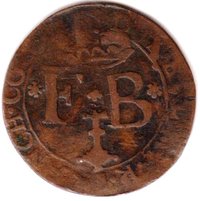
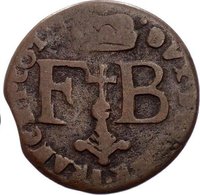
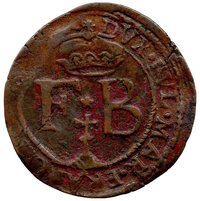
Description:
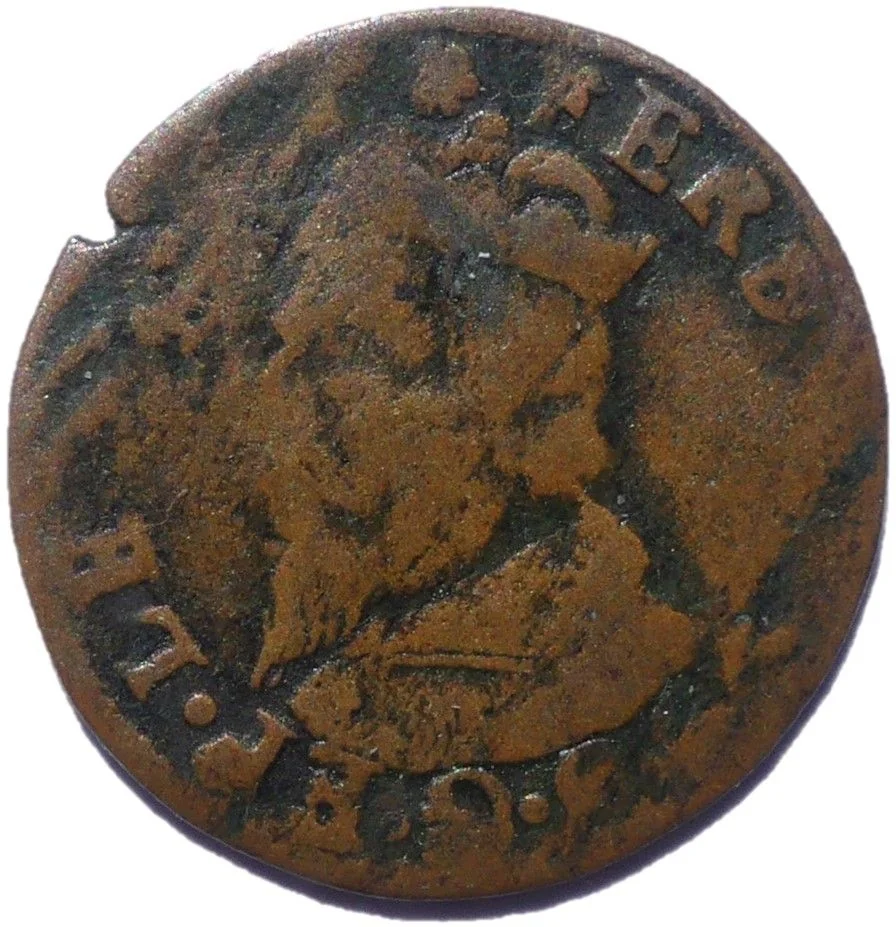
Ferdinand in elector's cap, left-facing bust.
Inscription:
FERDINAND . D . G . EP . LEO . D . BVL
Script: Latin
Reverse
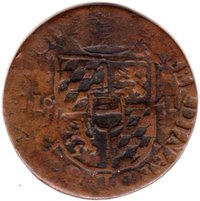
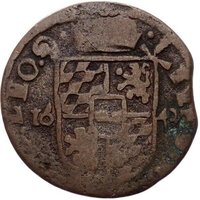
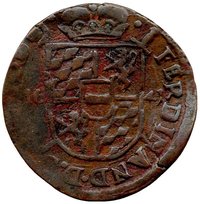
Description:
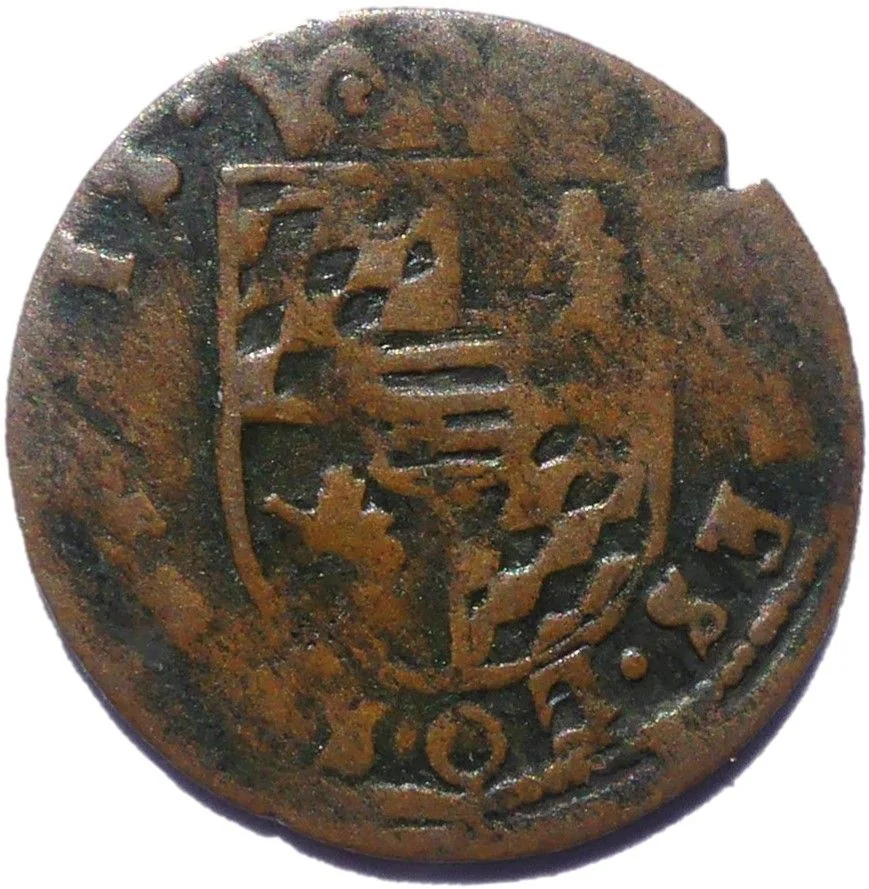
Quartered Bavarian-Palatinate arms with central Looz shield.
Inscription:
COMES • LOSSENSIS
Script: Latin
Edge
Plain
Mints
| Name | Mark |
|---|---|
| Hasselt | — |
Mintings
| Year | Mint Mark | Mintage | Quality | Collection |
|---|---|---|---|---|
| — | — | — |
Historical background
In 1641, the Prince-Bishopric of Liège, a semi-independent ecclesiastical state within the Holy Roman Empire, faced significant monetary instability characteristic of the wider "Kipper- und Wipperzeit" (the period of coinage debasement) that had plagued Central Europe during the Thirty Years' War. The primary issue was the proliferation of debased coinage, particularly low-quality liards and patards. These small-denomination coins, essential for daily trade, were being minted with ever-reducing silver content, both by Liège's own mint and, problematically, by neighboring states and counterfeiters. This flood of bad money into the circulation drove out the older, full-weight coins (Gresham's Law), causing inflation, eroding public trust, and disrupting local commerce.
The root of the problem lay in the fragmented monetary sovereignty of the era. While the Prince-Bishop held the right of minting, the practical authority was often exercised by the powerful estates of the land, including the cathedral chapter and the city of Liège itself, leading to competing interests. Furthermore, the bishopric's location at a commercial crossroads made it vulnerable to the influx of foreign debased coins from the Spanish Netherlands, the Dutch Republic, and various German territories, all seeking to offload their poor money and extract silver. This created a complex and chaotic monetary environment where the intrinsic value of coins was constantly in question.
In response, authorities in Liège attempted periodic reforms, such as issuing official ordinances to devalue and recall the worst coins, setting legal exchange rates, and trying to control the mint output. However, these measures in 1641 were largely reactive and struggled to be effective. The ongoing pressures of war economics, the profit motive for seigniorage (the revenue from minting), and the sheer volume of circulating debased coinage made stabilization nearly impossible. Consequently, the monetary situation remained a source of economic distress and social grievance throughout the decade.
The root of the problem lay in the fragmented monetary sovereignty of the era. While the Prince-Bishop held the right of minting, the practical authority was often exercised by the powerful estates of the land, including the cathedral chapter and the city of Liège itself, leading to competing interests. Furthermore, the bishopric's location at a commercial crossroads made it vulnerable to the influx of foreign debased coins from the Spanish Netherlands, the Dutch Republic, and various German territories, all seeking to offload their poor money and extract silver. This created a complex and chaotic monetary environment where the intrinsic value of coins was constantly in question.
In response, authorities in Liège attempted periodic reforms, such as issuing official ordinances to devalue and recall the worst coins, setting legal exchange rates, and trying to control the mint output. However, these measures in 1641 were largely reactive and struggled to be effective. The ongoing pressures of war economics, the profit motive for seigniorage (the revenue from minting), and the sheer volume of circulating debased coinage made stabilization nearly impossible. Consequently, the monetary situation remained a source of economic distress and social grievance throughout the decade.
✨ Legendary