

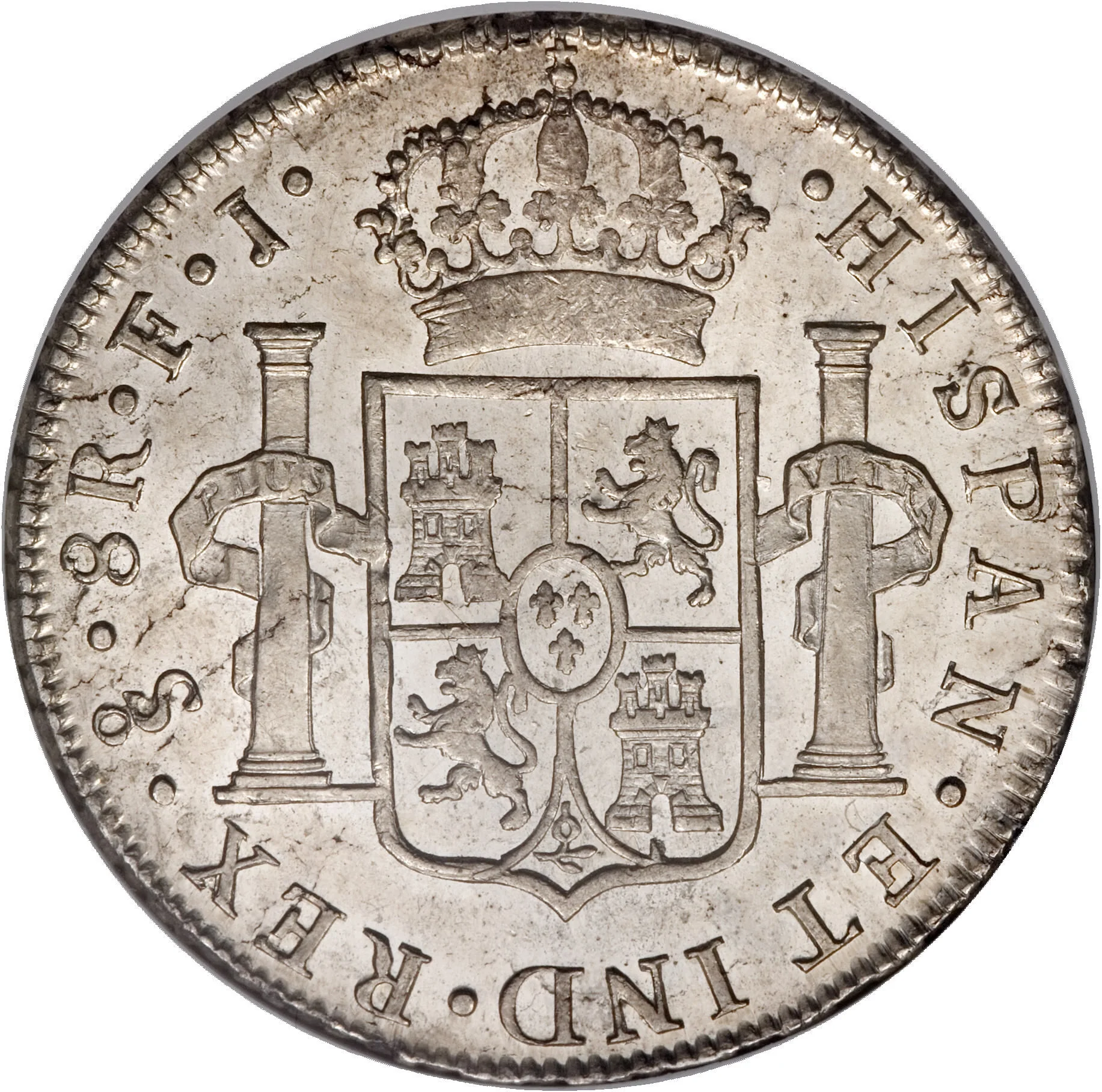
8 reales – Chile
Add to wishlist
Chile
Context
Years: 1791–1808
Issuer: Chile
Ruler: Charles IV
Currency:
(1541—1852)
Demonetized: Yes
Total mintage: 2,944,000
Material
References
KM: #
Numista: #33634
Value
Bullion value: $59.32
Obverse
Description:
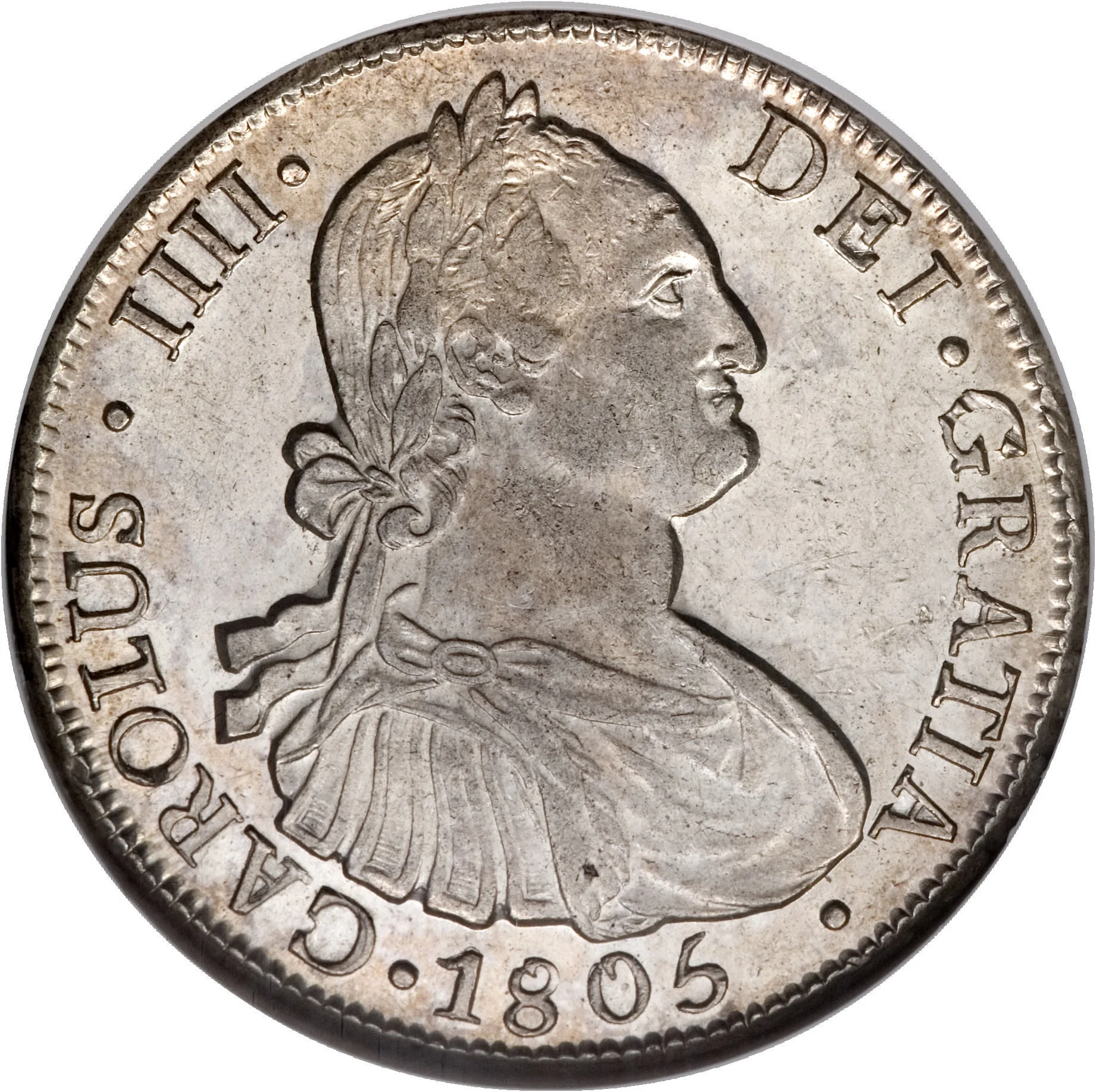
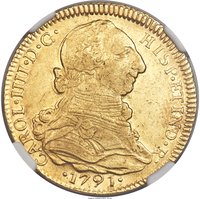
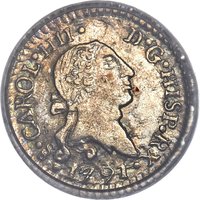
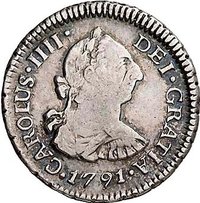
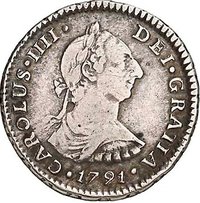
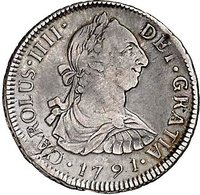
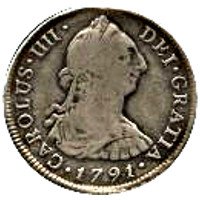
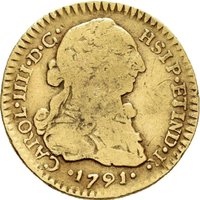
Bust of Charles IV, dated.
Inscription:
CAROLUS . IIII . DEI . GRATIA
1805
1805
Script: Latin
Reverse
Edge
Chained
Mints
| Name | Mark |
|---|---|
| Casa de Moneda de Chile | (So) |
Mintings
| Year | Mint Mark | Mintage | Quality | Collection |
|---|---|---|---|---|
| 1791 | So | 167,000 | ||
| 1792 | So | 161,000 | ||
| 1793 | So | 206,000 | ||
| 1794 | So | 161,000 | ||
| 1795 | So | 200,000 | ||
| 1796 | /5 | — | ||
| 1796 | So | 199,000 | ||
| 1797 | /6 | — | ||
| 1797 | So | 195,000 | ||
| 1798 | So | 174,000 | ||
| 1799 | So | 170,000 | ||
| 1800 | So | 184,000 | ||
| 1801 | So | 185,000 | ||
| 1802 | /1So | 160,000 | ||
| 1802 | So | — | ||
| 1803 | /2So | — | ||
| 1803 | So | 111,000 | ||
| 1804 | /3/2 | — | ||
| 1804 | So | 129,000 | ||
| 1805 | So | 159,000 | ||
| 1806 | /5 | — | ||
| 1806 | So | 155,000 | ||
| 1807 | So | 94,000 | ||
| 1808 | So | 134,000 |
Historical background
In 1791, Chile existed as a remote captaincy general within the Spanish Empire, and its currency situation was defined by severe scarcity and reliance on external sources. The colony produced no coins of its own; all circulating currency was imported from the royal mints in Peru (primarily Lima and Potosí) and, to a lesser extent, from Spain itself. This system created chronic monetary shortages, as the supply of silver and gold coins (reales and escudos) was irregular and insufficient for local economic activity, often being siphoned back to Peru to pay for imports or taxes.
The economy consequently operated on a practical mixture of official coinage, barter, and various substitutes. In daily transactions, especially outside major cities like Santiago, goods and services were frequently exchanged directly. Where coins were necessary, cut and fragmented pieces of larger coins were common, as was the use of "tlacos" or privately issued tokens by merchants and haciendas. This informal system highlighted the inadequacy of the imperial monetary supply and fostered a localized, fragmented economic environment.
This scarcity was a point of significant contention between colonial elites and the Crown. Local merchants and landowners persistently petitioned the Spanish authorities to establish a mint in Santiago to stabilize the economy. While these requests were denied in 1791 (a mint would not be established until 1749, and even then only temporarily), the ongoing crisis underscored the growing tension between colonial needs and imperial control. The monetary instability of this period hindered commercial development and was one of many friction points that would later contribute to the movements for Chilean independence.
The economy consequently operated on a practical mixture of official coinage, barter, and various substitutes. In daily transactions, especially outside major cities like Santiago, goods and services were frequently exchanged directly. Where coins were necessary, cut and fragmented pieces of larger coins were common, as was the use of "tlacos" or privately issued tokens by merchants and haciendas. This informal system highlighted the inadequacy of the imperial monetary supply and fostered a localized, fragmented economic environment.
This scarcity was a point of significant contention between colonial elites and the Crown. Local merchants and landowners persistently petitioned the Spanish authorities to establish a mint in Santiago to stabilize the economy. While these requests were denied in 1791 (a mint would not be established until 1749, and even then only temporarily), the ongoing crisis underscored the growing tension between colonial needs and imperial control. The monetary instability of this period hindered commercial development and was one of many friction points that would later contribute to the movements for Chilean independence.
Series: 1791 Chile circulation coins
💎 Very Rare