

1 ducat – Hungary
Add to wishlist
Hungary
Context
Years: 1712–1730
Issuer: Hungary
Ruler: Charles III
Currency:
(1526—1754)
Demonetized: Yes
Total mintage: 77,000
Material
Weight: 3.5 g
Gold Weight:: 3.45 g
Shape: Irregular round
Composition: 98.6% Gold
Magnetic: No
Alignment: Medal alignment
flip
References
KM: #
Numista: #33609
Value
Bullion value: $530.17
Obverse
Description:
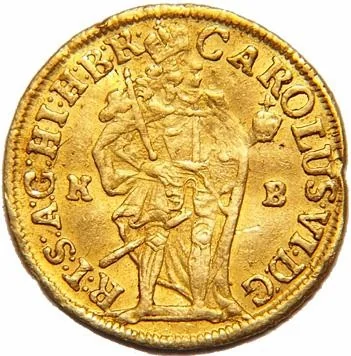
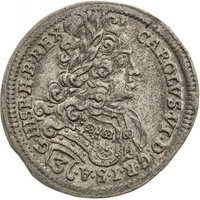
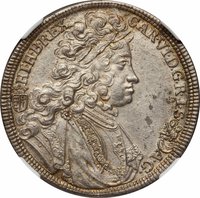
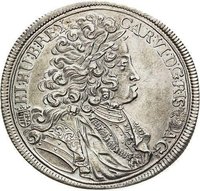
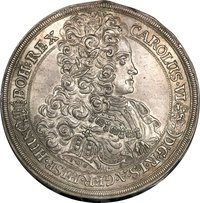
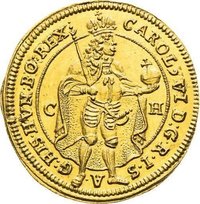
Crowned monarch facing right, holding scepter and orb, divides K B mintmark. Effigy interrupts inscription. No inner circle. CAROLVS begins at monarch's head.
Inscription:
CAROLVS : VI : D : G R : I : S : A : G : HI : H : B : R
K B
K B
Script: Latin
Reverse
Description:
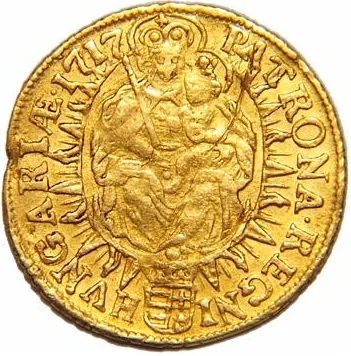
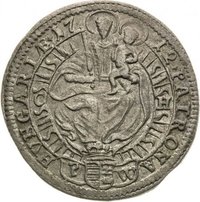
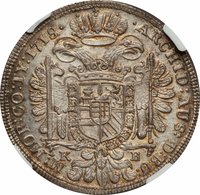
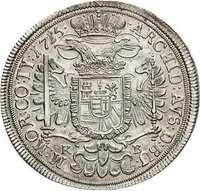
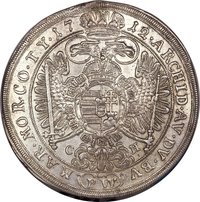
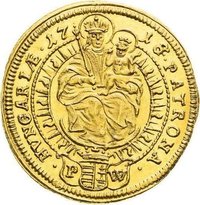
Crowned Madonna with scepter and child on a crescent moon, above a double-crowned Hungarian shield.
Inscription:
PATRONA · REGNI · HVNGARIÆ · 1717
Script: Latin
Edge
Plain
Mints
| Name | Mark |
|---|---|
| Kremnica | KB |
Mintings
Historical background
In 1712, Hungary's currency situation was deeply unstable and complex, a direct consequence of its political turmoil. The country was divided, with the Habsburg-controlled Royal Hungary under Emperor Charles VI, the Ottoman-controlled central regions, and the Principality of Transylvania. This fragmentation meant there was no unified monetary authority. The primary circulating coin was the silver tallér (thaler), but its value and purity were inconsistent, competing with older Hungarian issues, Austrian coins, Turkish akçe, and a flood of debased copper and billon coins from provincial mints.
The core of the crisis was severe inflation and debasement, driven by the immense costs of the ongoing War of the Spanish Succession (1701-1714) and the preceding conflicts against the Ottomans. The Habsburg government, desperate for revenue, repeatedly reduced the silver content of the lower-denomination denars and polturas (made of billon, a silver-copper alloy) minted at Nagybánya (today Baia Mare, Romania). This practice, known as "coinage deterioration," led to a situation where the intrinsic metal value of these coins fell far below their face value, causing public mistrust, price surges, and Gresham's Law ("bad money drives out good money") as people hoarded older, purer coins.
Consequently, everyday economic life was fraught with difficulty. Merchants and peasants faced uncertainty in every transaction, with exchange rates fluctuating wildly. The Habsburg authorities attempted to fix prices and values by decree, but these measures were largely ineffective in the face of fundamental debasement and a fractured economy. The monetary chaos of 1712 thus reflected the broader struggle of a war-ravaged and partitioned kingdom, where fiscal policy was subordinated to imperial military ambition, eroding economic stability for years to come.
The core of the crisis was severe inflation and debasement, driven by the immense costs of the ongoing War of the Spanish Succession (1701-1714) and the preceding conflicts against the Ottomans. The Habsburg government, desperate for revenue, repeatedly reduced the silver content of the lower-denomination denars and polturas (made of billon, a silver-copper alloy) minted at Nagybánya (today Baia Mare, Romania). This practice, known as "coinage deterioration," led to a situation where the intrinsic metal value of these coins fell far below their face value, causing public mistrust, price surges, and Gresham's Law ("bad money drives out good money") as people hoarded older, purer coins.
Consequently, everyday economic life was fraught with difficulty. Merchants and peasants faced uncertainty in every transaction, with exchange rates fluctuating wildly. The Habsburg authorities attempted to fix prices and values by decree, but these measures were largely ineffective in the face of fundamental debasement and a fractured economy. The monetary chaos of 1712 thus reflected the broader struggle of a war-ravaged and partitioned kingdom, where fiscal policy was subordinated to imperial military ambition, eroding economic stability for years to come.
Series: 1712 Hungary circulation coins
✨ Legendary