

1 Thaler – Austrian Empire
Austria
Context
Years: 1692–1695
Country: Austria 
Issuer: Austrian Empire
Ruler: Leopold I
Currency:
(1520—1754)
Demonetized: Yes
Material
References
KM: #Click to copy to clipboard1275.3
Numista: #33493
Value
Bullion value: $81.15
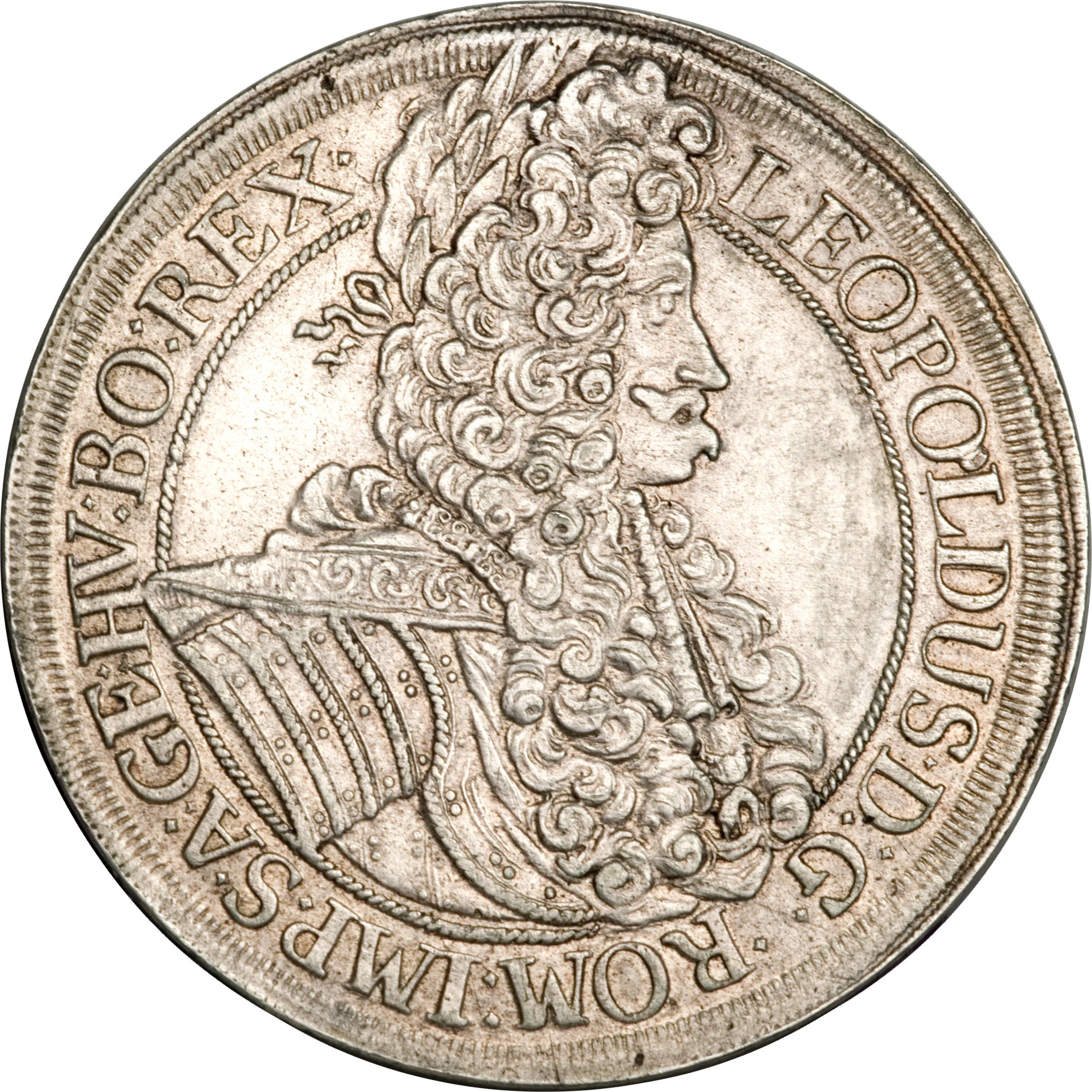
Obverse
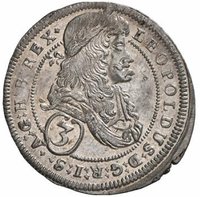
Description:
Laureate portrait, head touching the rim.
Inscription:
LEOPOLDUS D G ROM IMP S A GE HV BO REX
Script: Latin
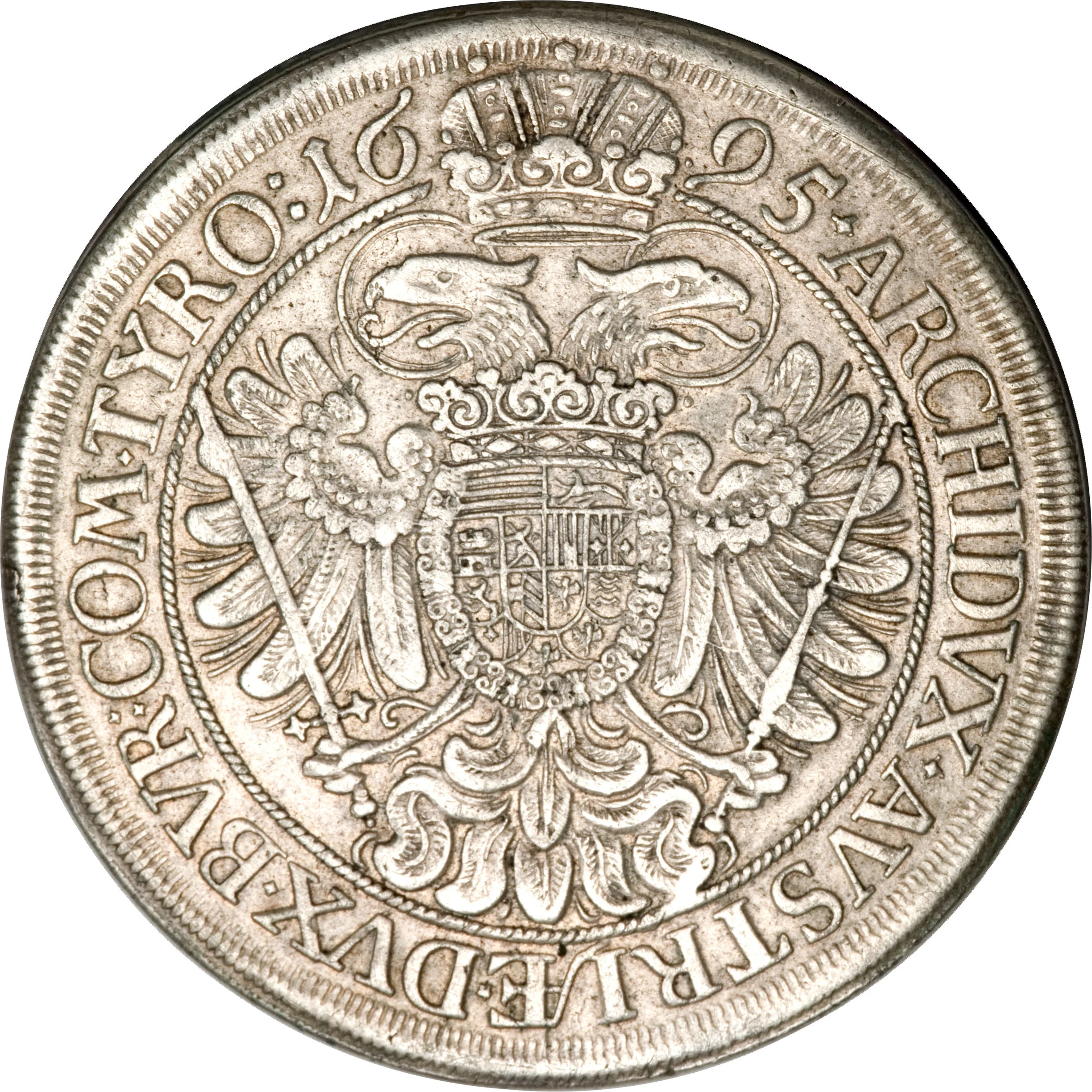
Reverse
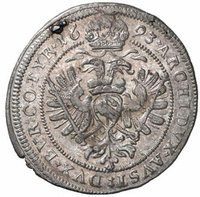
Description:
Imperial eagle, composite arms, date above.
Inscription:
ARCHIDVX AVSTRIÆ DVX BVR COM TYROL 1695
ou
COM TYRO
ou
COM TYRO
Script: Latin
Edge
Mints
| Name | Mark |
|---|---|
| Münze Österreich | — |
Mintings
| Year | Mint Mark | Mintage | Quality | Collection |
|---|---|---|---|---|
| 1692 | — | — | ||
| 1693 | — | — | ||
| 1695 | — | — |
Historical background
In 1692, the currency system of the Habsburg Monarchy, often referred to as the Austrian Empire, was in a state of profound crisis and transition, primarily due to the immense financial strain of ongoing warfare. The monarchy was engaged in the Great Turkish War (1683-1699) on its eastern frontier and the Nine Years' War (1688-1697) against France in the west. These simultaneous conflicts drained the imperial treasury, forcing the government to resort to repeated debasement of the coinage. The silver Reichsthaler and the smaller Kreuzer coins were systematically degraded with lower silver content, leading to rampant inflation, a loss of public confidence, and economic instability across the diverse lands of the empire.
The monetary landscape was further complicated by extreme regional fragmentation. There was no unified imperial currency; instead, various constituent territories (like Austria, Bohemia, and Hungary) minted their own versions of coins, often of differing quality and value. This period saw a chaotic circulation of domestic debased coins, older high-quality coins (which were hoarded and disappeared from circulation), and foreign currencies like Dutch ducats and Saxon Thalers. The Vienna Banko, established in 1703, was still a decade away, so there was no central banking authority to manage credit or stabilize the currency.
Consequently, the year 1692 fell within a bleak decade often called the Kipper- und Wipperzeit (Clipping and Swinging Time) in the Habsburg lands, named for the practice of clipping precious metal from coins. The government's short-term fiscal fixes created long-term economic damage, disrupting trade and imposing hardship on the population. This period of monetary chaos ultimately provided the crucial impetus for the major financial and administrative reforms that would be undertaken by Emperor Leopold I and his successors in the early 18th century, setting the stage for a more standardized monetary system.
The monetary landscape was further complicated by extreme regional fragmentation. There was no unified imperial currency; instead, various constituent territories (like Austria, Bohemia, and Hungary) minted their own versions of coins, often of differing quality and value. This period saw a chaotic circulation of domestic debased coins, older high-quality coins (which were hoarded and disappeared from circulation), and foreign currencies like Dutch ducats and Saxon Thalers. The Vienna Banko, established in 1703, was still a decade away, so there was no central banking authority to manage credit or stabilize the currency.
Consequently, the year 1692 fell within a bleak decade often called the Kipper- und Wipperzeit (Clipping and Swinging Time) in the Habsburg lands, named for the practice of clipping precious metal from coins. The government's short-term fiscal fixes created long-term economic damage, disrupting trade and imposing hardship on the population. This period of monetary chaos ultimately provided the crucial impetus for the major financial and administrative reforms that would be undertaken by Emperor Leopold I and his successors in the early 18th century, setting the stage for a more standardized monetary system.
💎 Extremely Rare