

1 Penny – Isle of Man
Context
Year: 1709
Country: British Crown dependencies
Issuer: Isle of Man 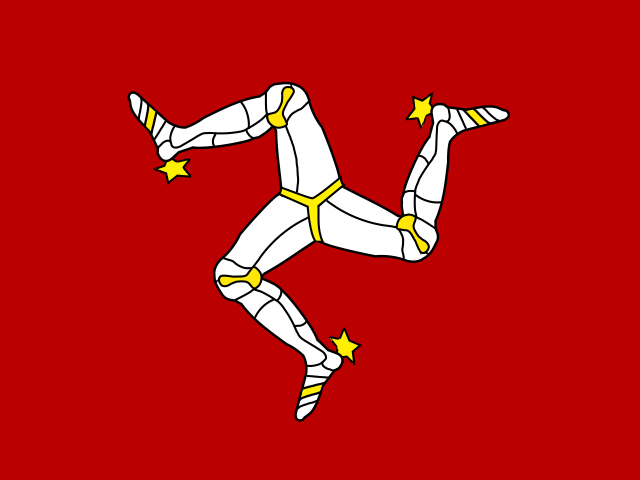
Currency:
(1709—1839)
Demonetized: Yes
Total mintage: 90,000
Material
References
KM: #Click to copy to clipboard2a
Numista: #333379
Obverse
Description:
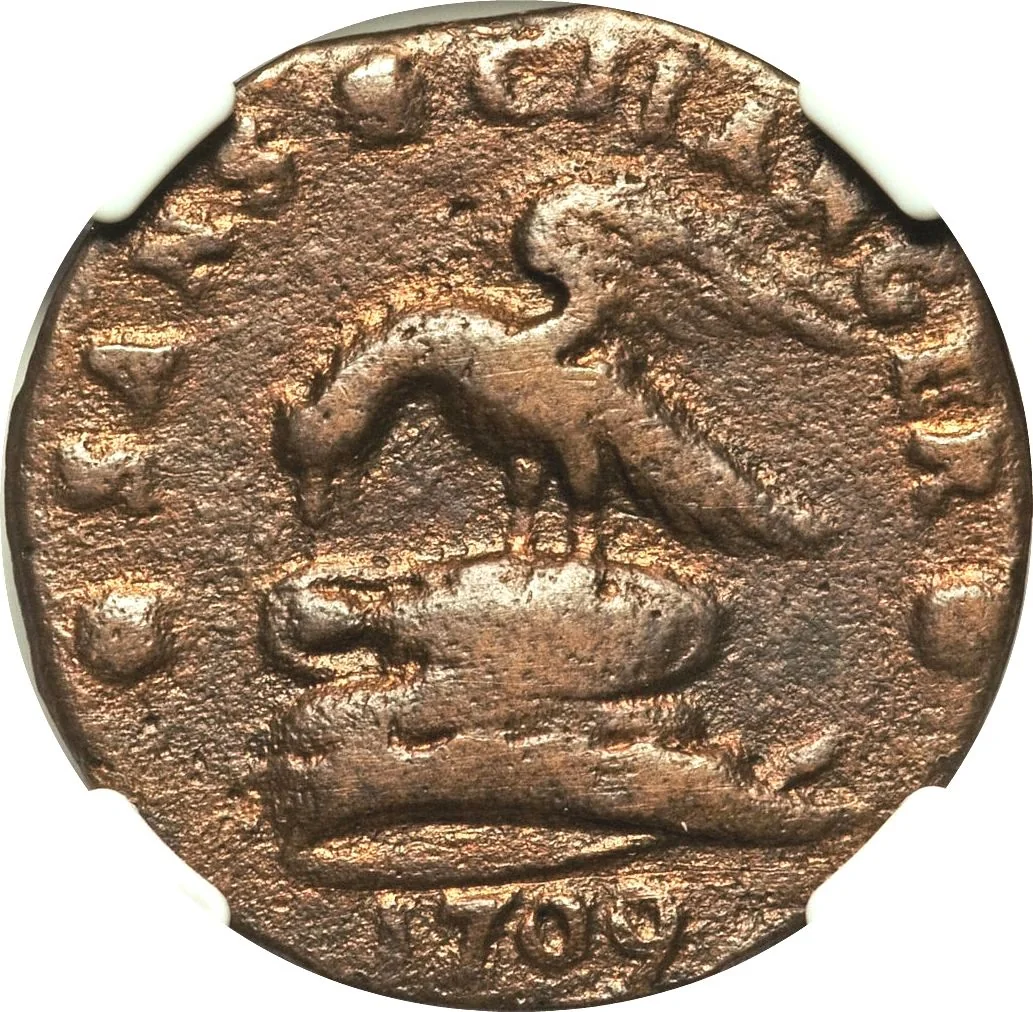
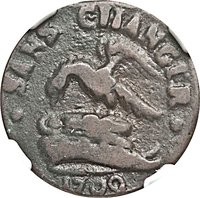
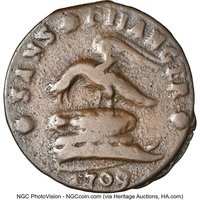
Stanley crest: eagle and child on a cap of maintenance.
Inscription:
SANS CHANGER
1709
1709
Script: Latin
Reverse
Edge
Plain
Categories
| Animal> Bird> Eagle |
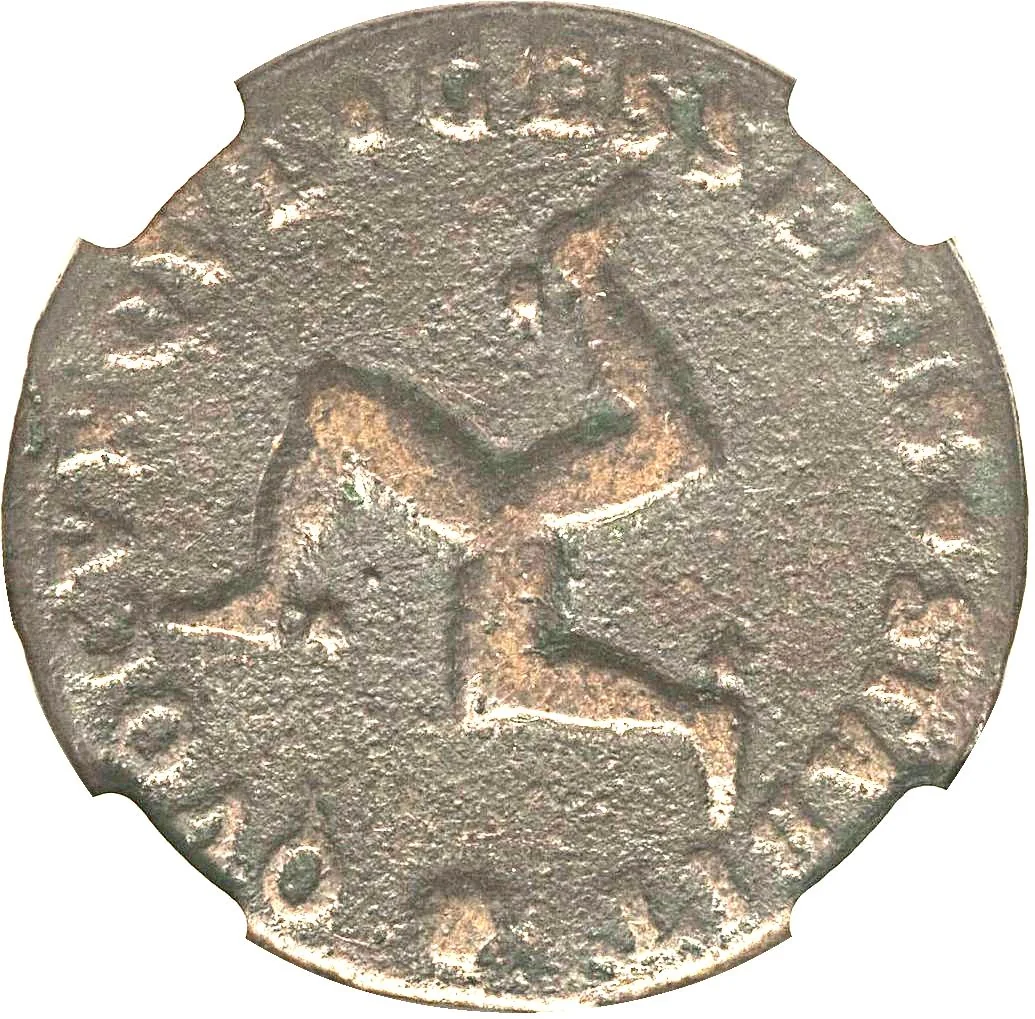
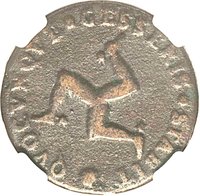
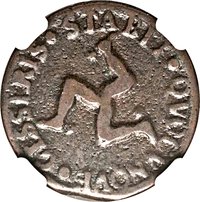
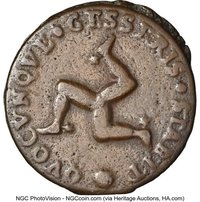
| Symbol> Triskelion |
Mintings
| Year | Mint Mark | Mintage | Quality | Collection |
|---|---|---|---|---|
| 1709 | — | 90,000 |
Historical background
In 1709, the Isle of Man found itself in a complex and challenging currency situation, caught between its historic ties, practical economic needs, and the political realities of the British Crown. Officially, the island's currency was pegged to sterling, with the Manx pound theoretically equal to the pound sterling. However, in practice, the circulating medium was a chaotic mixture of underweight and clipped English silver coins, alongside a significant influx of foreign coins, particularly Spanish dollars (pieces of eight) and French écus, which arrived through the island's active smuggling trade. This created a chronic shortage of reliable, full-value specie for everyday transactions.
The root of the problem lay in the Revestment Act of 1765 still being decades in the future; in 1709, the island remained a separate feudal lordship under the Duke of Atholl, not directly administered by the British Treasury. While English coin was legal tender, the British government showed little interest in ensuring a sufficient supply reached the island. Consequently, merchants and the public were forced to assign inflated values to the worn and foreign coins in circulation to facilitate trade, leading to confusion, uncertainty, and frequent disputes over exchange rates and values.
This unstable monetary environment reflected the Isle of Man's unique transitional status in the early 18th century. It was neither fully integrated into the British monetary system nor truly independent enough to issue its own regulated coinage. The currency scarcity and disorder directly hampered internal commerce and were symptomatic of the wider governance and economic ambiguity that would eventually lead to the British Crown purchasing the lordship in 1765, primarily to control the smuggling trade that was, ironically, a key source of the problematic foreign coins.
The root of the problem lay in the Revestment Act of 1765 still being decades in the future; in 1709, the island remained a separate feudal lordship under the Duke of Atholl, not directly administered by the British Treasury. While English coin was legal tender, the British government showed little interest in ensuring a sufficient supply reached the island. Consequently, merchants and the public were forced to assign inflated values to the worn and foreign coins in circulation to facilitate trade, leading to confusion, uncertainty, and frequent disputes over exchange rates and values.
This unstable monetary environment reflected the Isle of Man's unique transitional status in the early 18th century. It was neither fully integrated into the British monetary system nor truly independent enough to issue its own regulated coinage. The currency scarcity and disorder directly hampered internal commerce and were symptomatic of the wider governance and economic ambiguity that would eventually lead to the British Crown purchasing the lordship in 1765, primarily to control the smuggling trade that was, ironically, a key source of the problematic foreign coins.

✨ Legendary