

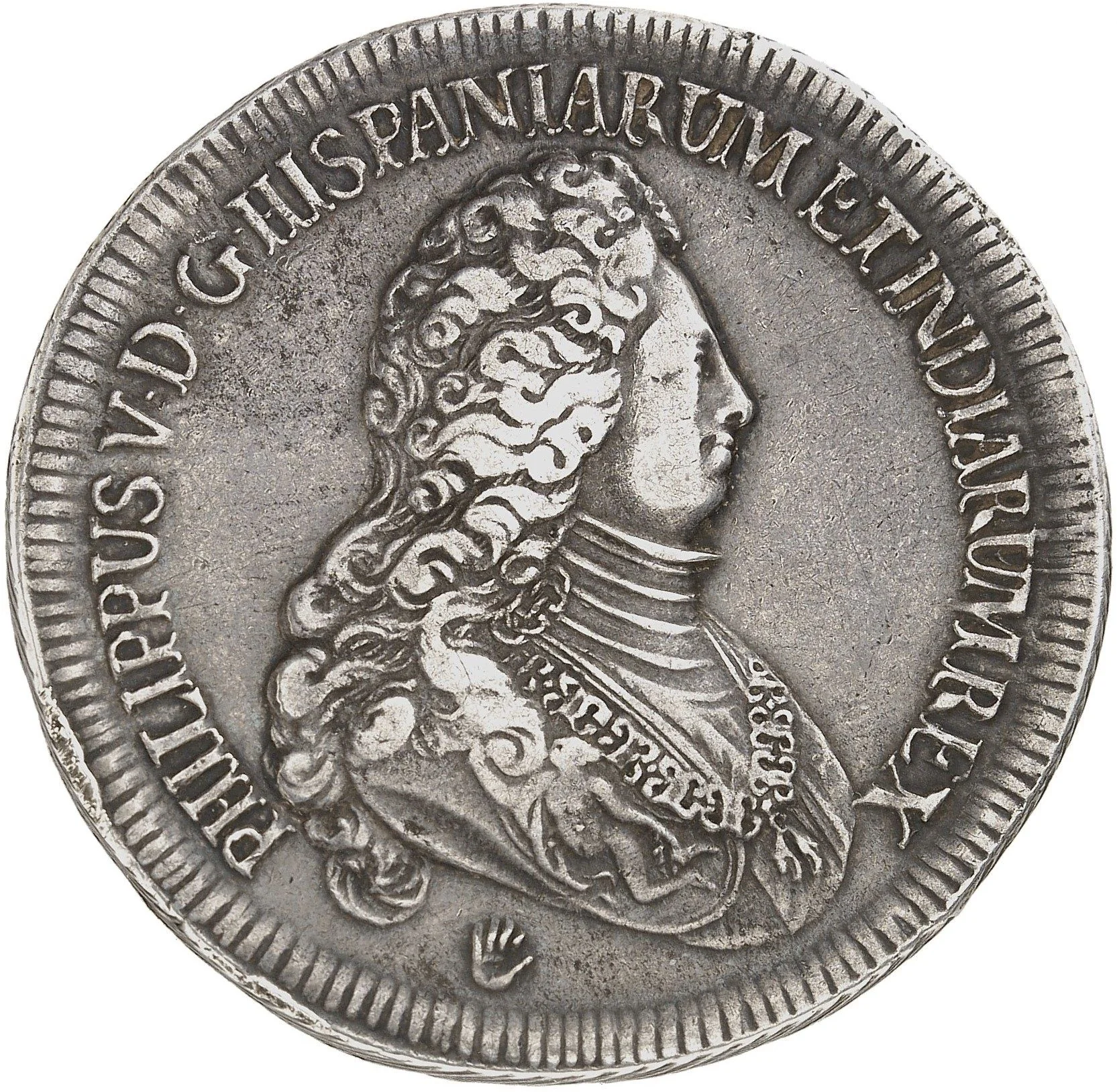
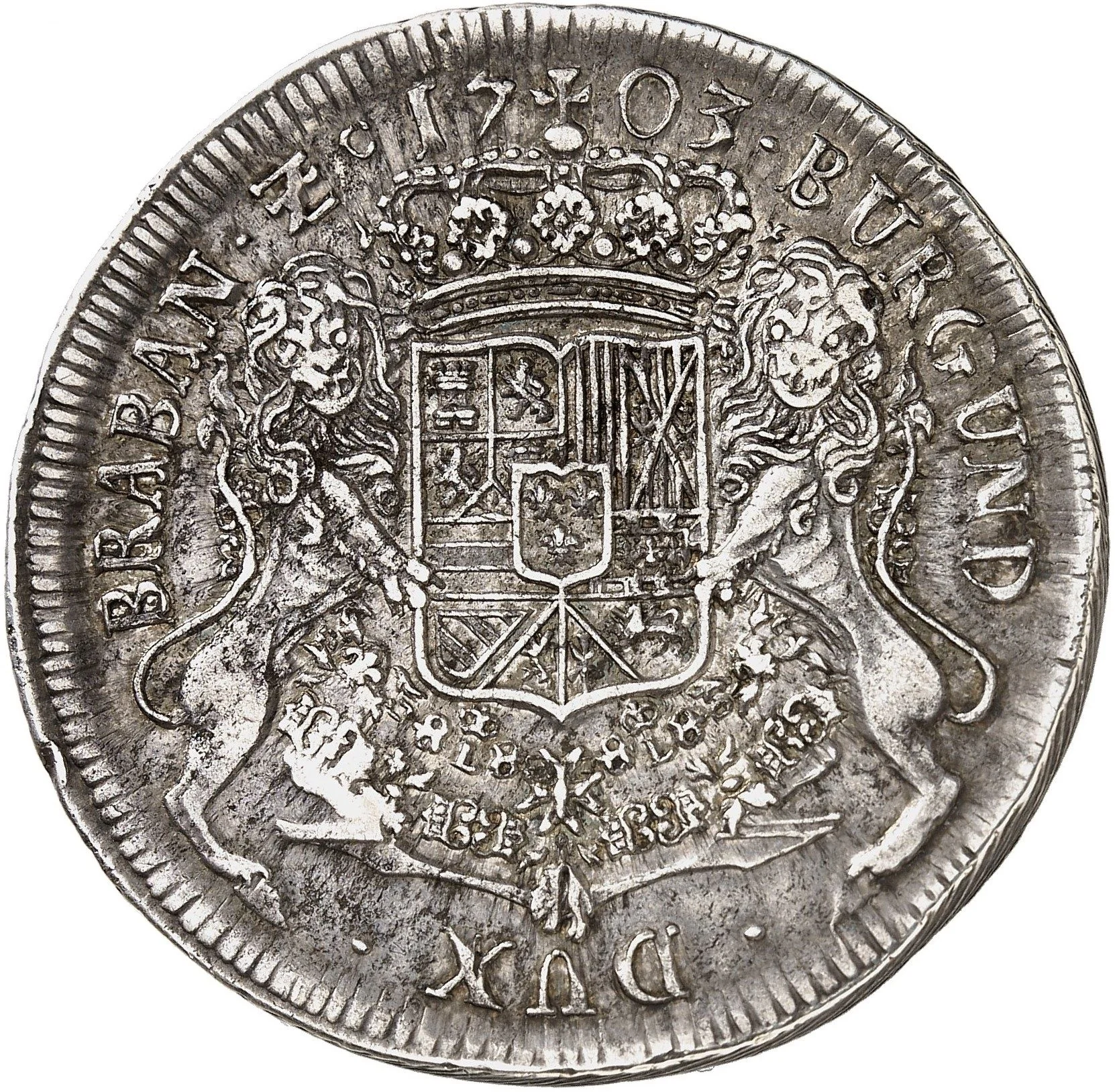
1 ducaton – Spanish Netherlands
Add to wishlist
Netherlands
Context
Years: 1703–1705
Country: Netherlands
Issuer: Spanish Netherlands
Ruler: Philip V
Currency:
(1506—1713)
Demonetized: Yes
Material
References
KM: #
Numista: #331863
Value
Bullion value: $159.46
Obverse
Description:
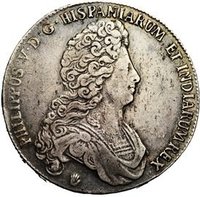
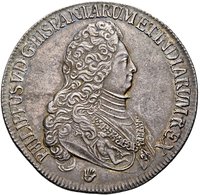
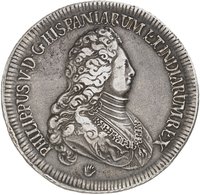
Armored bust right, mint mark beneath.
Inscription:
PHILIPPUS V • D • G • HISPANIARUM ET INDIARUM REX
Script: Latin
Reverse
Description:
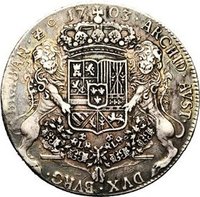
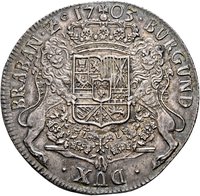
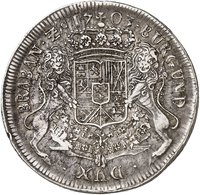
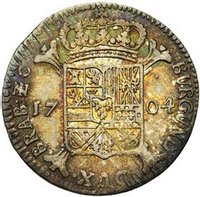
Crowned arms flanked by lions, date above.
Inscription:
BURGUND • DUX • BRABAN • Zc 17 03
Script: Latin
Edge
Mints
| Name | Mark |
|---|---|
| Antwerp | Hand |
Mintings
| Year | Mint Mark | Mintage | Quality | Collection |
|---|---|---|---|---|
| 1703 | hand | — | ||
| 1704 | hand | — | ||
| 1705 | hand | — |
Historical background
In 1703, the Spanish Netherlands found itself in a precarious monetary situation, deeply entangled in the wider War of the Spanish Succession (1701-1714). The region, a contested battleground between the Bourbon claimant Philip V and the Habsburg claimant Archduke Charles, suffered from the severe economic strain of military occupation and requisitioning by both French and Allied armies. This warfare disrupted trade, drained resources, and placed immense fiscal pressure on local authorities, leading to a chronic shortage of specie (coinage) in circulation. The reliable silver patagon and other established coins were increasingly hoarded, exacerbating daily transactional difficulties for commerce and soldiers alike.
The currency chaos was further compounded by a flood of debased and foreign coinage. To finance their campaigns, various armies, particularly the French, introduced lightweight or adulterated coins into the economy. Furthermore, the neighboring Dutch Republic, seeking to protect its own currency, often dumped inferior-quality copper duiten and heavily worn silver schellingen into the Southern Netherlands. This resulted in a confusing and unstable multi-currency environment where the intrinsic metal value of a coin often fell far below its nominal face value, destroying public trust and hindering any semblance of a unified monetary system.
Local authorities, such as the Estates of Brabant and Flanders, attempted to respond by issuing periodic ordinances that set official exchange rates (tarieven) for the myriad of coins in circulation, trying to fix their value in terms of the stable guilder of account. However, these measures were largely reactive and ineffectual. The constant military and political instability prevented any lasting monetary reform, making 1703 a year characteristic of the wider conflict's economic turmoil: a period of inflationary pressure, monetary confusion, and ad-hoc governance that severely burdened the population of the Spanish Netherlands.
The currency chaos was further compounded by a flood of debased and foreign coinage. To finance their campaigns, various armies, particularly the French, introduced lightweight or adulterated coins into the economy. Furthermore, the neighboring Dutch Republic, seeking to protect its own currency, often dumped inferior-quality copper duiten and heavily worn silver schellingen into the Southern Netherlands. This resulted in a confusing and unstable multi-currency environment where the intrinsic metal value of a coin often fell far below its nominal face value, destroying public trust and hindering any semblance of a unified monetary system.
Local authorities, such as the Estates of Brabant and Flanders, attempted to respond by issuing periodic ordinances that set official exchange rates (tarieven) for the myriad of coins in circulation, trying to fix their value in terms of the stable guilder of account. However, these measures were largely reactive and ineffectual. The constant military and political instability prevented any lasting monetary reform, making 1703 a year characteristic of the wider conflict's economic turmoil: a period of inflationary pressure, monetary confusion, and ad-hoc governance that severely burdened the population of the Spanish Netherlands.
✨ Legendary